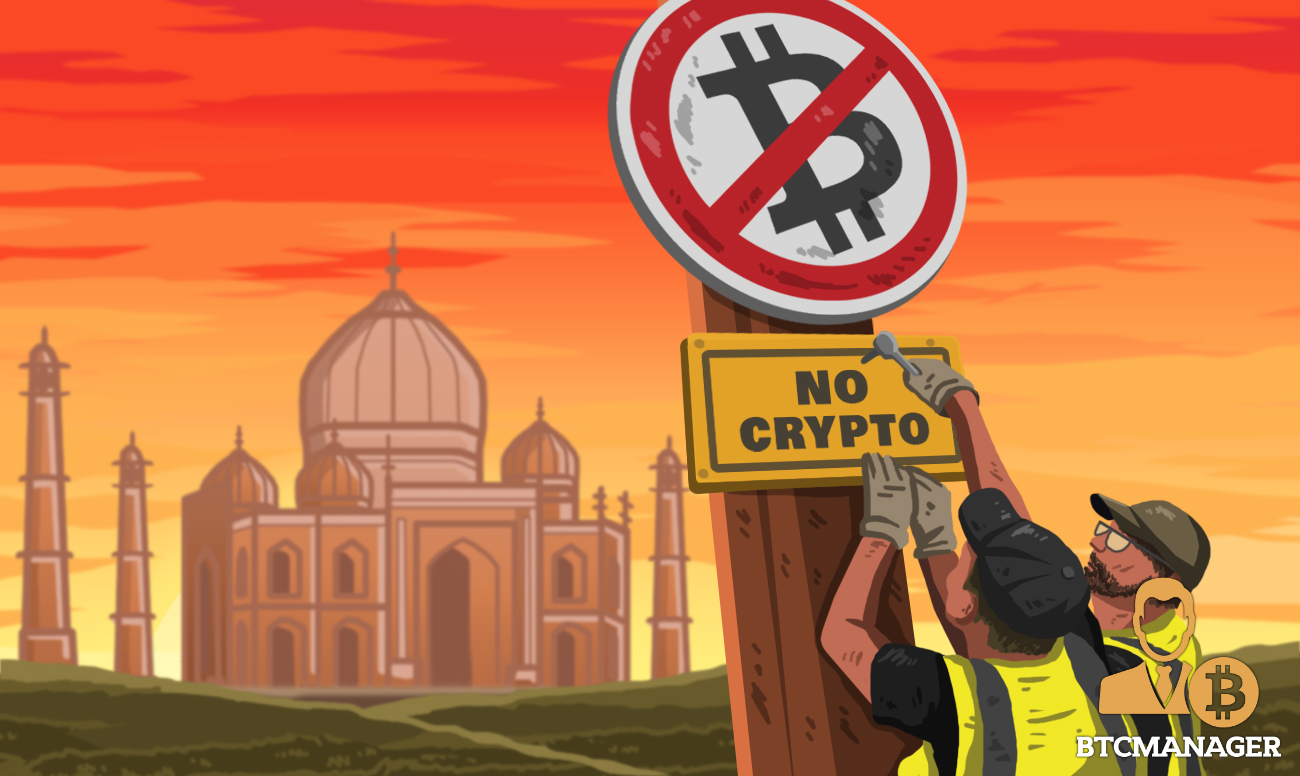
After the recent announcement of a bill that will virtual currency in India, BTCManager has summarized reports from the Reserve Bank of India () and the litigation surrounding the current .
Gaining Legitimacy
Until early 2017, was merely an intriguing technology for a handful of engineers and technology enthusiasts in India. There was no form of media coverage, research studies, or government addresses until late in 2017.
The first few exchanges in India were ZebPay and UnoCoin. Until these two launched, there was a small market for , but it was nothing too significant. It wasn’t until August 2017, the launch of and the start of double-digit percentage price moves, that people began to fall down the rabbit hole.
The bull run of 2017 had a massive effect on the Indian subcontinent. For a country with an extremely inefficient banking system, the thought of sending money across the world in seconds seemed like something straight out of a fantasy novel.
The biggest driver of attention to around the world was undoubtedly the opportunity to make a quick buck; was no exception to this.
The attention garnered from the bull-run saw large capital inflows to . This was when the government of India finally decided to join the commotion.
Stage One: Regulatory Attention and Banking Ban
After the early 2018 crash, the government decided it was in the investors’ best interest not to deal with such volatile assets.
The final authority on this was the Indian central bank, the RBI. On April 6, 2018, the RBI a notification instructing all commercial and co-operative banks to immediately halt facilitating transactions for any entity dealing in .
This meant exchanges had no way to access the traditional banking system. Ironically, the people trying to shape change for the unbanked became themselves unbanked.
For the sake of an example, let’s say Alice wants to deposit money on a exchange through her debit card. The transaction doesn’t get declined, but as soon as the bank’s software shows them that Alice transacted with an entity that deals in (associating her by default), the banks issue a letter asking her to explain her actions as well as visit her nearest branch to close her bank account.
This wasn’t enforced on the retail side until January 2019 when one of the largest commercial banks in the country, Kotak Mahindra Bank, closed the account of twitter user @DesiCryptoHodlr.
The same person tweeted an excerpt from a statement a user had received from , India’s largest private bank, regarding the use of virtual currency.
In October 2018, Harish B.N, co-founder of UnoCoin, India’s first ATM in Bangalore. Almost a week later, the ATM was and Harish was arrested for “illegally installing a kiosk that deals in .”
This caused outrage in the Indian crypto community but, unfortunately, amounted to nothing.
Stage Two: Court Battles
In November 2017, a public interest litigation by a young lawyer, Dwaipayan Bhomwick, arrived in the Supreme Court.
His litigation was filed to direct the government to create for crypto so the revolutionary technology could be leveraged by citizens and governments could increase their revenue by taxing these dealings. He felt was a great idea and countries like the USA and had accepted it with open arms.
By bringing in , Bhomwick explained that all parties could benefit rather than viewing the technology simply as a menace.
But on this particular day, the court was scheduled to hear two public interest litigations regarding . One was Bhomwick and the other was father-son duo, Vijay Pal and Siddharth Dalmia. The Dalmia’s were (and still are) seeking a complete ban on the and purchase of in India. Their rationale was that they are “completely anonymous and untraceable.”
Siddharth Dalmia, a 23-year-old law student at the time, was persuaded by his father to help him in getting banned in India.
After the rasomware attack in May 2017, he decided his Father’s stance was correct and joined him in trying to ban in India. The Dalmia’s litigation has dragged on into 2019.
In early February 2019, the Supreme Court sent a notice to the RBI, Securities and Exchange Board of India, and various Ministries to come up with a draft for by the end of March. The subsequent hearing on March 29, 2019, which came in the midst of national elections, was postponed to July 23, 2019.
Stage Three: Ongoing Events
On April 27, 2019, mainstream media sources reported the Indian government was a blanket ban on all virtual currencies. This was spurred on by the comments of Anurag Agarwal, the head of the Investor Education and Protection Fund (). He was by Moneycontrol issuing a strong statement against . Agarwal said:
“When it comes to investor protection, the IEPFA has to take a stand against certain things. Against Ponzi schemes, we are taking a stand. We believe is a Ponzi scheme and it should be banned.”
It should be noted that while the IEPFA is statutory body created by legislation and empowered by the Company’s Act, they can only prosecute and do not have the statutory power to pass legislation or any rules.
Despite the outrage, the opinion of the IEPFA does not necessarily encompass the government’s opinion. The positive is that the central bank and Ministry of Finance have not addressed the issue or changed their stance.
Before the FY20 national budget, some that the government would introduce crypto regulations in the budget announcement speech. This never happened.
A Ray of Hope
Several organizations like crypto exchange Koinex and have been ushering in to bring regulatory awareness to .
Blockchained India has been holding roadshows cross-country to gather the opinions of the crypto community and submit a report to the Securities and Exchange Board of India.
The hashtag “” has been spammed on Twitter by Indian enthusiasts who want the government to regulate the space instead of banning it outright. Nischal Shetty, a co-founder of WazirX, has been tweeting the securities regulator and the Minister of Finance every day for the last 180 days in an attempt to throw attention at the matter.
While the government has seemingly taken an authoritarian stance against , the people of India time and time again show their passion for the technology.
From exchanges and developers to investors and enthusiasts, the majority of citizens with knowledge of what this technology can do have been doing their part to persuade authorities to recognize the innovation has for society.
Like BTCMANAGER? Send us a tip!
Our Address: 3AbQrAyRsdM5NX5BQh8qWYePEpGjCYLCy4
Published at Tue, 30 Apr 2019 18:10:04 +0000