October 11, 2026

Capitalizations Index – B ∞/21M

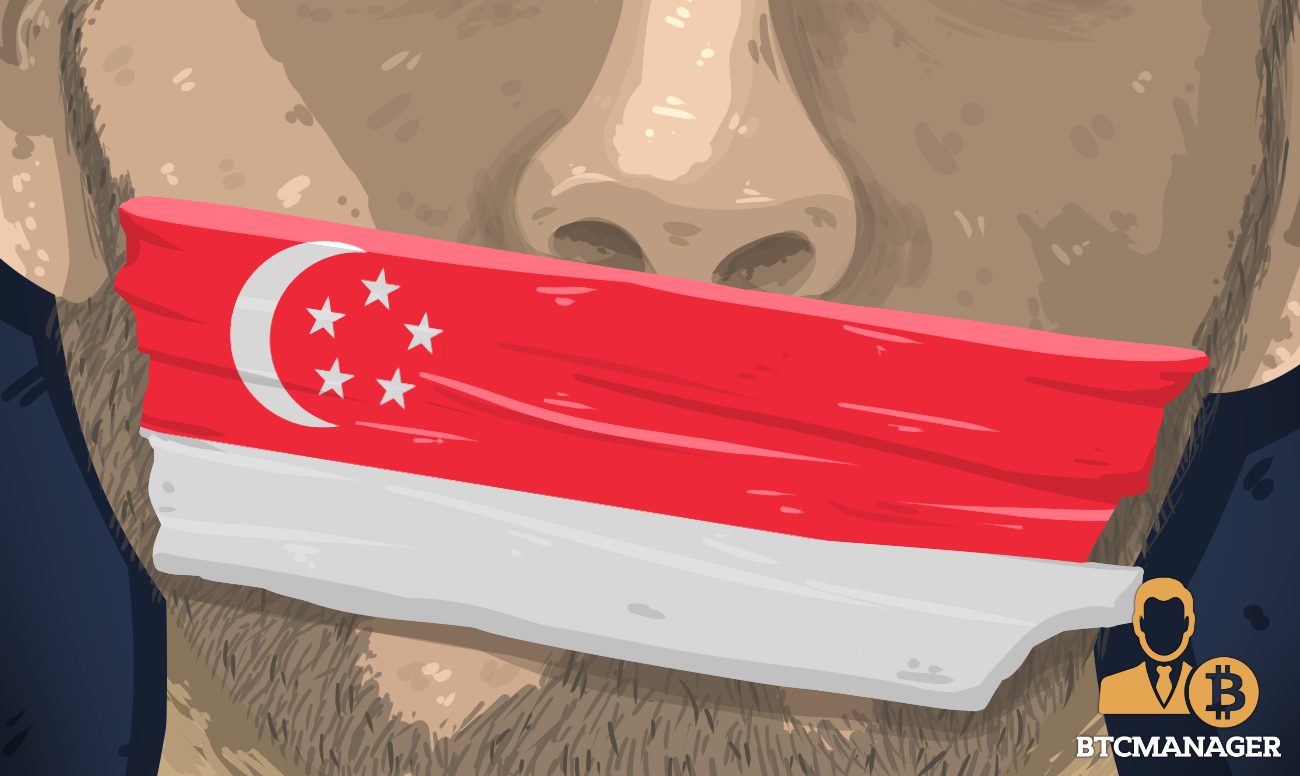
Singapore: New Internet Law Targets Free Speech More than Fake News

Singapore: new internet law targets free speech more than fake news

Singapore: New Internet Law Targets Free Speech More than Fake News

Singapore: new internet law targets free speech more than fake news

According to a post on TechCrunch, May 09, 2018, Singapore’s new law to fight fake news on the internet is likely to render the government unreasonable powers to control the content on online media, which could be a threat to free speech.

Not Alone, Not the First

Governments across multiple countries have continually tried imposing harsh laws to control the content that is circulated on the internet within their region. Whether in a minor or a major way, they affect the freedom of speech and instill fear in the minds of people.

In Singapore, a bill related to internet laws was drafted in April that raised concerns as its features would have given the government excessive control over the content shared on the internet. The bill has now been passed. TechCrunch states that the bill goes as far as giving individual ministers the power to point out corrections in the content that they personally find false.

Legal actions are supposed to be taken against those who post content that does not align with the law. Those found guilty could be fined as much as $37,000 or five years in prison. The fine can be up to $74,000 or ten years of imprisonment if the content is posted using fake accounts or bots.

The new law will not only curb the freedom of individuals but also online media houses that report real, unbiased news that is uninfluenced by any political party. Phil Robertson, Human Rights Watch deputy Asia director, took to Twitter to criticize the law saying that the leaders have crafted a law that will try to “impose the narrow version of the ‘truth’ on the wider world.”

In terms of freedom on the internet, Singapore stands at 151 out of 183 countries according to the WordPress Freedom Index. This is in itself an indication that online freedom suffers in Singapore already. Now, due to yet another political propaganda to spread only such content that sits in line with the interest of the ruling party, the internet of free speech is probably going to become a thing of the past for Singapore.

Internet Freedom is Shrinking

Singapore isn’t the first country to be imposing such laws. China, Iran, Syria, Saudi Arabia, Russia and many other countries also have strict regulatory laws for added censorship on the internet.

On April 17, 2019, BTCManager reported a similar case of the Russian government approving a bill that rendered the authorities an increased control over the internet.

For people, VPNs might be a good way to jump over a few restrictions for using certain websites and accessing banned webpages, but when personal ideas and free speech are at stake, they are surely not a way out. What’s more concerning is that with major countries like Singapore and Russia successfully implementing such laws, other nations are sure to be enticed to create similar policies for potential political benefits.

Like BTCMANAGER? Send us a tip!
Our bitcoin Address: 3AbQrAyRsdM5NX5BQh8qWYePEpGjCYLCy4

Published at Fri, 10 May 2019 09:00:23 +0000

Previous Article

A New Crypto ETF Has Just Been Filed With the U.S. SEC

Next Article

Global Blockchain Has A Big Future According To A Deloitte Survey

You might be interested in …

Nano-Diebstahl auf BitGrail: Klage gegen das Nano-Core-Team

BTC-ECHO Nano-Diebstahl auf BitGrail: Klage gegen das Nano-Core-Team In den Vereinigten Staaten wurde am District Court (entsprechend dem dt. Amtsgericht) Eastern District of New York eine Sammelklage durch Nano-Investoren (XRB, ehemals Raiblocks) eingereicht. Der Kläger, […]

Bitcoin Potentially the Most Lucrative Trading Investment Since Amazon

Comparing the dotcom booms, Amazon share price and performance to bitcoin draws some very interesting parallels, setting bitcoin as potentially the world’s most lucrative trading investment.


Emerging Tech market Capitalisation Then and Now

Gordon Scott at Investopedia writes that bitcoin is comparable to how Amazon was treated during the Dotcom boom.

Even by the start of 1997, everyone knew Amazon had a great idea, but no one could fully explain how much its shares should be worth.

It is that very problem that bitcoin now faces. Everyone realizes that it is a great idea, yet it is hard to fully grasp exactly how much it should be worth. bitcoin’s primary use as a monetary is well known, but the actual technology and its potential applications are still a great mystery to many.

Amazon faced the same problem as it took new approaches to distribution and supply chain management. Interestingly, Amazon initially started in the book sector and, while it dominates that market to this day, it has since evolved by several orders of magnitude to be the giant that it is today. Gordon further explains:

Investors were not able to fully and accurately quantify Amazon share value at first. Can you blame them if it was hard to analyze the idea of using supply-chain management software to create a virtual book warehouse and factory outlet mall synthesized into a single website?

If we take a look at Amazon’s market valuation back in its 1997-99 cycle there existed the same degree of price volatility that bitcoin has experienced, at least in it’s 2016-17 period which has seen a much steadier rise as a result of actual widespread investor speculation.

It is the cryptocurrency’s volatility that makes it such a potentially highly rewarding trading investment. The price swings, while hopefully not terminal (as they became after 2010), offer the trader many opportunities to take profit and reinvest. As long as bitcoin continues to follow the price trends set by Amazon, its traders can potentially continue to make a very lucrative trading investment with the coin.

As can be seen in the charts above, the dotcom boom parallels the current state of cryptocurrency. Furthermore, as other altcoins emerge to stand up to rival and compete with bitcoin, there exist the same issues of fluctuations in price.

These same issues were present in 1997, except that some companies went on to continue rising as others crashed with the bursting of the dotcom bubble.

bitcoin In Perspective

Sue Chang at Marketwatch posted this chart (below) which puts the current size and value of bitcoin into perspective:

Bitcoin - Putting the World's Money into Perspective

As illustrated above, Amazon currently stands at a value of $402 billion, with bitcoin already sitting at a $41 billion market capitalization. Given this, it’s not hard to get a sense of the size of the cryptocurrency’s current projected value and there is a great deal of market confidence in the coin to have reached this stage.

While many see bitcoin as being in a bubble, and there may yet be many more volatile dips to come, it is worth remembering that companies such as Amazon suffered also from this market volatility. Volatility, while not desirable in a currency, could just be a sign of bitcoin and its technology truly finding its feet among its fellow market giants.

Will bitcoin fulfill its promise as the most lucrative trading investment? Let us know in the comments.


Images courtesy of Investopedia, MarketWatch

The post Bitcoin Potentially the Most Lucrative Trading Investment Since Amazon appeared first on Bitcoinist.com.