May 4, 2026

Capitalizations Index – B ∞/21M

San Francisco’s Ban on Facial Recognition is a Victory for Personal Privacy Advocates

San francisco’s ban on facial recognition is a victory for personal privacy advocates

San Francisco’s Ban on Facial Recognition is a Victory for Personal Privacy Advocates

San francisco’s ban on facial recognition is a victory for personal privacy advocates

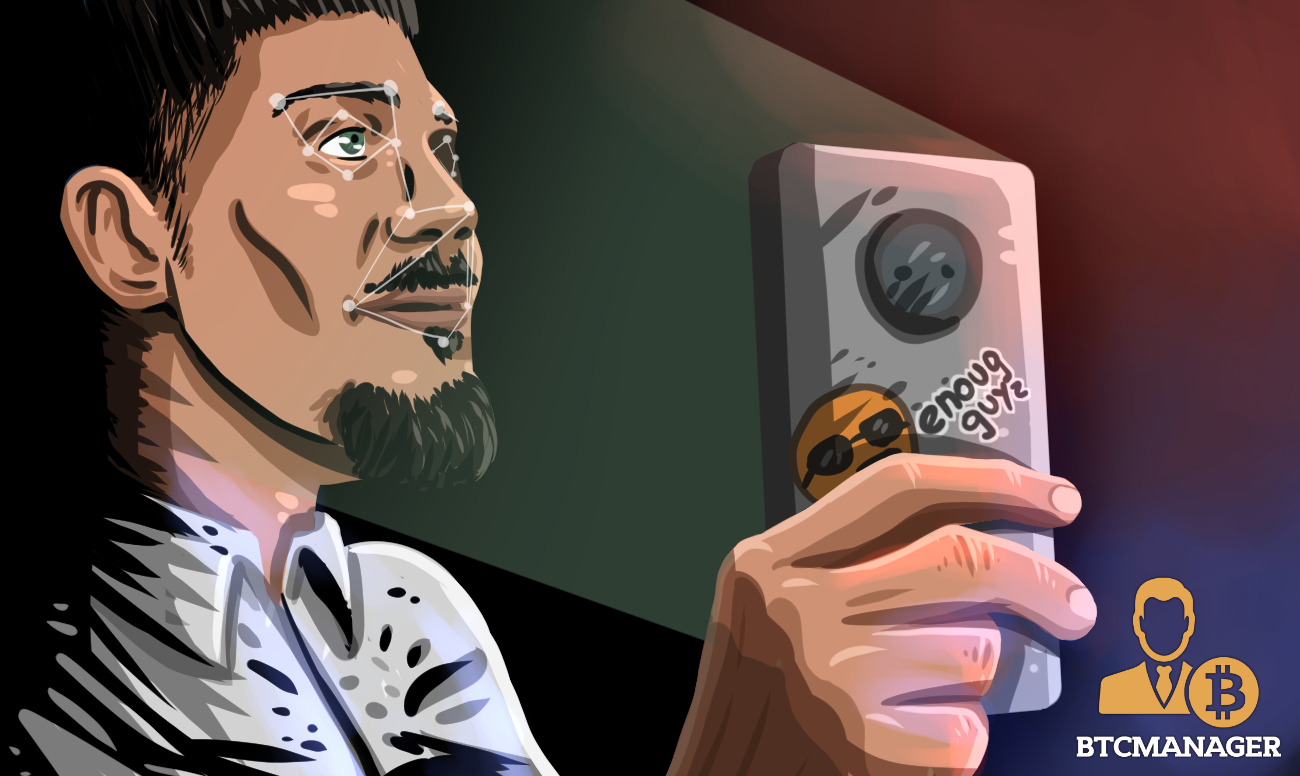
San Francisco has set the record as the first US state to ban the use of facial recognition technology. Per a report on Engadget, May 14, 2019, the state made the decision in order to protect residents from the government’s constant surveillance. With the pressure on regulators and government agencies on the cryptocurrency sector to remove its privacy feature, this might be a welcome development for the emerging market.

The Golden City Scraps Intrusive Mass Surveillance Program

On May 14, 2019, San Francisco’s Board of Supervisors voted in favor of a bill that prohibited government agencies including the police from using facial recognition technology. Supervisor Aaron Peskin first introduced The Stop Secret Surveillance Ordinance Bill, which other supervisors voted eight – one.

Although law enforcement agencies have used facial recognition technology to identify suspects, critics stated that the government was beginning to abuse its use. Aaron Peskin said that the ban would racial injustice and ensure that citizens can move around freely without the government monitoring their every step.

Furthermore, the supervisor opined:

“This is really about saying: ‘We can have security without being a security state. We can have good policing without being a police state.’ And part of that is building trust with the community based on good community information, not on Big Brother technology.”

Following the move by San Francisco, other states are also considering carrying out similar actions. Capitol Hill introduced a bill back in April that would prohibit users who use face recognition for commercial purposes from assembling and sharing data of consumers without their consent.

Also, Massachusetts would introduce a bill that would place a moratorium on face recognition and other biometric surveillance systems.

This recent development, however, does not sit well companies who sell facial recognition technology. Some other critics criticize San Francisco’s action, saying that it is impossible to have privacy in a public place.

Small Victory for Privacy Enthusiasts

Cryptocurrency and blockchain’s core emphasis on privacy has been a major threat to mainstream institutions and government bodies. Due to this particular feature, regulators, government bodies, and critics alike see the virtual currency sector as a viable tool for terrorists’ attack and money laundering.

The decision coming out of San Francisco, however, serves as a small victory for the privacy-centered digital currency companies willing to operate in the state.

In January 2019, Google Play asked Samourai Wallet to remove the following features – Stealth Mode, SIM Switch defense, and remote SMS Commands from their private bitcoin wallet before the company could perform an upgrade on the platform. To protect users, Samourai Wallet made the previous version available through a direct APK download on GitHub.

As reported by BTCManager in March 2019, the Chinese government was seeking to use blockchain technology to keep permanent records of its citizens. Also, the government national cryptocurrency, when adopted, would completely control the life of every Chinese citizen.

Like BTCMANAGER? Send us a tip!
Our bitcoin Address: 3AbQrAyRsdM5NX5BQh8qWYePEpGjCYLCy4

Published at Thu, 16 May 2019 14:00:30 +0000
Previous Article

Bitcoin Core 0.18.0 Released

Next Article

Bitcoin’s [BTC] appeal has made Microsoft switch from Ethereum to Bitcoin, says Coin Shares’ CSO

You might be interested in …

Samson Mow Introduces Liquid Networks at Blockchain Forum in Canada

Samson Mow Introduces Liquid Networks' at Blockchain Forum in Canada

Blockstream’s Samson Mow and Paycase’s Joseph Weinberg unveiled the Liquid network yesterday at the Blockchain Association of Canada’s Government Forum in Ottawa, as a step forward in the ongoing bitcoin scaling debate.

The Liquid network is a federated sidechain designed to provide new features and benefits to exchanges, users, and businesses by leveraging a sidechain which will process transactions more quickly and efficiently than the main bitcoin blockchain.

Sidechains like the Liquid network offer automated real-time audit, a secure open protocol, and unforgeable secure tokens, all of which can be used over the open internet.

Samson Mow, Chief Strategy Officer with Blockstream told bitcoin Magazine:

“There’s a preference from some people to scale on-chain with block size increases, but that’s a technical dead-end. Scaling off-chain with sidechains means leveraging proven technology that’s already available, and will be far superior to static blocksize increases for trivial on-chain scaling gains.”

Mow explained:

“Sidechains allow for new innovations in security models and features, plus the added benefit of faster and more cost efficient transactions – if more businesses were utilizing sidechains for use cases involving recurring transactions, they would take some pressure off the main bitcoin blockchain.”

He noted that there are strong indications that cryptographic federations and sidechains in general are a good solution to better distribute networks that currently hold the potential for centralized systemic risk.

“In the case of Liquid, it will also improve bitcoin interchange liquidity, and accelerate trading and security for a large percent of today’s global and currency-paired BTC trading,” added Mow.

Mow explained that Liquid networks or “Liquid” represents a point-to-point sidechain that provides near-instant, secure transfer of assets (bitcoin initially), all while user and exchange environments remain separate from the movement of the underlying value.

Paycase CEO Joseph Weinberg told the audience that they have been working with users, enterprises, financial institutions and others on solutions that leverage strong federations.

Weinberg told bitcoin Magazine:

“Sidechains become even more interesting when you have multiple sidechains from an interoperability perspective. As you tokenize the world, you see this marketplace of all assets being liquefied and then rapidly traversed, similar to how currents move liquid water around the world.

“It’s this frictionless flow and interoperability that our economy here in Canada and our geo-political and economic partners around the world are really well positioned to adopt and champion into the mainstream.”

Samson Mow Introduces Liquid Networks' at Blockchain Forum in Canada

Strong Federations and Sidechains

In order to function, a Liquid network requires explicit trust of a group of parties, governance guarantees whereby you have rule adherence and a network of many participants responsible for network consensus.

While accelerating trading in bitcoin, this system will build an infrastructure that leads to a “trustless” exchange for users.

Best use cases include cryptographic assets, central bank currency issuance, land titles/registries, credit issuance and settlement between large institutions.

Mow noted that what Lightning Networks can do for smaller transactions, the Liquid Network can do for larger transactions between companies and exchanges.

Currently, Liquid Beta participants include Bitso, Bitfinex, Bitt, BTCC, Coins.ph, Streami, Paycase, The Rock Trading, Unocoin and Zaif. Discussions continue with other partners.

Bank of Canada Is Interested in Liquid Networks

While in Ottawa, Mow and Weinberg met with representatives from the central Bank of Canada. Weinberg told us:

“We met with the Bank of Canada and had some great discussions with them about blockchain technology, and use cases and systems like Paycase’s cross-border transaction platform Traverse and Blockstream’s Elements platform.

“There is a sense that the media misrepresented the Bank’s recent comments on the Jasper experiment, which was actually a well-balanced and accurate assessment of the technologies they’ve trialed to date. I think they’re still very much interested in evaluating blockchain technology.”

Weinberg added: “We are also working on other sidechain initiatives that leverage strong federations and confidential assets via the elements project both in Canada and globally that require multi-participant governance guarantees and explicit trust.”

He added that they are excited going forward, not just about Liquid networks but the whole interoperation and weaving of different technology stacks in the ecosystem to enable new use cases and leverage all the great layers of the blockchain stack that are being built around the world.

The post Samson Mow Introduces Liquid Networks at Blockchain Forum in Canada appeared first on Bitcoin Magazine.