May 31, 2026

Capitalizations Index – B ∞/21M

Ripple Exec Denies Bribing Coinbase; Why You Should/Shouldn’t Believe It

Ripple exec denies bribing coinbase; why you should/shouldn’t believe it

Ripple Exec Denies Bribing Coinbase; Why You Should/Shouldn’t Believe It

Ripple exec denies bribing coinbase; why you should/shouldn’t believe it

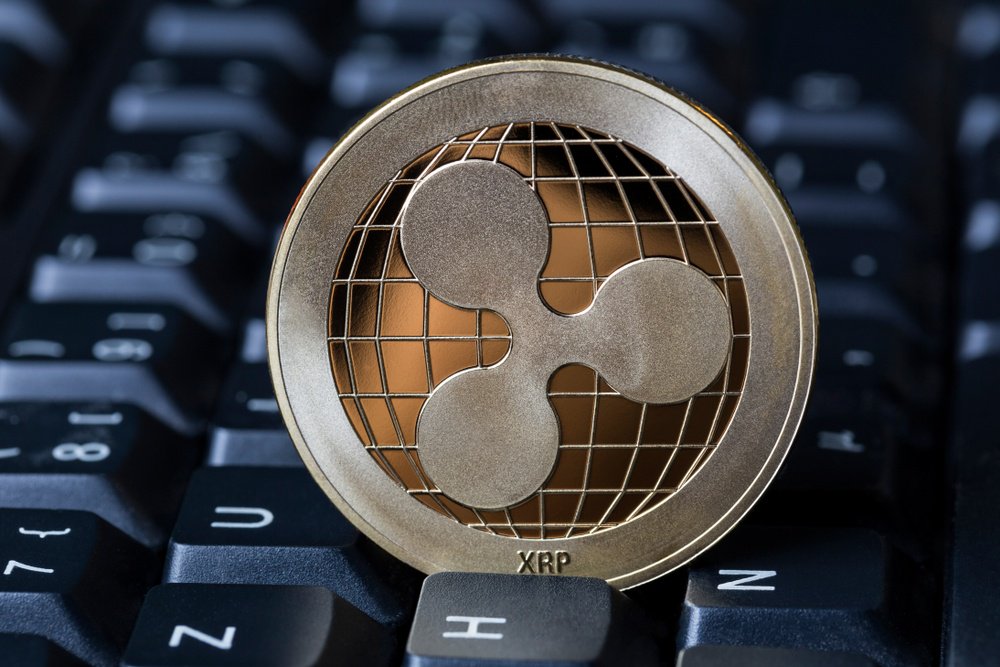
Miguel Vias, the head of XRP markets at Ripple, denied allegations of paying off Coinbase to list XRP on their cryptocurrency exchange.

The response followed a series of bribery accusations shot towards Coinbase after its sudden announcement of adding XRP trading pairs to its platform on Feb 26. In contrast, the US exchange had earlier remained cautious of the said listing. As many speculate, Coinbase’s careful approach was due to XRP’s controversial history with Ripple Labs, a San Francisco startup that owns 60% of XRP – a stock worth billions of dollars.

What also concerned the company was a pending $167.7 million class-action lawsuit against Ripple which would determine whether or not XRP is a security asset.

However, all the genuine concerns Coinbase had were washed aside almost too suddenly, at least according to Allistair Milne.

The CIO of Altana Digital Currency Fund reached Coinbase’s communications’ director, Elliott Suthers via an email with a set of interrogative questions. He asked Suthers whether or not Coinbase sought the permission of either the Securities and Exchange Commission (SEC) or Commodity and Futures Trading Commission (CFTC) before offering XRP to the public. Milne also asked whether there was a private deal between Coinbase and Ripple for listing XRP pairs.

According to a screenshot published February 26, Suthers told Milne that Coinbase was happy to discuss his questions “off the record.” Milne took the response as a piece of evidence proving that Ripple had bribed Coinbase.

“You god damn right they did,” Milne hashtagged.

Vias: XRP Not Our Token

Miguel Vias contradicted Milne’s statement in a February 28 tweet. He clarified that Ripple didn’t pay Coinbase anything to make the XRP listing happen. Vias also claimed that XRP was not their token.

The “not our token” theory signified that Ripple, as a company, didn’t issue XRP tokens.

Ripple had faced a lot of flack for holding a majority of XRP stakes. In response, the company decided to lock their 55 billion XRP tokens away from themselves – in a cryptographic escrow account. The time-based smart contracts would release 1 billion XRP on the 1st of every month. At the end of each month, Ripple would place the remaining unused tokens into a new escrow account set to expire in another 55 months from creation.

Still, Ripple had a say when it came to distributing XRP tokens.

On October 13, 2017, Ripple launched a RippleNet accelerator program to increase the “XRP utility.” The company allocated a $300 million XRP fund from its escrow holdings and declared that it would reward those financial institutions with XRP that test RippleNet payment framework. As a result, Ripple was able to attract partnerships from mainstream financial firms.

“This rebate — available in XRP or USD — is designed to accelerate adoption and usage of Ripple solutions.” the post read.

Incentivization, or free distributions, became one of the significant tools for Ripple to boost XRP adoption. And a Bloomberg report published in April 2018 revealed the same.

The $100 Million Incentive?

Bloomberg reported that Ripple had suggested paying financial incentives to crypto exchanges Gemini and Coinbase for XRP listing. In Coinbase’s case, Ripple had allegedly offered to lend $100 million in XRP to start letting its users trade the token. The firm had reportedly made a similar offer to Gemini – albeit amounting to $1 million.

Milne reiterated his accusation with the Bloomberg article. He asked Vias whether Ripple and Coinbase exchanged any assets in over the past 12 months or more. Milne also found it hard to believe that Coinbase, a company embroiled in multi-lawsuit accusations of insider trading surrounding its Bitcoin Cash listing, didn’t take a single penny but yet listed XRP.

The Coinbase Nostalgia

On December 19, 2017, Coinbase had made a surprise announcement that it was adding Bitcoin Cash trading option to its platform. Earlier, the company had refused to list the said crypto asset, so the u-turn took the trading community by surprise. Indeed, the price of Bitcoin Cash surged on the news within minutes, reaching as high as $1,000. In response, Coinbase canceled and all the further BCH trades citing liquidity issues.

According to Jeffery Berk, the primary plaintiff in the lawsuit filed May 2018, insiders were able to flood GDAX – a crypto trading platform owned by Coinbase – with BCH orders soon after the news went public. Coinbase, based on an internal investigation’s outcome, claimed that no such Bitcoin Cash insider trading took place.

Why would a regulated exchange risk its neck to list unproven securities? The jury is still out.

Published at Thu, 14 Mar 2019 07:18:20 +0000
Previous Article

Monero Hard Fork: Boron Butterfly fliegt ASICs davon

Next Article

Bitcoin (BTC) Price Could Explode Soon: $4,000 Holds The Key

You might be interested in …

Privatix, the world’s first blockchain-based bandwidth marketplace, reaches ICO soft cap.

Privatix, the world’s first decentralized and anonymous peer-to-peer broadband data marketplace, has successfully hit its token sale soft cap.

[Note: This is a press release.]


8,000,000 PRIX tokens was sold to the public, enabling the blockchain-based startup to realize its 3,350 ETH soft cap and signaling community approval and interest in the further development of the platform. Bonuses of 40% were distributed to every buyer in the first 48 hours after the event went live.

Privatix is an anonymous, P2P broadband internet connection marketplace aimed at decentralizing the internet. Presently, more than 3.8 billion people are connected to the internet. This number is expected to increase steadily, growing to 5 billion by 2020. However, with increased user base comes increased content creation, consumption, and censorship.

Internet censorship is the total control or suppression of users experience on the internet. It allows Internet Service Providers (ISP) to dictate where users can go and what they can see, hear, do, or even say. This power also provides the ISP with access to the user’s private information and history. Such access violates users’ rights and enables anyone from cybercriminals to third-party companies and organizations to piggyback on users’ data for their own gain.

[youtube https://www.youtube.com/watch?v=kH8tDnMoaYk]

Virtual Private Networks (VPN) have been touted as the best possible solution for internet censorship and privacy concerns. The service allows users to connect directly to the internet through a secured server that encrypts their data, making it difficult to censor, hack, or intercept traffic. However, this service often comes at an exorbitant price tag, and most are still susceptible to ISP control.

By reducing costs and margins on the VPN consumer market, eliminating middlemen, and enabling users to directly share their broadband connection on a blockchain market, Privatix is set to decentralize the internet and let users monetize their spare internet connection. Users from anywhere in the world can sell their unused internet channels for cryptocurrency or purchase such channels for business and personal purposes.

The network also provides a platform for developers to build decentralized and distributed apps and services such as CDN, business intelligence proxy tools, and anti-censorship SDKs in order to reinforce net neutrality for all.

All transactions between users on the platform are executed by the network’s ERC20 compatible token, PRIX. This token is central to the network’s ecosystem, facilitating the prompt and instantaneous settlement of services. It can be freely exchanged to other currencies.

With 8,000,000 of its fixed 10,000,000 tokens sold already, the Privatix ICO is on course to end its campaign on a high note. Unlike other tokens, PRIX tokens cannot be mined, and after the ICO, no more new tokens will be issued. The limited amount of tokens, coupled with the increasing demands for privacy on the internet, will fuel the growth of the cryptocurrency and market value.

Privatix has also released it development road map to the public, highlighting a couple of key innovations planned for future release. This includes:

● Privatix.Agent – a cross-platform application to buy and sell internet channels, which will be released in Q4 2017.

● Ability to buy and sell Proxy/Socks using the APIs for users in 2018, after the launch of its completely decentralized VPN service.

● Privatix.FAAS (Freedom-as-a-Service) and Privatix.Monetize are SDK available for mobile platform developers and slated to be launched in Q1 2019

About the company

Privatix develops distributed broadband sharing solution based on a P2P VPN platform. The company possesses more than 10 years of experience in VPN development and services. Among products created by Privatix are: the free VPN service, Privatix.com; VPN services for professionals and organizations– 5vpn.net; and Temp-Mail.org, a temporary mail service with integrated spam filters.

Privatix is the source of this content. Virtual currency is not legal tender, is not backed by the government, and accounts and value balances are not subject to consumer protections. This press release is for informational purposes only. The information does not constitute investment advice or an offer to invest.


Images courtesy of Privatix.

The post Privatix, the world’s first blockchain-based bandwidth marketplace, reaches ICO soft cap. appeared first on Bitcoinist.com.

Olxa crowdsale announced

OLXA crowdsale announced

OLXA crowdsale announced DISCLAIMER & RISK WARNING This offer is based on information provided solely by the offeror and other publicly available information. The token sale or exchange event is entirely unrelated to TokenMarket and […]

AirSwap Instant 2.0 – Fluidity –

AirSwap Instant 2.0 – Fluidity – With a year of Instant behind us, we’re excited to release a completely new trading experience into public beta. We’ve taken your feedback for a more immersive, informative, and […]