June 8, 2026

Capitalizations Index – B ∞/21M

Ripple Announces $100 Million Blockchain Gaming Fund with Forte

Ripple announces $100 million blockchain gaming fund with forte

Ripple Announces $100 Million Blockchain Gaming Fund with Forte

Ripple announces $100 million blockchain gaming fund with forte

The company behind the XRP digital currency has announced plans to integrate blockchain technology with video gaming. To facilitate development on the project Ripple will be working with Forte, a startup founded this year and backed by Coinbase Ventures, Battery Ventures, and other prominent Silicon Valley investors.

Amongst other things the goal of the project will be to bring greater efficiency to in-game marketplaces using blockchain technology. The current methods used by players to trade in-game assets are often legally questionable and sales take place using third-party services such as eBay.

Ripple to Move into the Gaming Industry

Broadening their horizons beyond strictly the financial sphere, digital currency company Ripple has announced intentions to move into the video gaming industry. The firm behind the divisive XRP currency has announced that it will be working with San Francisco-based Forte to pursue the development of marketplaces to allow for the sale of scarce digital items found in many games.

As part of the effort to move into gaming, Ripple has announced a $100 million fund. This will be distributed to game developers of titles with more than 50,000 active users. According to a report in Fortune, a senior executive at Ripple’s Xpring development department, Ethan Beard, stated that these payments would be made in XRP and could be millions of dollars each.

Beard went on to comment on the integration of blockchain technology with video games:

“Video games have long been quick to adopt new technology, from console to the PC to mobile. Now, blockchain will help game designers who’ve had a hard time facilitating an economy that can serve all types of players.”

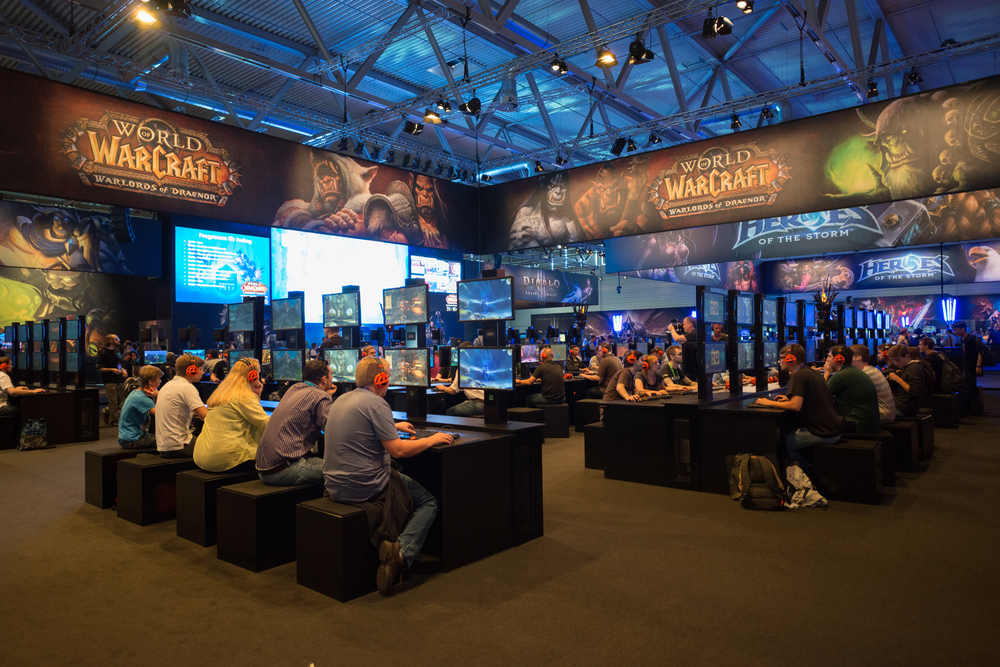
Games like World of Warcraft lack built-in marketplaces to trade rare items.

The premise of a marketplace for trading digital items within a game has already been tried a few times previously but with little lasting success. Perhaps most famous was the example of CryptoKitties, a collectable game built on the Ethereum network in which players had to collect digital cats.

The game proved highly popular initially and some of the rarest felines traded for thousands of dollars. However, it also served to highlight the shortcomings of the Ethereum network itself. At the height of CryptoKitties’s popularity, the number of transactions associated with the game contributed heavily to a huge transaction backlog at the end of 2017.

Former Facebook executive and current Chief Platform Executive of Forte, Brett Seyer, had the following to say about taking the idea demonstrated by CryptoKitties steps further:

“CryptoKitties introduced what a blockchain could do. It showed the benefit of having a public record of transactions people could trust, and how an in-game economy is well suited to blockchain.”

A similar effort was made by Major League Baseball. The professional sporting association created MLB Crypto last year. However, like CryptoKitties, it has remained niche owing to technical barriers to entry associated with running Ethereum dApps.

Examples such a CryptoKitties and MLB crypto provide reasonable proof-of-concept but being entirely one dimensional in gameplay, they lack the kind of widespread appeal of more popular existing titles. We can infer from the fact that Ripple has mentioned would-be recipients of shares of the $100 million developer fund need to have active user bases that it will be targeting established franchises for blockchain integration, rather than attempting to build games from the ground up. This could see another widespread use case for the much-hyped technology.


Related Reading: Can Ethereum’s ERC721 Standard Reshape the Blockchain Gaming Industry?

Featured Images from Shutterstock.

Published at Wed, 13 Mar 2019 02:08:51 +0000

Previous Article

Tron [TRX] Weekly Report: Foundation to initiate USDT launch in early second quarter

Next Article

Binance Set The Stage With Launchpad, Other Major Exchanges Quickly Follow

You might be interested in …

Bitkan Experiment Shows Japan is No Bitcoin Mecca on the Ground

Bitkan has said the consumer bitcoin scene in Japan is still “difficult to use” after staff conducted an investigation in Tokyo.


Bitkan: Japan bitcoin Payments Still ‘Difficult’

The decentralized trading platform, which is headquartered in China but looking to expand into the Japanese market, also released a documentary film about using bitcoin in the country in 2017.

Last month, Bitkan organized a Tokyo Bitcoin meetup which saw some of the largest ever audiences debate the local scene as well as current technological issues facing the bitcoin ecosystem. Roger Ver and Jihan Wu were among the attendees.

“We used Coinmap to search advertisements of businesses accepting bitcoin,” operations director Sandy Liang told Bitcoinist in emailed comments about the research.

“These places had a ‘bitcoin accepted’ sticker, and where it was possible to use it to pay, staff appeared familiar with the payment process.”

bitcoin’s Mixed Fortunes Evident In Payment Landscape

Japan hit the headlines in February following the temporary moratorium on Chinese bitcoin trading, becoming the world’s largest bitcoin exchange market.

As reports heralded a total of 4500 outlets accepting the virtual currency, reactions from users on the ground struck a decidedly different note, stating that in reality bitcoin payments were almost unnoticeable.

Liang shared this view following Bitkan marketing director Ruby Chen’s attempt to live off Bitcoin for 72 hours in Tokyo but remained positive about the future.

“We have to say that it’s not very convenient to use bitcoin in Tokyo for covering all expenses, compared with fiat. For now, it’s really hard to live only on bitcoin,” she said.

“However, it’s getting easier and easier. The growing number of bitcoin ATMs, for instance, allows the option of converting BTC to yen as an alternative.”

She added that the depth of incentives for consumers to pay using the virtual currency was also lacking. Discounts and other marketing schemes were not in evidence at all, making the idea of transitioning to a notionally more convenient, empowering payment method appear daunting.

Big Business Paving Way For Change

Meanwhile, the country’s cryptocurrency exchanges are busy laying the foundations for what could be a seismic shift in attitudes in the coming years.

BitFlyer and Coincheck, both major market players in Japan, have recently announced partnerships with big business specifically with the aim of expanding the number of merchants with whom consumers may pay using bitcoin.

The former is working with Japanese economics giant Bic Camera to roll out bitcoin payments across its empire, with a trial initially limited to two flagship stores in Tokyo. Customers are able to pay up to 10,000 yen ($900) in bitcoin.

Coincheck meanwhile is seeking to expand the merchant base even further – by up to 260,000 – through allowing merchants using PoS app AirRegi to also accept bitcoin.

Such an expansion would place bitcoin on par with extant fiat payment app acceptance numbers, the most popular being Suica and Edy with up to 470,000 locations.

[Note: This is a sponsored article]

What do you think about Japan’s bitcoin journey? Let us know in the comments below!


Images courtesy of Shutterstock. BitKan

The post Bitkan Experiment Shows Japan is No Bitcoin Mecca on the Ground appeared first on Bitcoinist.com.