We built the Blockchain Wallet because we’re driven by a relentless passion for making crypto easy to use. We want everyone to be able to use it, not just invest in it.
We believe that owning and controlling your own private key is the single most important aspect of using crypto. Without a private key, you aren’t using crypto – you’re just speculating and you’re missing the defining part of crypto: user controlled, sovereign money.
It was enabling that exact need that underpinned the development of the Blockchain Wallet six years ago. The mission? Make it easy for every user to have their own private key, to get users away from storing funds at exchanges and “bitcoin banks”, and to enable everyone to be their own bank.
Fast forward six years and we’ve achieved a few things that we’re proud of:
Building the first cross-platform, non-custodial, and cross-chain wallet
Signing up 30 million wallets in 140 countries globally
Powering over $200 billion in consumer transaction volume and over 80 million consumer crypto transactions in the last two years alone
Championing the cause of financial sovereignty and user-control with regulators around the world. (We’ve spent thousands of hours and millions on education and outreach.)
Helping our users store millions of BTC, BCH & ETH coins and generate over a quarter of bitcoin network traffic alone
Most importantly, it’s been a honor and privilege to be the first place tens of millions of people turn in order to actually use crypto and hold their own keys.
But there’s a lot still to do.
At the end of the last bull run, we did a serious self-assessment and asked ourselves, what do users need that we aren’t delivering today? We identified four common requests and frustrations:
Better, faster ways for new users to get their first crypto and make their first transaction
More storage types, like hardware, as users’ balances increased
More assets as users want to store and use an increasingly diverse asset set
Better, more reliable sources of liquidity as trading and investing across assets continues to increase
Satisfying these demands meant building a huge extension of our platform, at scale. We’ve had our heads down much of this year doing exactly that and starting today we’re excited to begin delivering new solutions to you, beginning with two new capabilities.
First, we’re launching Swap by Blockchain: a next generation trading product with best-in-class liquidity and execution, powered by our new machine trading software platform that ensures best execution across assets. Blockchain Wallet users will now have access to exchange-like prices without giving up control of their keys or their crypto. And trade limits will increase from hundreds to thousands of dollars of crypto per trade.
While the system currently has deep liquidity drawn from a variety of sources, we plan to add more liquidity sources over time, including decentralized exchange protocols. We’ve rebuilt our risk and KYC systems, so that you can onboard with ease, in minutes. Swap ensures our users stay liquid and can trade at the best prices in the market, regardless of overall market volatility and challenges. We’ve started rolling Swap out today and everyone will have access over the next two weeks.
Secondly, we’re launching Lockbox: a hardware vault in your pocket, built in partnership with hardware leader Ledger. Lockbox is simple to use and is even more secure thanks to a locked endpoint that prevents phishing and spoofing attacks. It’s hardware made easy, with a setup that takes just a few moments thanks to our custom hardware-software integration.
With Lockbox you’re able to check your balance and receive transactions, on mobile and web, without the inconvenience of having to plug your device in every time. In an industry first, you’ll also be able to trade directly from your Lockbox while still maintaining your keys. In conjunction with Lockbox, we’re also excited to let current Ledger device owners seamlessly pair with the Blockchain Wallet and trade directly from the Ledger device they already own.
And we have more coming this year, including additional assets and new products within the Blockchain Wallet that will bring you new, faster, and better ways to get started in crypto.
We’re here to build a new financial system and the Blockchain Wallet is your passport to that new world. Store crypto, trade crypto, transact with crypto and most importantly truly own and control your crypto.
We’re dedicated to building the functionality you want, without compromising your control of your key. Your crypto is yours, and it should stay that way.
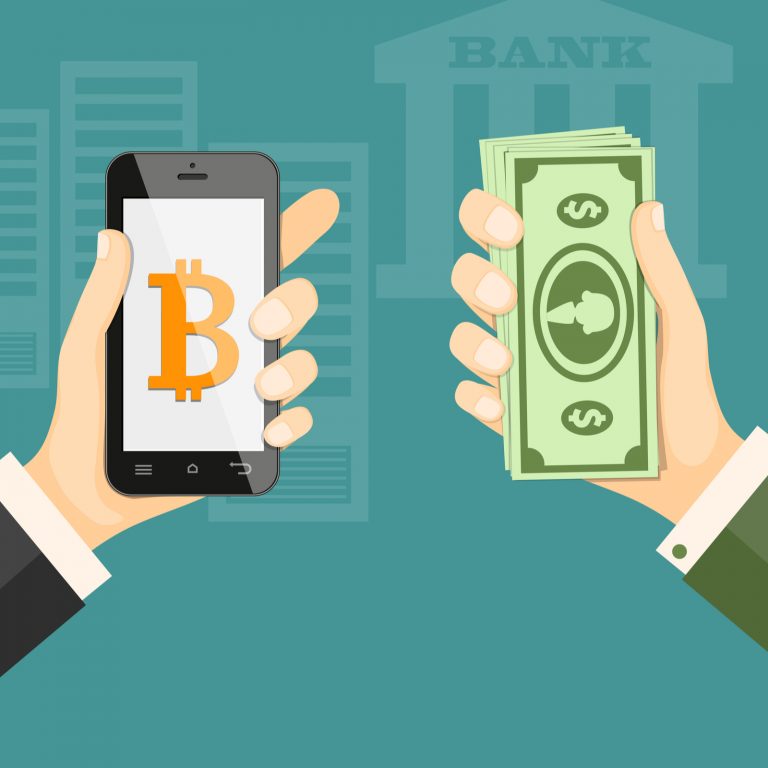
In recent news regarding cryptocurrency exchanges, a member of the British Parliament has quit his role with a cryptocurrency exchange just four days after joining the company, analysts have estimated the daily volume of the over-the-counter (OTC) cryptocurrency markets to be $250 million, and Poloniex’s new terms of use have banned residents of Germany, China, Pakistan, Vietnam, and three U.S. states from accessing its platform.
Also Read:
UK MP Joins Exchange as Adviser, Quits Within a Week
 Stephen Hammond, the former vice-chairman of the Conservative Party in the United Kingdom and current member of the Treasury Committee, has quit his job with cryptocurrency exchange Ironx after just .
Hammond has purportedly been hired to “advise on government relations” – a role that would see him remunerated with 50,000 IRX tokens (valued at approximately $0.42 each) as compensation for his “two or three” days of work per “quarter.”
Regarding his decision to leave the company so soon after joining it, Hammond that he “probably should have given it more thought.” After initially accepting that he would recuse himself of “inquiries into the crypto world,” Hammond claims to have surmised “that crypto is increasingly going to be a major part of the financial world and therefore it may well affect a number of Treasury Select Committee inquiries, and potentially, therefore, that might cause a greater conflict than I had first hoped it might. And therefore I decided, to avoid any conflict of interest and to avoid any embarrassment, that I should stand down from the advisory board.”
Industry Insiders Discuss OTC Markets
The 2018 bear market resulting in thin order books across major exchanges, many traders look to exchange significant size are believed to be trading via the over-the-counter markets.
 “The big deals have to go OTC. A lot of the exchanges limit the order size, so you have to break up your orders, and that’s just fatal,” Monica Summerville, director of fintech research at Tabb Group.
Lucas Nuzzi, director of technology at Digital Asset Research, agrees, arguing that “for a lot of institutional investors, OTC is really the only way they can trade the most liquid assets.” Nuzzi indicated that Digital Asset Research estimates the daily volume on the OTC markets to currently comprise roughly $250M worth of trade.
Frank Wagner, the co-founder of Invao, believes that a lack of sophistication in the means available for purchasing large quantities of cryptocurrency may be deterring institutional investors from entering the virtual currency markets. “Currently, some parts of the cryptocurrency industry are organizing six-figure trades over Skype and Telegram – very similar to how old-school Wall Street brokers and traders would call clients to bring buyers and sellers together. Clearly, this can’t be the most secure and effective way to execute these trades and may be a reason that many institutional investors are deterred from getting involved,” Wagner stated.
New Poloniex Terms of Use Block Citizens of Several Jurisdictions
 Poloniex recently revised its , barring traders from several jurisdictions from accessing the exchange. The new terms of use took effect from the Oct. 18 for new customers and will come into effect one month later for existing accounts.
The update states that Poloniex will no longer offer services to “Persons who have their registered office or place of residence” in China, Germany, Pakistan, Vietnam, the U.S. states of New Hampshire, New York or Washington, or “any other Restricted Territories” – which are defined as “Cuba, Iran, North Korea, Sudan, Syria, or any other country to which the United States, the United Kingdom or the European Union embargoes goods or imposes similar sanctions.”
What do you make of the estimate that OTC trade produces $250M in volume daily? Share your thoughts in the comments section below!
Images courtesy of Shutterstock, Wikipedia
At bitcoin.com there’s a bunch of free helpful services. For instance, have you seen our page? You can even lookup the exchange rate for a transaction in the past. Or calculate the value of your current holdings. Or create a paper wallet. And much more.
The post appeared first on .