June 24, 2026

Capitalizations Index – B ∞/21M

Monero Successfully Upgrades Its Protocol

Monero successfully upgrades its protocol

Monero Successfully Upgrades Its Protocol

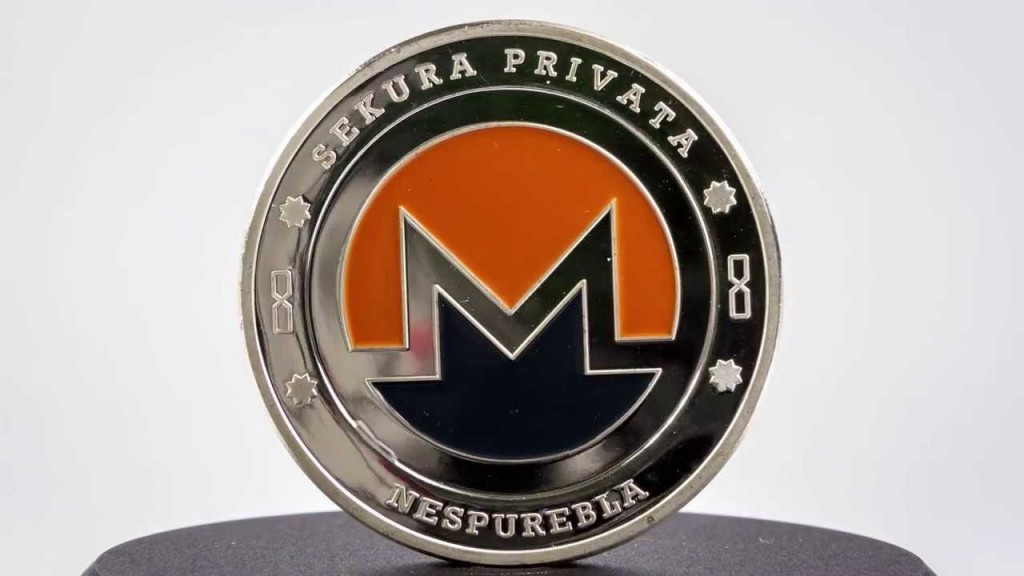
Monero (XMR), a privacy-focused cryptocurrency launched in 2014, announced that it has successfully performed a protocol upgrade on March 9, 2019. 


Hard Fork Aims to Improve Monero’s Key Features

Monero (XMR) strives to differentiate itself from other cryptocurrencies by focusing on privacy and security. With the aim of enhancing these features, the Monero team has completed a network upgrade — involving about a million updates.

Specifically, Monero underwent a hard fork at block 1788000 to improve its privacy, security, and ASIC resistance by introducing four key changes to the network. Monero specified these changes as follows:

  • First, some changes to the dynamic block size algorithm to fix the big bang attack.
  • Second, a third PoW tweak (CryptoNight-R) to curb the ASICs currently present on the network and further preserve ASIC resistance. As a result, miners will have to update their miners (i.e., mining software) as well.
  • Third, a dummy encrypted payment ID is now added to each transaction to improve transaction homogeneity.
  • Fourth, the development team simplified amount commitments by shrinking the size of amount encodings and using deterministic masks. These changes were deemed safe to apply by the Monero ResearchLab. Additionally, the changes essentially entail the transaction format being upgraded to a v2 format.”

Upon completion of the hard fork, Monero informed its users that, for the next 24-48 hours, they should expect slower block times.
Monero

Monero Focus Protecting on User Privacy

Monero’s elaborate built-in privacy protections make it ideal for users wishing to perform payments anonymously. Moreover, Monero claims that its transactions are untraceable. According to Monero website:

Sending and receiving addresses as well as transacted amounts are obfuscated by default. Transactions on the Monero blockchain cannot be linked to a particular user or real-world identity.

For instance, buyers of cannabis might prefer paying in Monero, given that cannabis is legal in Canada, but illegal in most jurisdictions outside Canada. Many see Monero as the most suitable currency for cannabis purchases in Canada.

How do you think the implementation of the hard fork will affect Monero’s adoption rate? Don’t hesitate to let us know in the comments below! 


Images courtesy of Twitter/@Monero, Shutterstock.

Published at Sun, 10 Mar 2019 23:00:20 +0000

Previous Article

BITCOIN – TIMING THE NEXT BULL RUN TO $100,000 – CryptoManiac101

Next Article

Bitcoin [BTC]: Mike Novogratz claims crypto is progressing; cites Stanford and Harvard as examples

You might be interested in …

Crypto Music Festivals Are Setting a Precedent for Future Gatherings

Bitcoinist.com Crypto Music Festivals Are Setting a Precedent for Future Gatherings Last month, Bitcoinist reported on Our Music Festival (OMF), a cryptocurrency music festival held in Berkeley at the end of October. OMF’s crypto environment sets […]

Yes, stablecoins can secure official audits from major firms

Yes, Stablecoins Can Secure Official Audits from Major Firms

Yes, Stablecoins Can Secure Official Audits from Major Firms “We have nothing to hide,” says Tory Reiss, VP of corporate development at TrustToken. Like the market’s most popular stablecoin, Tether, TrustToken’s TrueUSD is fiat-collateralized. Under this model, […]

Hacker Allegedly Siphons $31 Million Out of Tether, Driving Further Speculations About the Cryptocurrency

Hacker Allegedly Siphons $31 Million Out of Tether, Driving Further Speculations About the Cryptocurrency

Tether, a cryptocurrency pegged 1-to-1 to the U.S. dollar, was allegedly hacked today to the tune of $31 million.

Tether functions to convert U.S. dollars to a type of cryptocurrency. The project’s token (USDT) is pegged to the dollar and is used in exchange trading. The idea behind Tether is that instead of having to sell your bitcoin or other token for a fiat currency, you can convert it to USDT, and either hold it in USDT or else transfer your USDT to another exchange and use it to purchase tokens there.

As for the exchanges, USDT allows them to trade in something akin to dollars, without requiring them to have a bank account.

Tether operates on the “Omni Layer Protocol,” which itself operates on top of the bitcoin network, and uses bitcoin addresses. According to a blog post on the project’s website, $31 million worth of USDT was sent to an unauthorized bitcoin address on November 19, 2017.

In the blog post, Tether also noted it released a new version of the Omni Core software used by exchanges and wallets to support USDT transactions, thus implementing a temporary hard fork to the Omni Layer. As a result, the affected tokens are frozen in place, making them essentially worthless to the hacker.

“We strongly urge all Tether integrators to install this software immediately to prevent the coins from entering the ecosystem,” Tether wrote, adding that “any tokens from the attacker’s addresses will not be redeemed.”

Some exchanges, like Kraken, have stopped trading USDT temporarily while they upgrade to the newer software.

The heist was made in three separate USDT transfers out of Tether’s core Treasury wallet in the amounts of 23,000,000; 7,900,000; and 500,000 USDT. It is unclear why the hacker did not move all of the money out at once.

In addition to the other exchanges it trades on, USDT is widely traded on Bitfinex, an exchange that lost 119,756 BTC (worth $72 million at the time) in a hack that took place a year and a half ago.

News of the Tether attack comes at a time when some — notably the blogger “Bitfinex’ed” — are questioning whether USDTs are being issued without backing of actual U.S. dollars. Similarly, there has been growing speculation that Tether is being used in possible market manipulation to drive up the price of bitcoin.

The current market cap value of USDT is around $673 million. If that money is backed by real reserves, as Tether claims, the project would need to have at least that much in its bank account in Taiwan.

Tether publishes a bank account balance on its website’s Transparency page and claims the money is redeemable for U.S. dollars at any time directly through the Tether platform.

The project’s website has been up and down sporadically, since the hack. An archive of the site is available here.

The post Hacker Allegedly Siphons $31 Million Out of Tether, Driving Further Speculations About the Cryptocurrency appeared first on Bitcoin Magazine.