What Are bitcoin Ordinals?
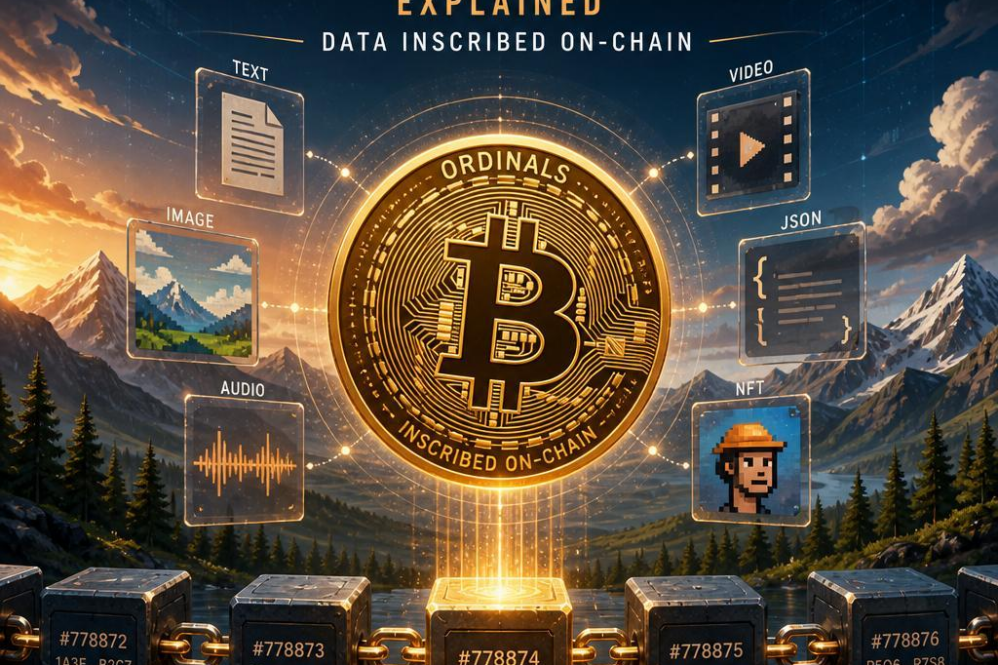
bitcoin ordinals are a method for inscribing data, including NFT-like digital artifacts, onto the bitcoin blockchain. The system assigns a number to each satoshi-the smallest unit of bitcoin-and tracks that satoshi through bitcoin’s transaction history. An inscription is then linked to a particular satoshi by including data in a bitcoin transaction.
In practice, creating an inscription usually involves two transactions. The first, called the commit transaction, prepares an output for the inscription. The second, the reveal transaction, spends that output and publishes the inscription data in the transaction’s witness data. The result is not a seperate token bolted onto bitcoin.It is data recorded in bitcoin’s transaction history and associated,by the Ordinals convention,with one satoshi.
An inscription might contain an image, text, HTML, audioor another small media file.bitcoin nodes do not decide weather that data is art, a collectibleor part of an request. They simply validate the transaction under bitcoin’s normal rules. Ordinals indexers, walletsand explorers add the interpretive layer: they identify inscriptions, read their metadataand follow the satoshi that carries them.
Inscriptions, Blockspaceand Fees
inscriptions use bitcoin blockspace just like any other transaction. Their data is commonly placed in witness data, but those bytes still add weight to the transaction and compete with payments, exchange withdrawals, and every other transaction waiting for confirmation.
A small text inscription may add relatively little weight,while a larger image or media file can be much more expensive than a basic bitcoin payment. Miners generally prioritize transactions by the fees offered relative to their size,not by whether they contain an inscription. When demand for inscriptions rises alongside other on-chain activity,the mempool can become more competitive and fee rates may increase.
That does not mean ordinals alone determine bitcoin fees. Fees move with overall transaction demand, available blockspace, block timingand how quickly users want confirmation. Still, inscriptions are part of the same blockspace market, so their activity can affect the cost of transacting on-chain.
What People Use Ordinals For
Ordinals are best known for digital art and collectibles, from single images to limited editions and small interactive pieces.They are also used for short texts, archival notes, simple documents, audio snippetsand experimental web-based projects. For creators, the appeal is straightforward: the underlying content can be writen directly into a bitcoin transaction rather than kept solely on a conventional hosting service.
There are limits. bitcoin blockspace is scarceand fees generally rise with the amount of data being inscribed. That makes ordinals a poor fit for large files, frequently updated contentor everyday file hosting. An inscription may preserve bytes on-chain, but it does not offer the editing tools, permissions, search featuresor low-cost distribution of a customary storage platform.
It is also worth separating bitcoin’s rules from the ordinals convention. bitcoin itself does not recognize collection names, creator identities, artworkor satoshi rarity. Those labels come from the indexers, wallets, marketplacesand communities that follow Ordinals rules. An inscription can remain in bitcoin’s transaction history while different services display its content or metadata in different ways.
Buying and Holding Ordinals Carefully
If you are considering an ordinal, begin with the inscription rather than the listing image or price. check the inscription ID, the satoshi and UTXO associated with it, and its transaction history using a reputable Ordinals explorer. Confirm that the seller controls the UTXO holding the inscribed sat. It is indeed also sensible to check whether the inscription contains all of its content on-chain or relies on outside files or references.
Provenance requires judgment as well as technical checks. A collection name, artist claim, or rarity label is not enforced by bitcoin. Review the available inscription data and transaction historyand look into parent-child relationships where they matter to a particular collection. An early inscription number may be interesting, but that alone does not establish cultural or financial value.
- Keep ordinal-bearing UTXOs separate from bitcoin used for everyday payments.
- Use a wallet with coin controland review transaction inputs and outputs before signing.
- Keep enough ordinary bitcoin available for fees so an inscribed sat is not selected by mistake.
- Store inscription IDs, purchase recordsand wallet recovery details securely offline.
The main risk in managing ordinals is accidental spending. A wallet display does not protect an inscription by itself. If you spend the UTXO containing the inscribed sat without controlling where it goes, the ordinal can be transferred in that transaction.Keep collectibles separate from spending funds, test unfamiliar wallet workflows with small amountsand read marketplace or third-party signing requests carefully.
The bottom Line
bitcoin ordinals turn individual satoshis into reference points for data recorded on-chain. They have opened a new use for bitcoin blockspace, especially for digital collectibles and small permanent records, but they also come with real trade-offs: transaction fees, limited storage practicalityand the need for careful wallet management. Anyone buying or creating an inscription should understand both sides-the bitcoin transaction underneath it and the Ordinals tools used to interpret it.