June 10, 2026

Capitalizations Index – B ∞/21M

Markets Update: Trading Action Heats Up During the First Week of May

bitcoin News
Markets Update: Trading Action Heats Up During the First Week of May
Markets update: trading action heats up during the first week of may

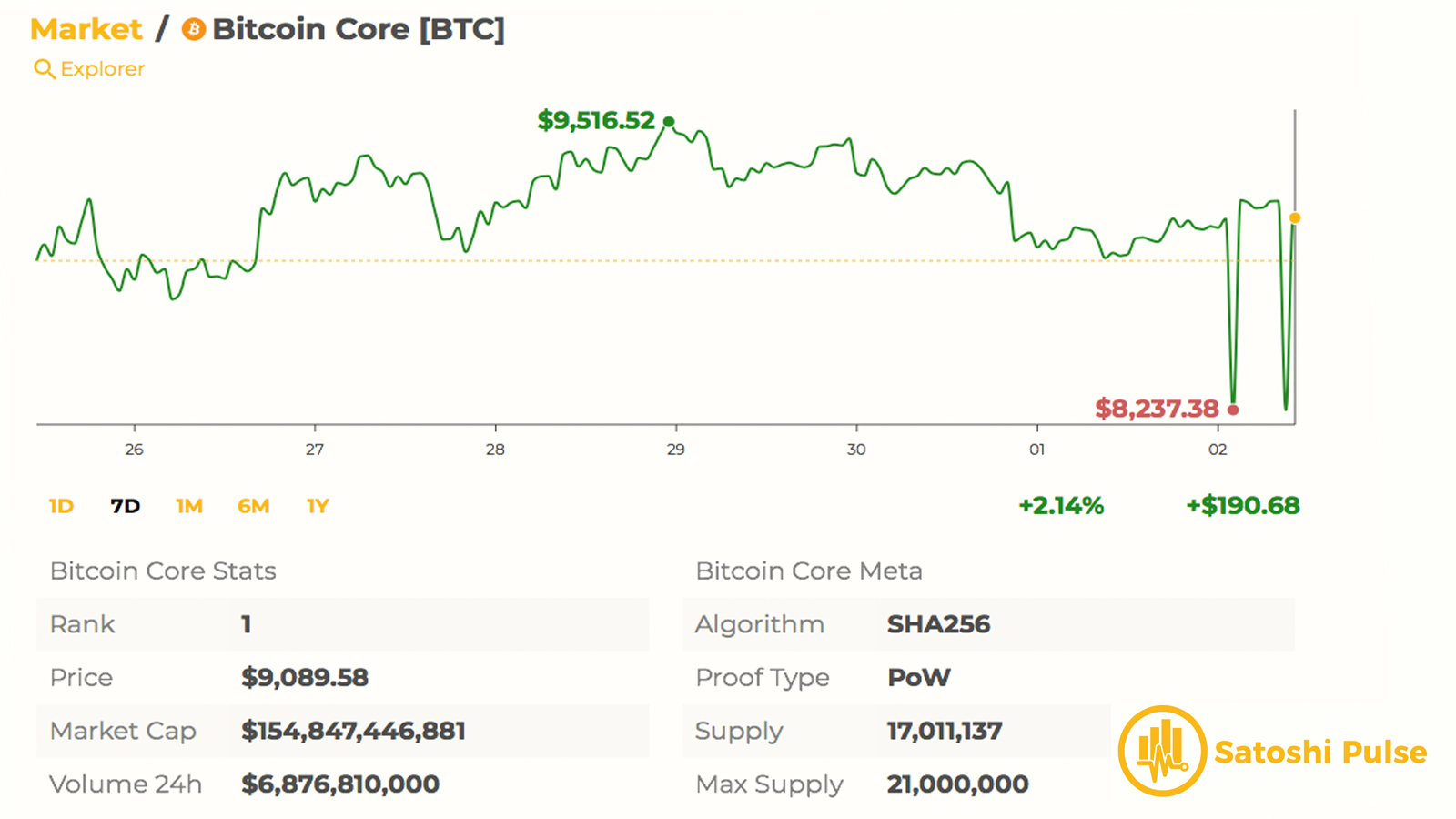
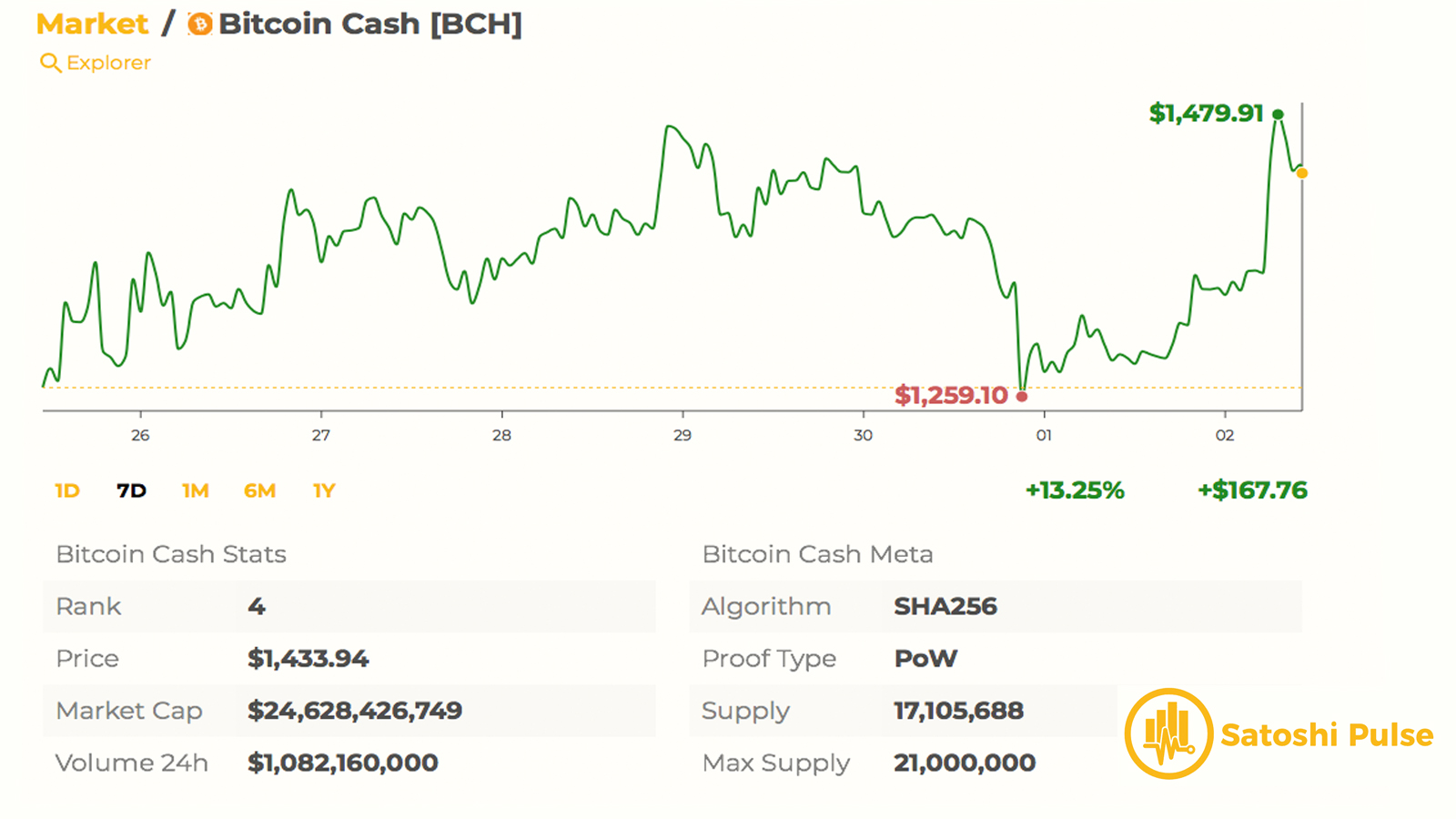
Cryptocurrency markets are seeing some action today as digital asset values have been fluctuating over the past 72 hours. During yesterday’s trading sessions a lot of digital currencies dropped anywhere between 2-6 percent but many are erasing some of those losses today. On April 28, BTC/USD markets touched a high of $9,538 but dipped below the sub-$9,000 regions on May 1. bitcoin Cash (BCH) markets touched a high of close to $1,500 on the 28th as well but dropped to $1,320. Today, however, BCH has managed to capture most of those gains back as it hovers around $1,430 at the time of publication.

Also read: Court Orders Chilean Banks to Re-Open Crypto Exchange Accounts 

Markets See Slight Recovery After Yesterday’s Dips

May is here and many digital currency enthusiasts believe the ‘Crypto Spring’ is about to bloom after the long and hard Crypto Winter. Right now a good majority of cryptocurrency assets are in the green during today’s trading sessions as most of them saw some losses yesterday. The entire cryptocurrency market capitalization of all 1,600 coins is around $429 billion USD today. BTC/USD markets are currently averaging around $9,060 per coin and trade volume is lighter this week as it hovers around $6.8Bn over the past 24 hours. The top five exchanges today swapping the most BTC are Binance, Okex, Bitfinex, Upbit, and Huobi. The Japanese yen still dominates BTC trades by 39 percent but is much lower than last week’s percentages. This is followed by the USD (29.7%), tether (USDT 22.3%), the Korean won (7.4%), and the euro (3.9%). The top trade today on the peer-to-peer platform Shapeshift is ethereum (ETH) for bitcoin core (BTC).
Markets update: trading action heats up during the first week of may

BTC/USD Technical Indicators

The daily, weekly and 4-hour BTC/USD charts show some consolidation taking place once again as traders are seeking new positions. At the time of publication, the two Simple Moving Averages (100 & 200 SMA) have a decent gap with the short term 100 SMA above the long-term trendline. This indicates today’s trading action and the path to resistance should be on the upside. MACd is meandering around 23.43 showing it has a lot of room for improvement. Both the Relative Strength Index (RSI) and Stochastic oscillators are following the same pattern as the RSI hovers around 46.9. These signs indicate that bulls could manage to muster up strength but BTC/USD trade volumes today are quite flat. Order books show that bulls need to push past tough resistance at $9,250 through $9,600 to gain some better ground ahead. On the backside, if bears grab the reins again there’s some good foundational support around $8,800 to $8,500 for the time being.

Markets update: trading action heats up during the first week of mayAt the time of publication on May 2, 2018, the BTC/USD price is $9,089 per BTC.
bitcoin Cash Markets Jump Over 10%

At the moment Bitcoin Cash markets have seen a considerable spike during today’s trading sessions. Over the past 24 hours, BCH/USD markets are up over 10 percent, while BCH weighted price averages are hovering around $1,430 right now. BCH 24-hour trade volume is decent hovering around $1Bn USD worth of daily trades. The total valuation of the BCH market cap at the moment is over $24Bn and most of the trades today are in BTC. bitcoin core trades account for 40 percent of today’s BCH trades which is followed by the USD at 19 percent. BCH global trades are also seeing heavy volume from tether (USDT 19%), the Korean won (14.8%), and the euro (1.6%). Both binance coin (BNB), and ethereum (ETH) are also top trades with BCH on May 2.
Markets update: trading action heats up during the first week of may

BCH/USD Technical Indicators

Looking at BCH/USD charts on Bitfinex and Bitstamp shows there are some differences between BTC/USD markets. The 4-hour BCH/USD chart indicates some overbought signals as the two SMAs are completely different for BCH. The short-term 100 SMA is well below the longer term 200 indicating the path to resistance will likely be on the downside. MACd is still riding northbound and RSI levels are around 66 showing market bulls are awfully close to showing exhaustion. On the flipside, resistance isn’t too tough approaching the $1,540 range and if bulls can manage to make it to that price area then they will see one more nice pitstop around $1,640. We can see on the backside that some nice consolidation has taken place as order books show good support around $1,395, but after that, it is a lot thinner. Most markets are down 0.5 to 1 percent today and BCH/USD prices will likely follow along, but the market has been seeing its own strong movements these past few weeks.

Markets update: trading action heats up during the first week of mayAt the time of publication on May 2, 2018, the BCH/USD price is $1,433 per BCH.
The Verdict: Crypto-Market Optimism Still Trumps Skepticism But Uncertainty Still Remains

Overall cryptocurrency market participants seem positive today as more consolidation forms across the digital asset economy. Some notable market movers on May 2nd include EOS which is up 7.6 percent and the Cardano platform’s ADA seeing gains of around 6.6 percent. Further, the cryptocurrency Tron (TRX) has silently moved into the top ten cryptocurrency market caps. Optimism is still on high as traders and enthusiasts believe markets will manage to only get better but there’s still some skepticism after the last four months of downward price trends.
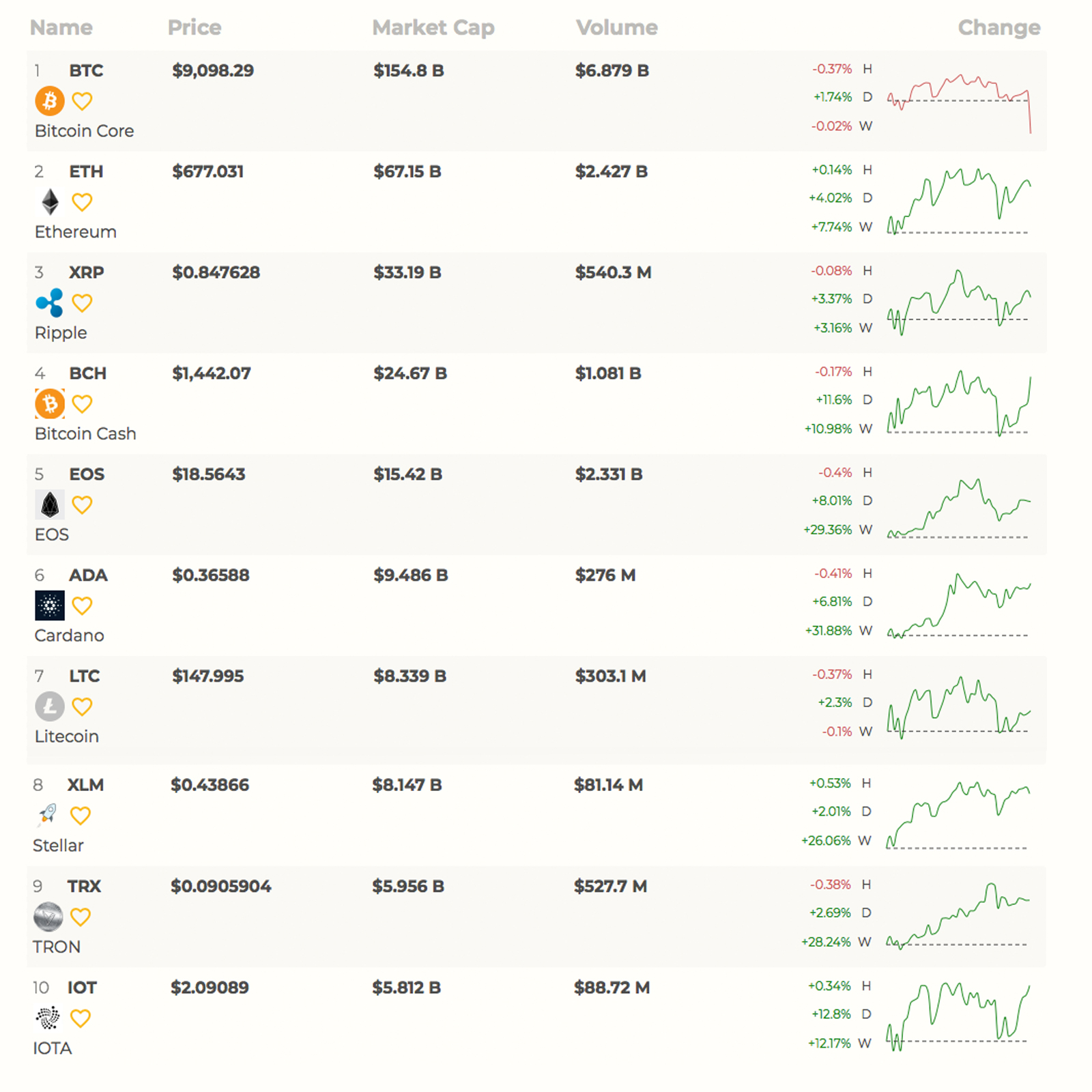
Markets update: trading action heats up during the first week of mayThe top ten market valuations according to Satoshi Pulse.

Where do you see the price of BCH and BTC headed from here? Let us know in the comments below.

Disclaimer: Price articles and markets updates are intended for informational purposes only and should not to be considered as trading advice. Neither Bitcoin.com nor the author is responsible for any losses or gains, as the ultimate decision to conduct a trade is made by the reader. Always remember that only those in possession of the private keys are in control of the “money.”

Images via Shutterstock, Trading View, and Satoshi Pulse.

Want to create your own secure cold storage paper wallet? Check our tools section.

The post Markets Update: Trading Action Heats Up During the First Week of May appeared first on Bitcoin News.

Previous Article

Nick Spanos: Saudi Arabia Is “Kicking the Tires — and That’s Huge”

Next Article

Here’s How Ripple Faced Up to Questioning at a UK Parliament Blockchain Hearing

You might be interested in …

A Bitcoin Beginner’s Guide to Surviving the BIP 148 UASF

A Bitcoin Beginner’s Guide to Surviving the BIP 148 UASF

This is a re-write of A Bitcoin Beginner’s Guide to Surviving a Coin-Split, specifically addressing issues associated with the upcoming BIP 148 UASF.

There is a chance bitcoin will experience a chain-split on August 1st. A segment of all bitcoin users is committed to activate a user activated soft fork (UASF) as described in Bitcoin Improvement Proposal 148 (BIP 148). Specifically, they will reject any bitcoin blocks that do not signal support for Segregated Witness (SegWit), the centerpiece of Bitcoin Core’s scaling roadmap.

If a majority of miners (by hash power) does not signal support for SegWit on August 1st, but at least some do, bitcoin’s blockchain will split in two. In that case, there would be two types of bitcoin tokens, which we’ll refer to in this article as “148 BTC” for coins on the soft forked chain, and “Legacy BTC” for coins on the chain that did not activate the soft fork.

The good news is that each bitcoin would effectively be copied to both chains. If you hold bitcoin right now, you will hold both 148 BTC and Legacy BTC after the split.

The bad news is that this coin-split can be messy and risky. And if you’re not careful, you could lose funds.

This guide will provide you with the basics to keeping your funds safe during the UASF and will help to make sure you make it to the “other side” with all your bitcoins intact.

Author’s note: If you want to play the 148 BTC/Legacy BTC markets as soon as possible and you are fine with taking risks, and/or you really know what you are doing, this article is probably not for you: It’s a beginner’s guide.

Before August 1

First off, be aware that a chain-split create a high-risk situation. There is a chance that some sort of cyber-battle will break out between the two camps, perhaps even escalating to the point where bitcoin’s exchange rate(s) drops sharply, possibly to zero. Make absolutely sure you are not holding more value in bitcoin than what you are willing to lose.

If you do decide to hold onto your bitcoins, the single most important piece of advice is this: Ensure that you control your own private keys.

If you are storing your bitcoins on an exchange, in a custodial wallet like Coinbase, Circle or Xapo, or on any other service that holds your private keys for you, you may or may not eventually receive coins on both ends of the chain. In fact, if these kinds of services aren’t well-prepared, there could be scenarios where you don’t get any coins at all. So far, no exchanges have given any kind of guarantee.

So if you’re using any of these kinds of services to store your bitcoins, you need to create your own wallet. Send your bitcoins to one or several bitcoin addresses in this new wallet. This wallet now holds your private keys.

What kind of wallet you use is up to you. That said, here are some basic solutions:

If you don’t care about transacting with bitcoin (either 148 BTC or Legacy BTC) anytime soon and really just want to keep both as a long-term investment, printing your private keys on a paper wallet is one option. This option, however, is only really secure if you follow strict security precautions, which you can find here. Another option is to get a hardware wallet. Any of the hardware wallets listed on bitcoin.org will keep your private keys secure.

Most regular desktop or mobile wallets, as listed on bitcoin.org, are about as secure as your computer or phone is. Since most computers and phones are not all that secure, these are not ideal for large amounts. With that in mind, all mobile wallets and desktop wallets listed on bitcoin.org will store your private keys for you.

In any case: Be sure to make backups of your keys! Most wallets require you to do this when installing: don’t skip this step.

On, and Perhaps (shortly) After, August 1

If a majority of hash power signals support for Segregated Witness on or before August 1st, the protocol upgrade will activate smoothly. In that case, you’re fine, even if you didn’t prepare at all.

But it’s also possible that a majority of hash power will not go along with the BIP 148 UASF on August 1st, in which case the chain could split. If you hold your private keys, you will then have both 148 BTC and Legacy BTC.

Such a chain-split could resolve in several ways.

If at any point on or after August 1st, the 148 BTC chain becomes the chain with most accumulated proof of work, both BIP 148 nodes as well as Legacy nodes would switch to the 148 BTC chain. As such, the Legacy BTC chain should be discarded, resolving the situation. It would have been a temporary split, and you should be fine if you held onto your private keys. You can now continue to use bitcoin as usual.

But unless and until this happens (or other types of precautions are taken), there is always at least a theoretical risk that the Legacy BTC chain can be overtaken and be discarded like this. That chance should decrease as time goes on, but will realistically exist for hours, perhaps days, and maybe even longer — even if no blocks are found on the 148 BTC chain.

As such, buying or accepting Legacy BTC after the split — and especially shortly after the split — is very risky. These bitcoins can quite literally disappear if the 148 BTC chain overtakes the Legacy BTC chain. Therefore, it’s not recommended that you buy or accept any Legacy BTC — if you do, at least be aware of and comfortable with the risk that your money could cease to exist.

BIP 148 nodes will never acknowledge the Legacy chain, so these will not switch regardless of which chain has more hash power. However, it is very risky to buy, accept or hold 148 BTC, too. Most importantly, there is no guarantee that 148 BTC will continue to be used. While that is of course true for any cryptocurrency, due to slow mining difficulty adjustments, a potentially hostile environment, and the continued possibility for SegWit to activate on the Legacy chain after all, it’s probably more true for 148 BTC. Additionally, block confirmations may be very slow for quite a while, which could make using 148 BTC for transacting impractical.

If you want to accept 148 BTC regardless, you need to run a BIP 148 full node as a wallet. You can find more information about that here.

On top of the Legacy BTC chain being discarded or the 148 BTC chain withering away, there is another big risk: replay attacks.

In case of a chain-split, transactions on both sides of the fork will look identical. If a transaction is picked up by both 148 BTC and Legacy BTC nodes — for example, because the receiver of a transaction retransmits that transaction — the transaction may be valid on both chains. This is called a “replay attack.”

As such, spending coins on one end of the chain could make you accidentally spend the equivalent coin on the other side of the chain. Instead of paying someone only in 148 BTC, you may unintentionally send Legacy BTC as well, or vice versa. 148 BTC and Legacy BTC are initially “stuck together.”

The best way to prevent replay attacks is simple: Do not send any transactions. At least not until it is clearer to everyone what the post-fork situation looks like. 

After the Chain-Split

In case of the BIP 148 UASF, it is a bit hard to say what “after the chain-split” actually means.

If the 148 BTC chain gets more accumulated proof of work, it should be the only chain to survive, and the split would be over. All 148 BTC would then simply be bitcoins (BTC) again.

But if that doesn’t happen fast, and even if the 148 BTC chain appears non-active, a chain-split could, at the very least, linger for a while. Miners could start mining on that chain at any time. As such, the 148 BTC chain can in theory always wipe out the Legacy BTC chain.

And there are also possible scenarios where the two chains — 148 BTC and Legacy BTC — coexist. What’s more, even a scenario where more than two chains emerge can’t be taken out of the equation. In these scenarios, you will have coins on both (or all) sides of the fork.

But as mentioned, it will be tricky to spend coins on one chain without accidentally spending the equivalent on the other(s). And the bad news is that splitting these coins can be a bit complex. (It will require freshly mined or double-spent coins.)

The good news, however, is that some exchanges will likely set up coin-splitting services and take care of most of the complexity behind the screens. You’d just need to send your bitcoins to an exchange, and the exchange will credit your account with 148 BTC and Legacy BTC. (They should even replay the transaction for you to make sure they indeed receive both your coins.) At that point, if you want, you will be able to sell or trade your coins.

If the split persists, there should be wallets for both coins soon enough. Of course, you may need to upgrade your existing wallet or download a new wallet if and when this happens. This outcome also remains to be seen. Do not accept any transactions on your wallet before this is clear.

Further specifics on what to do after a coin-split will be announced on bitcoin Magazine (and most likely on bitcoin.org and other sources of information) if and when a coin-split occurs and we have a better understanding of the post-fork situation.

So, to Recap …

1. Control your private keys.

2. To be on the safe side, avoid any transactions on and shortly after August 1st. (How “shortly after” depends on what happens.)

3. If there are still two chains when the dust settles, split your coins into different wallets.

This article will be updated as news develops.

The post A Bitcoin Beginner’s Guide to Surviving the BIP 148 UASF appeared first on Bitcoin Magazine.

Information Technology Examiner

Information Technology Examiner Research and provide guidance for the agency in the areas of cryptocurrency and other Fintech developments. The IT Examiner will also serve as a subject matter… Office of the State Bank CommissionerTopeka, […]