May 27, 2026

Capitalizations Index – B ∞/21M

Markets Update: BCH Holds Above $150, RVN and XTZ Explode

Markets update: bch holds above $150, rvn and xtz explode

Markets Update: BCH Holds Above $150, RVN and XTZ Explode

Markets update: bch holds above $150, rvn and xtz explode

In recent market action, bitcoin core (BTC) has struggled to hold above $4,000 following four consecutive green weekly candles, while bitcoin cash (BCH) appears to be consolidating above $150 after comprising the best performing of the 10 largest crypto assets by market cap of the last seven days. In other news, ravencoin (RVN) and tezos (XTZ) are among the highest capitalized top gaining markets of the past week.

Also Read: 8 Useful Browser Extensions for Cryptocurrency Users

BTC Consolidates at $4,000

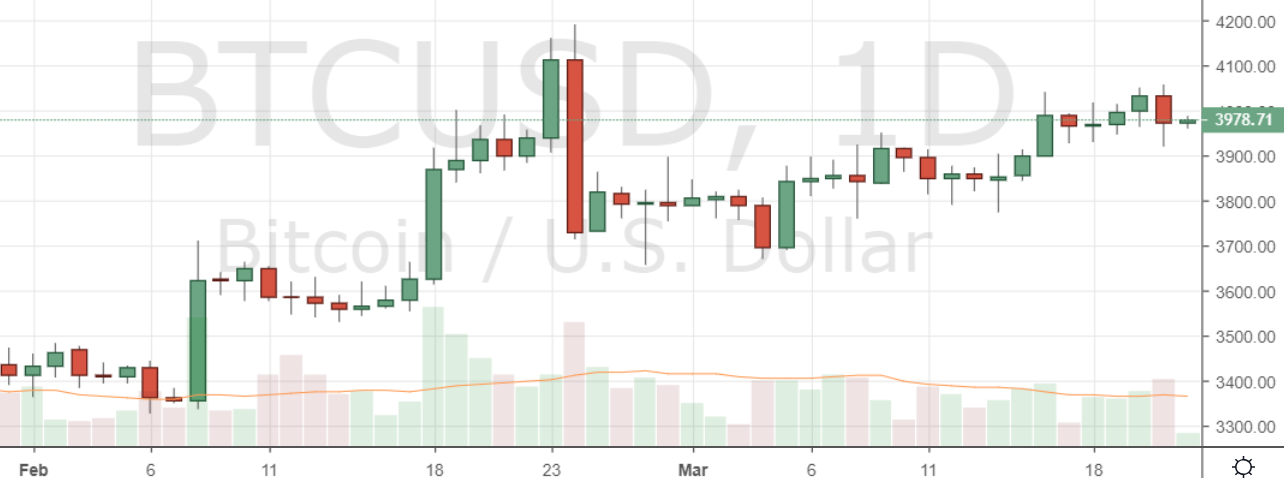
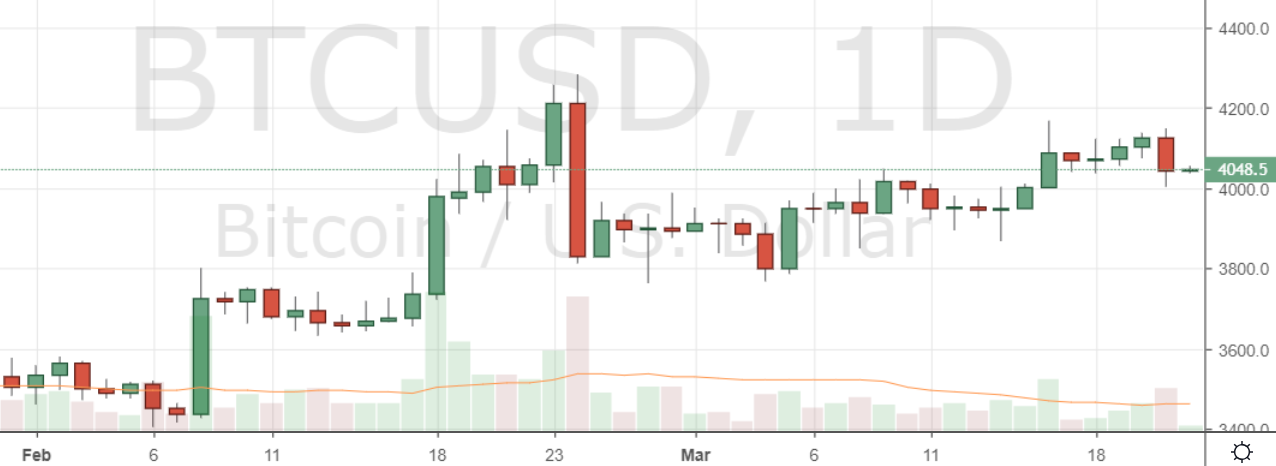
Following four weeks of green weekly candles, BTC is currently struggling to hold above $4,000 after retracing approximately 1.4% in the last 24 hours. As of this writing, BTC is trading for approximately $3,975 on Bitstamp and $4,040 on Bitfinex, indicating a spread of approximately 1.7% between USD and USDT exchanges.
Markets update: bch holds above $150, rvn and xtz explode
Btc/usd – bitstamp – 1d

BTC has a market capitalization of $70.91 billion. Approximately $10.6 billion worth of BTC has changed hands during the last 24 hours.
Markets update: bch holds above $150, rvn and xtz explode

BCH Consolidates Above $150

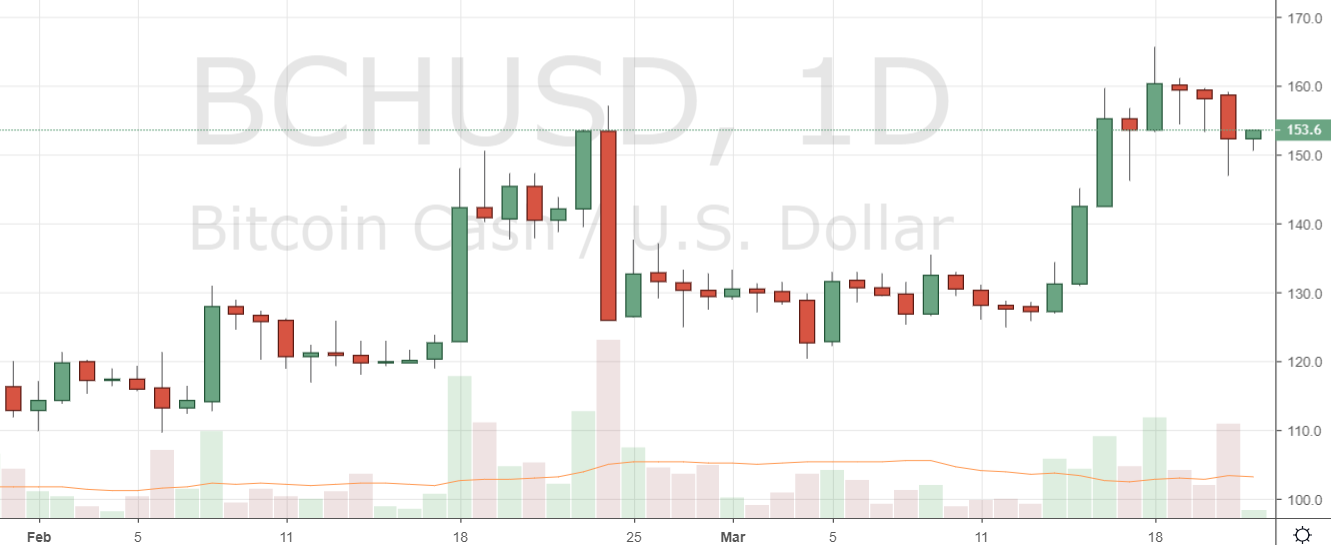
BCH appears to have established support at $150 after posting a 4% retracement over the course of the last 24 hours. The retracement following seven days of strong bullish momentum, with BCH comprising the top gaining of the 10 largest cryptocurrencies by capitalization after posting a weekly gain of 14%. BCH is currently trading for approximately $153.
Markets update: bch holds above $150, rvn and xtz explode
Bch/usd – kraken – 1d

When measured against BTC, BCH is consolidating around the 0.038 BTC support area after gaining 16% last week. BCH is currently the sixth largest crypto asset with a market cap of $2.73 billion. Approximately $471 million worth of BCH has been traded in the last 24 hours.
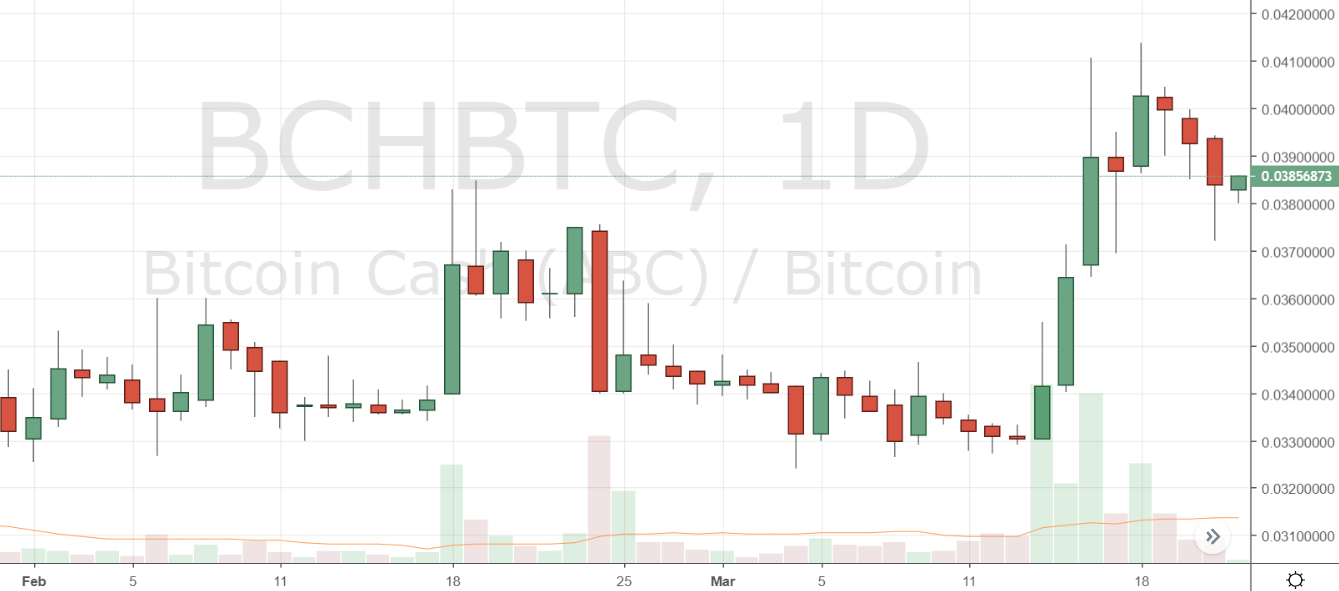
Markets update: bch holds above $150, rvn and xtz explode
Bch/btc – bittrex – 1d

XTZ and RVN Rank Among Top Gainers

XTZ has broken into the top 20 crypto assets by capitalization following a dramatic 70% rally in seven days, ranking tezos as the 18th strongest performing crypto assets of the past week. XTZ is currently the 20th largest cryptocurrency with a market cap of $525 million and is trading for $0.755.
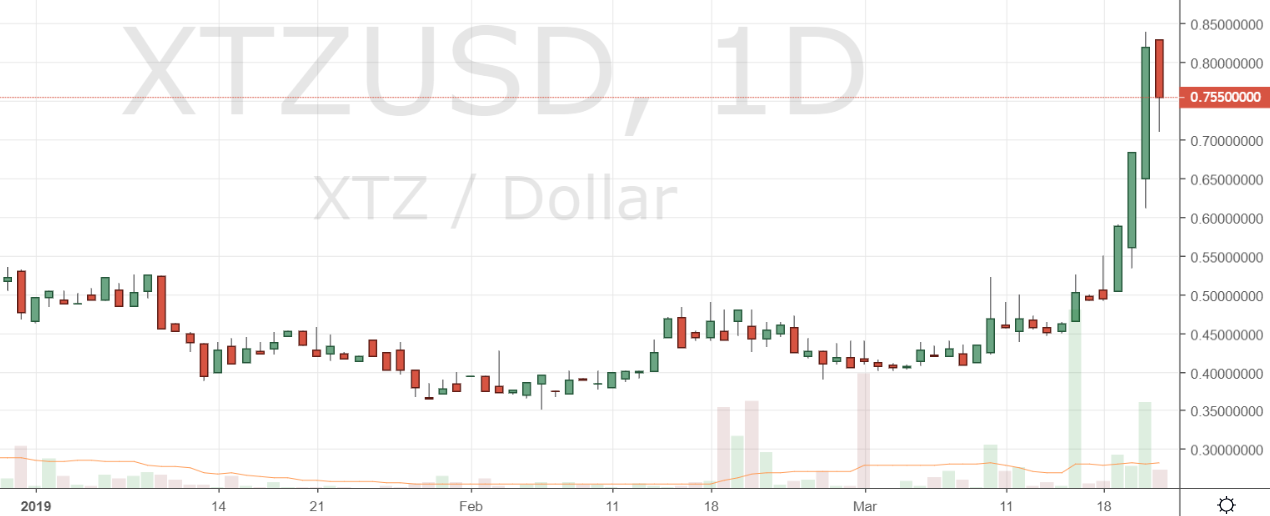
Markets update: bch holds above $150, rvn and xtz explode
Xtz/usd – bitfinex – 1d

When measured against BTC, XTZ is trading for more than 0.00019 BTC after gaining 55.5% in less than seven days. Nearly $12.4 million worth of XTZ was traded during the last 24 hours, making XTZ currently the second most liquid of the top 20 markets by capitalization.
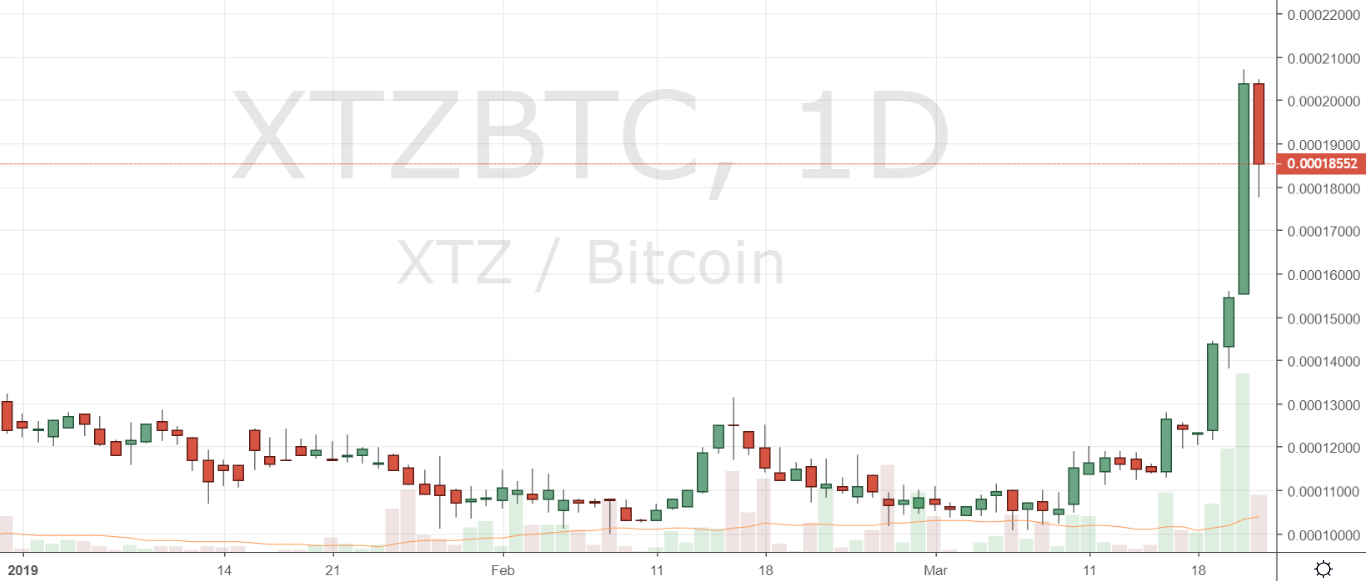
Markets update: bch holds above $150, rvn and xtz explode
Xtz/btc – bitfinex – 1d

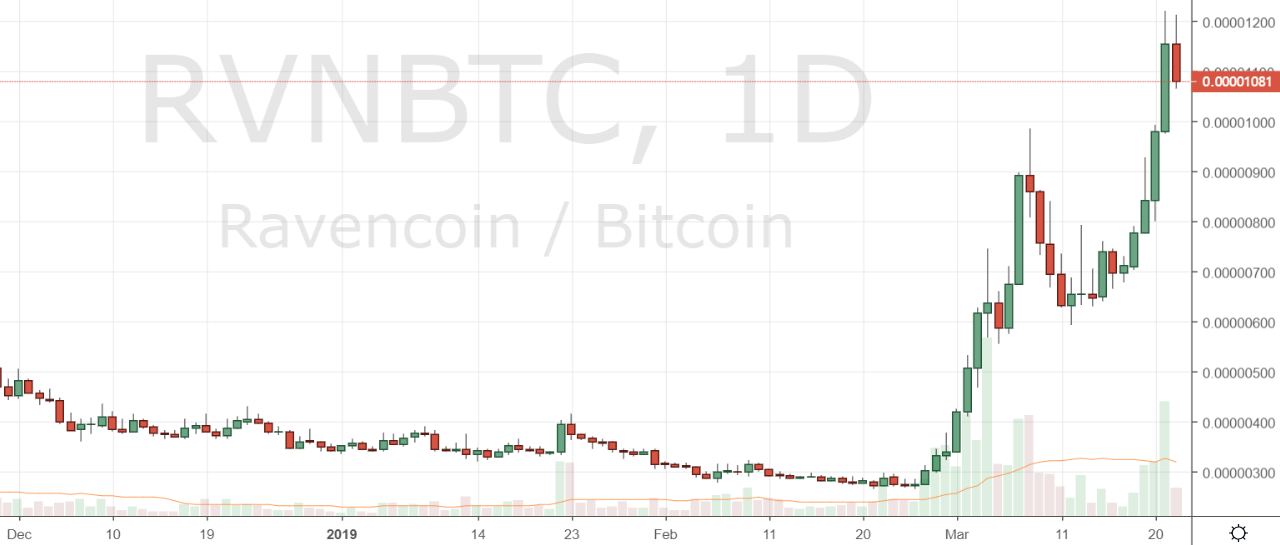
RVN is currently ranked as the past week’s 14th top performing market after gaining 72% over the last seven days. The week comprises the fourth-consecutive green candle, with RVN having gained 345% in less than one month. The bullish momentum has propelled RVN back into the top 50 crypto assets by market cap, currently ranking 43rd with a capitalization of $143 million.
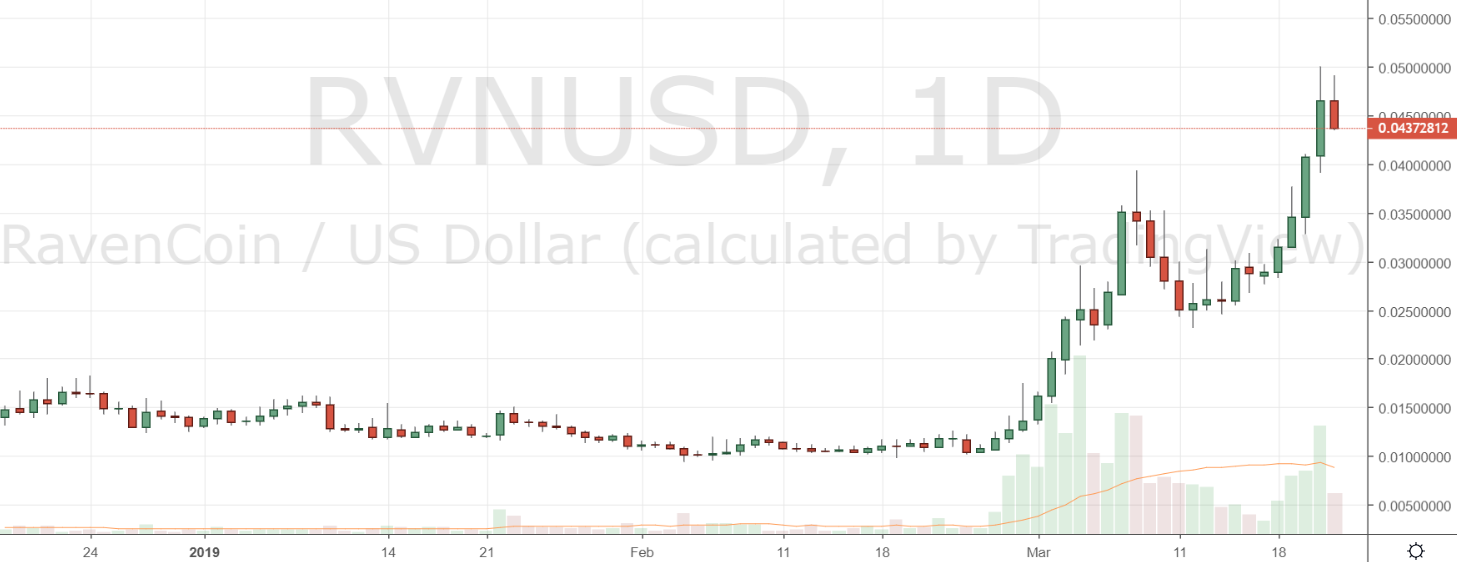
Markets update: bch holds above $150, rvn and xtz explode
Rvn/usd – bittrex – 1d (calculated by tradingview)

When measured against BTC, RVN broke into new all-time highs this past week, with RVN currently trading for 1,118 satoshis after gaining roughly 305% in less than four weeks. Roughly $86.22 million worth of RVN has changed hands over the last 24 hours.
Markets update: bch holds above $150, rvn and xtz explode
Rvn/btc – binance – 1d

Do you think the markets are starting to transition out of the bear season? Share your outlook in the comments section below!


Images courtesy of Shutterstock


Disclaimer: Price articles and markets updates are intended for informational purposes only and should not to be considered as trading advice. Neither Bitcoin.com nor the author is responsible for any losses or gains, as the ultimate decision to conduct a trade is made by the reader. Always remember that only those in possession of the private keys are in control of the “money.”

Tags in this story
$, 1:50, Above, BCH, bitcoin cash, Bitcoin Core, BTC, Explode, Holds, Markets, ravencoin, RVN, Tezos, update, xtz

Markets update: bch holds above $150, rvn and xtz explode
Samuel Haig

Samuel Haig is a journalist who has been completely obsessed with bitcoin and cryptocurrency since 2012. Samuel lives in Tasmania, Australia, where he attended the University of Tasmania and majored in Political Science, and Journalism, Media & Communications. Samuel has written about the dialectics of decentralization, and is also a musician and kangaroo riding enthusiast.

Published at Fri, 22 Mar 2019 13:45:38 +0000

Previous Article

Verasity VRA token incrementa un 300%

Next Article

Cryptocurrency adoption is inevitable in the future, says Chicago’s Mayor Rahm Emanuel

You might be interested in …

Op Ed: Crypto-Investing in the Age of Whales

Crypto-Investing in the Age of Whales

“That was fast,” I keep saying. Why do I keep saying that? Because I keep this page open in my browser all the time:

I had bought bitcoin at $2200. It promptly went down to $1700, and ether went from $203 to $150. The next day. That was fast.

In the past five days, ether has gone from $150 to $220, and bitcoin has gone to $2400. That was fast.

In a crypto-investing webinar two weeks ago, I recommended looking into buying the Brave browser’s Basic Attention Token (BAT). They screwed up the smart contract so instead of raising $25 million they ended up raising $35 million. In 30 seconds. That was fast.

What’s Going On?

So let’s talk first about crytpocurrencies. Here’s the key thing to understand: six months ago, bitcoin was 90 percent of the market, ether was about 5 percent, and all other altcoins had about 5 percent market share. Fast forward six months without a neck brace, and today we’re at almost exactly 50 percent bitcoin and 50 percent altcoins. The total value of all coins and tokens has quadrupled. That was fast.

What does that tell you? There are two things going on:

bitcoin Whales are Snapping Up Tokens

Any early bitcoin miner or investor now has thousands of bitcoins. Most are Chinese. Each 500 bitcoins is $1 million. These “bitcoin whales” are now very wealthy. They would like to reduce their exposure to bitcoin, but the last thing they will do is go to fiat currency  —  there they will have poor returns and have to pay taxes. In fact, what they would like to do is get their money out of China without the government knowing. So they are looking for altcoins, especially token sales.

Why? Because if a token comes out that will likely go up in value, it’s safer than having all your wealth in bitcoins. The Chinese are buying any token that looks legitimate and like it has a chance to go up later. Their hold period is 3 – 9 months or so, they hope to double their money and move on to the next token. This diversifies their portfolio while keeping their reporting and tax obligations to a minimum.

So the whales are effectively sucking tokens up, preventing the natural buyers  —  project supporters  —  from purchasing tokens in the initial offering. They effectively have an elephant gun loaded with cash. Yesterday, one whale paid around $2,000 just in ether fees to get his $7 million trade in ahead of the other orders. This is probably 1,000 times what you would normally pay in fees, just to be at the head of the line.

If a whale can close out a token sale and force the issuance of new tokens, he effectively locks in his bitcoin price for several months. Please let that sink in :  the whale doesn’t care what token it is, as long as it looks legitimate. He’s watching the price of bitcoin to make the decision on when to pull the trigger  —  any token sale that happens to look like it’s going to close is simply in the way of this elephant gun.

Is this bad? It appears to be, because these investors have no real interest in the project. They just want to see that it looks legitimate. They don’t do much homework. They look for some social validation and pull the trigger. (My thanks to James Drake @EmbermineDrake and @Crypt0Leviathan for helping me understand these dynamics.)

But I argue it’s not so bad. They are playing the role of underwriters. They are distributors. The group raising money gets the money they asked for. The fast investors aren’t looking to sell at a loss, so over the next year or so they watch the price and get rid of their tokens when they have increased in value. (In the case of the Brave browser, I understand tokens were changing hands at 4 times their ICO price just hours later) This diversifies the whales and gives them unleveraged gains measured in triple digits.

Some months later, the project reaches some milestones, the price of the token goes up, and the natural buyers come in to support the price, and if they hang on they could also see significant gains. So everyone wins. The first buyers take most of the risk, and the second buyers hang on for the long-term realized value of the token. This could be natural market making at work.

But not so fast  —  everything is not always as it seems. There are pumpers and dumpers. Just buying all of a token sale practically guarantees the price will go up . It’s very likely this will cause the price to double in short order, and the pumper starts dumping, going for a return in the thousands of percent in hours or days. The pumper uses the unsuspecting token as a means to an end, and the value of the token could collapse shortly after everyone else buys on their signal.

Even though there is some of this sort of manipulation going on, I would argue that most of it is actually the underwriting model I explained above. Here’s why: investors don’t like to lose money, so they aren’t going to sell all at once: Only if they have a liquidity problem in their portfolio will they sell at a loss.

Second, plenty of ICOs simply don’t sell out. Of 158 known ICOs, 118 are still actively in the process of selling their inventory. More than half don’t reach their maximum at the closing bell. So investors are being selective. It’s just that the fast sell-outs make the most news. This, along with the incredibly durable efficient market hypothesis, suggests that, in general, this is not a bubble, this is underwriting, and there are plenty of natural buyers coming in at the next stage.

And that brings us to part two:

Natural Buyers and Speculators are Arriving in Boatloads

Crypto investing is in the news. People can see the hockey-stick charts and want to get in on this gold rush. So more and more buyers are pouring in to feed the frenzy. This, again, is not necessarily speculation, and there is no guarantee it’s a bubble that will pop. There are buy-and-hold investors in this crowd as well (I hope my readers are some of them). We’ve gone from about $20 billion in total crypto-market cap 6 months ago to about $90 billion today, and many of those buyers are going to stay in crypto. They probably aren’t going to cash back out to fiat after a quick win. There could definitely be corrections  —  we saw a good one last week. But it is quickly being erased by more buyers wanting to get in on the action. Most exchanges are hiring more people to help with the increased onboarding load.

I study bubbles. Most bubbles are not bubbles. When they pop, people say it was a bubble, but then prices go back up and then some. Was the 2009 housing “crisis” a bubble? We have good evidence that it wasn’t. The pop is a buying opportunity for an overheated market that went up too fast. You can say it’s a velocity bubble, but I don’t think it’s a value bubble. As we say in economics, “never reason from a price change”  because  a price change can happen for many reasons. I’ll get to my recommendation in a moment, but people are quick to talk about bubbles, yet they rarely bring a sharp lens to the analysis.

Think of it this way: whether you’re a speculator or an investor, suppose you just doubled your money or more in crypto-investing. Are you going back to fiat? Probably not. I predict we’ll go from $90 billion steadily to $1 trillion over the next few years. Millionaires will become billionaires, and I won’t be surprised to see $5 trillion of crypto-assets over the next ten years. It is still early. There is still huge money to be made. It’s really just getting started.

It all reminds me of the Internet in the 1990s — people kept underestimating the impact, and those who kept doubling down (like Jeff Bezos) ultimately came out with monster compound returns. I bought Google shares at $1 (through a fund) and and sold it at $100 just after the IPO. I missed 5x after that.

The bitcoin Situation

As I said earlier, not everything is as it seems. Last week, the Segwit crowd announced victory in the bitcoin block-scaling wars. But I’ve come to believe it may have been mere propaganda in an ongoing war for control of the protocol. This is why, I believe, the price hasn’t jumped back up to $2500, yet the price of ether has exceeded where it was a week ago. Many bitcoin announcements are designed as salvos in an ongoing war between two sides, and they are getting increasingly non-Nashian, with each side hoping for total victory.

What to Do Now?

bitcoin remains uncertain, ether has gone through the roof, ICOs are impossible to get in on, and altcoins are all hitting all-time highs. Is there anything to do? Go short? Fear the crash? Nervously jump onto the rocket, despite the potential for a nasty re-entry back to earth?

What follows should not be construed as investment advice, but it is what I plan to do myself. I already have a significant position in both ether and bitcoin. I plan to buy more. I can’t know your situation. Any investment you make is your own responsibility, and you can lose substantially in any speculative market. Do NOT seek the help of qualified investment professionals. They do not have your best interests at heart; they are salespeople. Rather, I suggest that you seek the help of a qualified statistician before making any speculative decision.

Here’s what I’m doing: I don’t care what happens in the six to twelve months after I buy something — it’s noise. I don’t try to catch the bottom or sell at the top. I just buy and stick it away and don’t sell. I ask: Where do I think bitcoin will be in two years? Probably somewhere in the $4–10k range. Where do I think ether will be in two years? Probably in the $500–2k range. So what do I care if I buy bitcoin at $2000 or $2500? What do I care if I buy ether at $170 or $220?

If I were investing fresh today, I would buy about 50 percent ether, about 20 percent bitcoin, and 30 percent various altcoins I thought were going to add value. That’s because you can’t buy a good index yet. When the index products come from Token Factory, I will hold about 30 percent ether and 70 percent index products. I don’t mind easing into these positions. I can buy now and watch for a dip to buy more, in which case I may have to pay more to get in if it goes up. BUT — we can count on volatility, so I plan to watch and buy more ether fairly soon.

I know that the day bitcoin’s scaling problem is really settled, the price will jump tremendously, but a press release is not a final solution. In the meantime, it’ll bounce up and down as the whales go into and out of tokens. So I’m looking for a buying opportunity. Anything under $2k looks like one to me.

Because there’s so much volatility, I don’t mind being ready to swoop in when I see prices drop 20 percent. If I see the price of ether or bitcoin drop by 40 percent or more, I will jump in with both feet. As Warren Buffett says, “Be greedy when others are fearful” (I’m leaving out the other half on purpose). I have no intention of selling;  all my coins are in cold storage.

What Should You Do?

Use your head. Have a plan. Don’t overcommit. Don’t buy more than you can afford to lose. Be prepared to see your investment go down before it goes up. You can’t call the bottom, even if you think you can. If you’re really excited, commit up to 20 percent of your investable money into crypto-assets. If you’re a normal, rational person, go for ten percent. If it doubles, you’re fine. Do NOT let cryptocurrencies occupy more than 50 percent of your portfolio under ANY circumstances  —  sell to reduce your exposure.

If you are sitting on a ton of ether, now is the time to pay your taxes and look at real estate for some portion of it. Buy yourself an apartment that sends you a check every month forever  —  just in case. If you’re just getting in, don’t be afraid to buy now if you think the price two years from now will be much higher.


This is a guest post by David Siegel, CEO of Twenty Thirty, an open blockchain and decentralization community which will hold its own ICO in the near future. The views expressed are his own and do not necessarily reflect those of bitcoin Magazine or BTC Media.


The post Op Ed: Crypto-Investing in the Age of Whales appeared first on Bitcoin Magazine.

SEC Delays Decision on Proposed Bitwise ETF

SEC Delays Decision on Proposed Bitwise ETF       The U.S. Securities and Exchange Commission this week announced a delay in its decision on a proposed rule change that would allow bitcoin exchange-traded funds […]