Understanding Custodial Wallets and their Role in bitcoin Storage
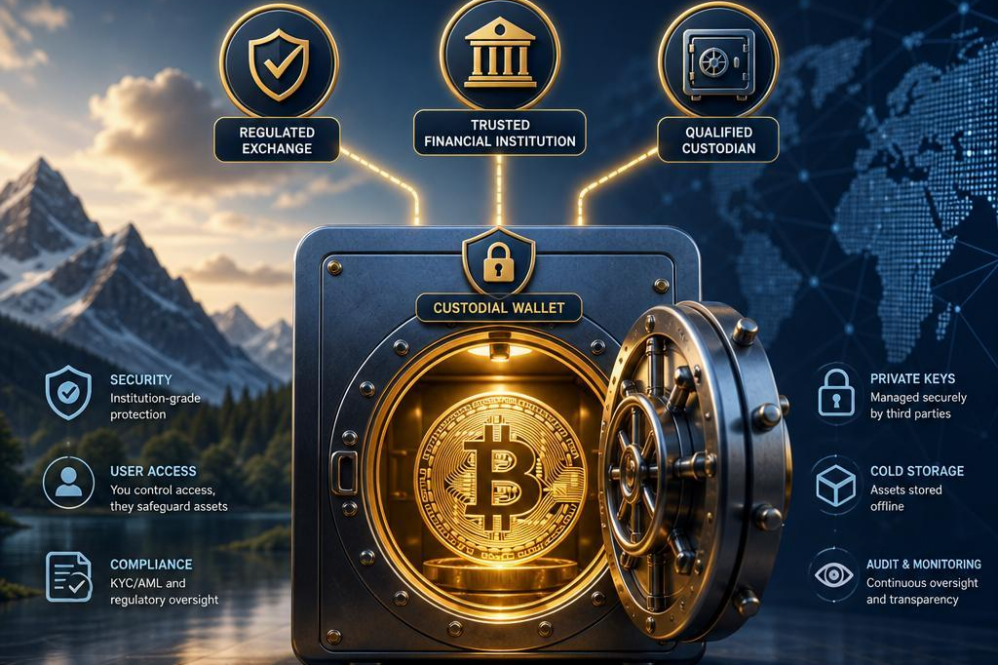
custodial wallets function by entrusting the private keys controlling bitcoin assets to a third-party intermediary. This third party-often an exchange or specialized wallet provider-retains full control over the private keys, thereby becoming responsible for the security, managementand accessibility of the bitcoin holdings on behalf of the user. This arrangement shifts the security burden from the individual to the custodian, allowing users to focus on ease of access without needing advanced technical knowledge or the duty of key management.
Key features of custodial wallets include:
- Centralized control of private keys by the custodian
- Enhanced user convenience through simplified recovery options
- Potential for integrated services such as instant trading or lending
- Dependence on the custodian’s security protocols and policies
| Aspect | Custodial Wallet | Non-Custodial Wallet |
|---|---|---|
| Key Control | Held by third party | Held by individual user |
| User Responsibility | Minimal key management | Full key management required |
| Security Risk | Exposed to custodian vulnerabilities | Dependent on user’s security practices |
| Ease of use | High due to centralized service | Varies,generally requires more knowledge |
Mechanisms employed by Third parties to Secure bitcoin Custodial Wallets
Third-party custodians employ a multi-layered approach to secure bitcoin wallets, integrating advanced technological and procedural safeguards. At the forefront are hardware security modules (HSMs), purpose-built devices that generate and store private keys offline.These HSMs are typically housed in secure data centers with strict access controls,ensuring that private key exposure is minimized and tightly monitored. Such devices are often paired with multi-signature (multisig) protocols, requiring multiple independant approvals before any transaction can be executed.
Beyond hardware protections, custodial services implement rigorous operational controls.These include robust identity verification (KYC) processes and tiered access privileges for internal staff, which restrict who can interact with wallet keys or initiate transfers. Additionally, custodians employ real-time monitoring systems that use machine learning to detect anomalous transactions or potential threats. Regular audits, both internal and external, further reaffirm that the safeguards remain effective and compliant with industry standards.
A concise comparison of common security features employed by third-party custodians highlights their comprehensive approach:
| Security Feature | Purpose | Benefit |
|---|---|---|
| Hardware Security Modules | Offline key storage | Prevents remote key theft |
| Multi-signature Wallets | Multiple approvals | reduces single point of failure |
| Behavioral Analytics | Transaction monitoring | Early threat detection |
Risks Inherent in Relying on Third-Party Custodial Services for bitcoin
Entrusting your bitcoin to third-party custodial services inherently involves multiple layers of risk that users must carefully consider.unlike self-custody, where control over private keys remains exclusively with the owner, custodial solutions require users to place trust in an external entity to secure and manage those keys. This centralization introduces vulnerability to hacks, mismanagementor even insolvency of the third party, perhaps resulting in loss or freezing of funds. Even with sophisticated security measures, the very act of pooling assets in a single platform creates a lucrative target for cybercriminals.
Operational risks also manifest through regulatory uncertainties, as custodial providers operate under varying legal frameworks and compliance requirements. Sudden changes in regulation or enforcement can lead to account restrictions or seizure. Additionally, the custodian’s internal controls, employee integrityand system vulnerabilities could impact asset safety. Customers often lack full transparency regarding the custodian’s security protocols, making due diligence challenging.
| Risk Type | Potential Impact | Mitigation Strategy |
|---|---|---|
| Cybersecurity Breach | Loss of bitcoin or private keys | Multi-signature wallets, cold storage |
| Regulatory Action | Freezing or seizure of assets | Stay informed, diversify custody providers |
| Operational Failures | Access delays, mismanagement | Regular audits, clear reporting |
Furthermore, users should recognize that relying on custodians often sacrifices the principle of complete financial sovereignty intrinsic to bitcoin’s design. The dependency on third parties can introduce withdrawal restrictions, delayed transaction processing, and limitations on how quickly funds can be moved.For those prioritizing autonomy and control, these constraints may undermine the fundamental benefits of cryptocurrency ownership. Hence, balancing convenience against inherent risks is essential when choosing to store bitcoin via custodial platforms.
Evaluating Security Protocols and Compliance Standards of Custodial Providers
When entrusting custodial providers with bitcoin storage, the backbone of trust lies in their established security protocols. These providers implement multiple layers of protection including multi-signature wallets, cold storage vaultsand end-to-end encryption. Multi-signature wallets require multiple private keys to authorize transactions, drastically reducing the risk of unauthorized access. Cold storage keeps the majority of funds offline, isolated from internet-based threatsand end-to-end encryption ensures that sensitive data remains confidential during transmission.
Compliance with industry standards and regulations further enhances security assurances. Leading custodial services adhere to frameworks such as ISO/IEC 27001 for details security management, PCI-DSS where applicableand regional laws such as GDPR and AML/KYC regulations. These standards mandate strict operational, technical, and organizational controls including regular audits, staff trainingand incident response protocols. Their adherence provides a measurable benchmark of security commitment, reassuring users about the integrity and legal compliance of their holdings.
Below is a concise comparison of key security features and compliance standards frequently enough found among top custodial providers:
| Feature / Standard | Security Impact | Compliance Role |
|---|---|---|
| Multi-signature Authentication | prevents single-point compromise | Mitigates internal fraud risks |
| Cold Storage Vaults | Protects funds from online attacks | Supports regulatory capital controls |
| ISO/IEC 27001 Certification | Ensures structured security management | mandates continuous risk assessment |
| AML/KYC Policies | Reduces fraudulent accounts | Complies with financial law enforcement |
Best Practices for Choosing a Reliable Custodial Wallet Service for bitcoin
When selecting a custodial wallet service, prioritize platforms with transparent security protocols. A reputable service will openly share details about how they safeguard users’ private keys and funds.Look for wallet providers that utilize multi-signature authentication,encryption standards like AES-256,and cold storage solutions to minimize exposure to hacks. Additionally,ensure that the service undergoes regular third-party security audits and publishes their reports for community verification.
reliability is also persistent by the quality of customer support and operational transparency. Opt for services that offer 24/7 customer assistance through various channels, ensuring rapid resolution of any issues. Verify their backup policies and disaster recovery plans,which should be clearly documented. A reliable custodial wallet maintains consistent uptime, provides real-time transaction trackingand is subject to regulatory compliance to enhance trustworthiness.
| Feature | Why It Matters | What to Look For |
|---|---|---|
| Multi-Factor Authentication (MFA) | Prevents unauthorized access to accounts | support for hardware tokens or biometric verification |
| Cold Storage | Keeps majority of funds offline, reducing hack risk | Clear segregation of hot and cold wallets |
| Regulatory Compliance | Ensures operation within legal frameworks, enhancing trust | Licenses from known financial authorities |
Strategies to Mitigate Risks While Using Custodial Wallets Through Third Parties
When relying on third-party custodial wallets, security begins with due diligence. Users must ensure that the chosen provider employs multi-layered security protocols such as multi-signature wallets, cold storage integrationand stringent KYC processes. Additionally, it’s crucial to verify if the custodial service is insured and regularly audited by independent cybersecurity firms, as this helps mitigate the risk of internal fraud or external cyber-attacks.
Another vital approach involves diversifying custodial holdings. Avoid entrusting all your bitcoin to a single third party. Spreading assets across multiple reputable custodians minimizes single points of failure. This strategy, coupled with keeping a portion of funds in non-custodial wallets, grants users more control and flexibility, reducing dependency on any one service provider’s infrastructure or policies.
Transparency and ongoing monitoring form the backbone of risk mitigation. users should actively engage with community feedback and review custodial wallet updates and policy changes regularly. Employ tools such as transaction notifications, real-time account activity tracking, and leverage platforms providing custodial health scores to stay informed. An example comparison of key custodial wallet features is shown below:
| Feature | Security Measures | Insurance | Multi-Sig Support |
|---|---|---|---|
| Custody Provider A | Cold storage, 2FA | Yes | Yes |
| Custody Provider B | Multi-Sig, Cold Storage | No | Yes |
| Custody Provider C | Third-Party audits, 2FA | Partial | no |