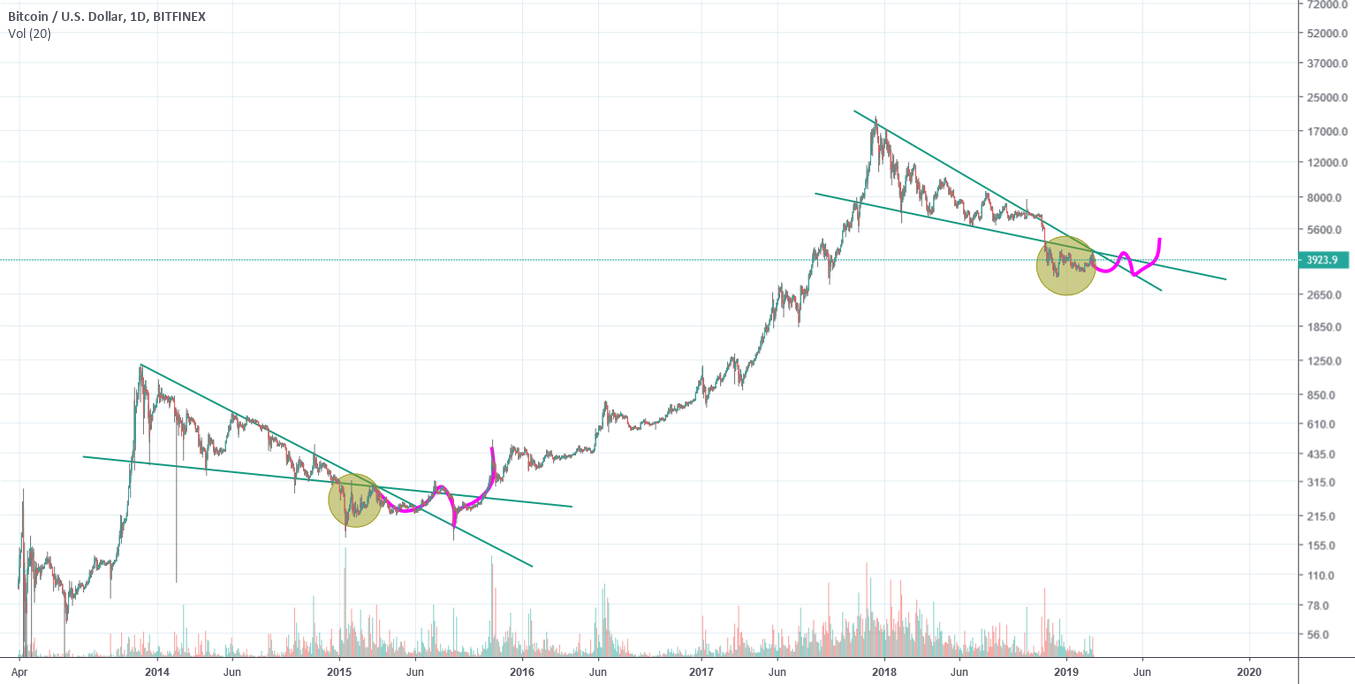
Understanding bitcoin Issuance The Halving Mechanism and Supply Schedule
At the heart of bitcoin’s design is a predictable and transparent schedule by which new coins enter circulation. Every new block added to the blockchain includes a reward paid to the miner who found it, and this reward is the only way new bitcoins are created. Unlike fiat currency,where central banks can adjust supply at will,bitcoin’s issuance follows a fixed formula embedded in its code,ensuring that the total supply can never exceed 21 million BTC. This programmed scarcity is not a marketing slogan; it is indeed a monetary rule enforced by every full node on the network.
- New coins are created as block rewards to miners
- block time target: ~10 minutes per block
- Maximum supply: 21,000,000 BTC
- Issuance schedule: Reward cuts in half every 210,000 blocks
| Era | Block Reward | Est. Years | Approx. New BTC / Day |
|---|---|---|---|
| Genesis | 50 BTC | 2009-2012 | 7,200 |
| Early Halvings | 25 → 12.5 BTC | 2012-2020 | 3,600 → 1,800 |
| Current Era | 6.25 BTC | 2020-2024+ | 900 |
| Future Eras | < 3.125 BTC | 2024-2130+ | Declining toward 0 |
This halving cycle, which takes place roughly every four years, means bitcoin’s inflation rate is constantly dropping, moving from a high-growth “monetary infancy” toward an ultra-low issuance environment. Early on, block rewards were abundant to bootstrap network security and incentivize miners to join. Over time, as adoption grows and transaction fees become more meaningful, the dependency on new-coin rewards diminishes. The result is a supply curve that flattens dramatically: instead of a steady stream of new units forever, the flow of fresh BTC slows to a trickle, reinforcing scarcity as demand competes for an increasingly fixed pool of coins.
From Inflationary to Disinflationary How Declining Block Rewards Reduce New Supply
In its early years, bitcoin behaved more like a high-inflation asset, with generous block rewards flooding the market with new coins every ten minutes. This generous issuance was by design: it bootstrapped the network,attracted miners,and secured the ledger when bitcoin was still a risky experiment. Over time, tho, programmed reward cuts transform this once inflationary profile into one where new supply grows more slowly than many conventional monetary systems.The protocol doesn’t react to politics or business cycles; instead, it follows a predictable, pre-set path that gradually tightens the flow of new coins.
Each halving event slices the reward that miners receive for adding new blocks, which steadily reduces the number of fresh bitcoins entering circulation per day.As rewards shrink, the expansion of the total supply decelerates, nudging bitcoin from an era of rapid issuance toward a disinflationary regime where supply growth trends toward zero. This transformation has profound implications for market dynamics, as participants can anticipate when supply shocks will occur and adjust their expectations accordingly. It also reshapes miner economics, pushing them to rely more on transaction fees and operational efficiency than on ever-larger quantities of newly minted coins.
Because these shifts are scheduled in advance, they introduce a unique clarity into bitcoin’s monetary policy that is rare in legacy systems. Market participants can model future supply with remarkable precision, helping them assess long-term scarcity. Key takeaways include:
- Predictable issuance curve reduces uncertainty around future supply.
- Declining inflation rate transitions bitcoin from rapid to slow supply growth.
- Increased emphasis on fees as block rewards fall over time.
- Greater scarcity narrative as new supply becomes a smaller share of total coins.
| Phase | Block Reward | Supply Effect |
|---|---|---|
| Early Years | 50 BTC | High new supply,inflationary |
| Middle Epochs | 25 → 12.5 → 6.25 BTC | Slowing supply growth |
| Future Halvings | 3.125 BTC and below | Minimal issuance, strong scarcity |
Scarcity in Practice Modeling supply Shock Effects on Price and Market Liquidity
When the number of new coins entering the market shrinks, the impact cascades across pricing, liquidity, and trader behavior. Each halving event compresses the flow of newly mined bitcoin,reducing the natural sell pressure from miners who routinely liquidate a portion of rewards to cover operational costs. As this steady stream diminishes, spot markets must increasingly rely on existing holders to supply demand, effectively shifting market power toward those with a long-term conviction. The result is a structurally tighter float, where even modest increases in buy-side interest can trigger disproportionately large price moves.
These dynamics become visible in order books and trading depth across major exchanges. Lower new issuance means fewer fresh coins available at tight spreads, which can reduce market depth around key price levels. This scarcity effect often manifests as thinner liquidity walls and more pronounced slippage for large orders. In practice, the market transitions from a miner-driven supply regime to a holder-driven one, with participants responding in ways that further amplify scarcity:
- Miners sell a smaller percentage of rewards, holding more inventory.
- Long-term holders tighten their grip, reducing circulating supply.
- New buyers compete over a shrinking flow of freshly issued coins.
- Market makers widen spreads to account for higher volatility risk.
| Phase | new Supply | typical Liquidity | Price Sensitivity |
|---|---|---|---|
| Pre-Halving | Higher | Deeper books | Moderate |
| Post-Halving (Early) | Reduced | Thinner at extremes | Elevated |
| Post-Halving (Mature) | Stable & Low | Efficient but tight | Highly responsive |
As the system progresses through these phases, price discovery becomes increasingly sensitive to marginal flows. A relatively small net inflow from institutions, ETFs, or retail participants can re-rate the asset because there is less fresh supply to absorb that demand. In this environment, liquidity is not merely a function of exchange volumes, but of how many holders are willing to part with coins at a given price level. The interplay between shrinking issuance, holder behavior, and order-book structure ultimately turns what appears to be a simple supply cut into a complex, market-wide scarcity regime that continuously reshapes both price and liquidity conditions.
Investor Behavior Adapting Portfolio Strategies to a Predictably Scarce Asset
As the pace of new coins entering circulation slows, market participants are compelled to rethink how they build and rebalance their positions. Instead of chasing short-term price swings, many investors shift toward accumulation strategies that anticipate a structurally tightening supply. This often means setting predefined allocation bands to layer in exposure over time, rather than making all-or-nothing bets. Over multiple halving cycles, those who adopt a disciplined, rules-based approach tend to prioritize long-term conviction over reactive trading, treating the asset less as a speculative ticket and more as a strategic reserve within a broader portfolio.
- Gradual allocation: Dollar-cost averaging into a finite supply asset.
- Risk-budgeting: Capping exposure as a percentage of total portfolio.
- Cycle-aware rebalancing: Adjusting weights around halving events and volatility spikes.
- Liquidity planning: Aligning holding periods with personal time horizons.
Scarcity that can be modeled in advance also reshapes risk management frameworks. Instead of viewing this asset purely through short-term volatility metrics, sophisticated investors examine how its supply schedule diverges from inflationary fiat and other asset classes. Some maintain a “core” long-term position complemented by a smaller “tactical” sleeve for opportunistic trades during drawdowns or exuberant rallies. This dual-structure approach attempts to capture upside from long-run adoption trends while still acknowledging the sharp price movements that can occur when a limited float meets surging demand.
| Portfolio Approach | Objective | Time Horizon |
|---|---|---|
| Core Holding | Capture long-term scarcity premium | 5+ years |
| tactical Sleeve | Exploit volatility and cycle patterns | Months to 2 years |
| Cash Buffer | Deploy on major dips | Opportunistic |
Over time, the predictably diminishing issuance nudges behavior toward a mindset similar to that used for other scarce stores of value, but with added emphasis on data-driven decision-making. Investors increasingly monitor on-chain indicators, macro liquidity conditions, and regulatory signals to refine their entry and exit rules. Some integrate scenario analysis-testing how the asset might respond under different adoption or macro stress cases-into their allocation process. As halving events march forward and the new supply becomes an ever-smaller fraction of existing float, portfolios that explicitly account for this engineered scarcity tend to migrate from speculative experiments to structured, thesis-driven positions backed by clear rules and measurable risk limits.
Risk Management Navigating Volatility Around Halving cycles and Supply Constriction
Managing exposure as issuance declines begins with understanding how price swings tend to cluster around key protocol events. Halving dates are known in advance, yet markets routinely treat them as catalysts, compressing months of speculation into a few highly volatile weeks. Prudent investors often stagger entries and exits instead of making single, all‑in decisions, aligning allocations with time, not headlines. this approach becomes more important as the marginal new supply shrinks; with fewer coins entering circulation, incremental buying or selling can have an outsized impact on price discovery, especially during thin liquidity windows.
| Phase | Typical Risk Feature | Risk Focus |
|---|---|---|
| Pre‑Halving | Speculative run‑ups | Position sizing |
| Post‑Halving (0-3 months) | Whipsaw moves | Liquidity planning |
| Post‑Halving (3-18 months) | Trend persistence | Profit discipline |
Effective frameworks acknowledge that tighter supply can amplify narrative‑driven price shocks. Instead of attempting to predict each swing,risk‑conscious participants focus on controlling what they can: downside limits,capital preservation rules,and liquidity buffers. Practical tools include:
- Tiered allocation bands that cap maximum exposure to the asset and to the broader crypto segment.
- Pre‑defined drawdown thresholds for trimming positions when volatility spikes beyond tolerance.
- Staggered limit orders to avoid emotional decisions during rapid price gaps.
- Segregated time horizons (short‑term vs. long‑term buckets) with distinct exit rules for each.
Supply constriction also increases the importance of counterparty and liquidity risk, particularly when using derivatives or leverage to hedge or enhance returns. Elevated volatility can widen spreads, trigger forced liquidations, and expose weaknesses in platforms that rely on continuous order flow. A more resilient posture tends to prioritize:
- Low or no leverage around event windows where liquidity may thin unpredictably.
- Diversified execution venues to reduce reliance on any single exchange or liquidity provider.
- Robust collateral management, with conservative loan‑to‑value ratios on any borrowed funds.
- Scenario testing that models extreme but plausible price gaps and evaluates the impact on the overall portfolio,not just on the bitcoin slice.
Policy and Market Infrastructure Preparing Exchanges and Regulators for Long Term Scarcity
As issuance trends toward near-zero over the coming decades, the entire market stack-from regulators to trading venues-must evolve from managing an inflationary digital asset to stewarding a structurally scarce one. This requires rulebooks and reporting standards that recognize the difference between protocol-driven monetary policy and discretionary, human-controlled supply. Regulatory clarity on custody, settlement finality and capital treatment will help exchanges design products that respect hard caps and halving dynamics, instead of treating bitcoin like a conventional commodity with elastic supply. In practice, this means adjusting surveillance tools, margining models and disclosure frameworks to reflect a world in which new supply cannot be dialed up in response to demand spikes.
- Clear categorization of bitcoin under securities, commodities or bespoke digital asset regimes
- Standardized disclosures on how halving events affect liquidity and risk models
- Robust market surveillance tailored to 24/7, globally fragmented order books
- Capital and margin rules that incorporate issuance decline and fixed supply
| focus Area | Today | Scarcity-Ready Future |
|---|---|---|
| Exchange Design | Volume-centric | Liquidity resilience-centric |
| Regulation | Retrofit legacy rules | Purpose-built digital asset regimes |
| Risk Models | Short-term volatility focus | Long-term supply inelasticity focus |
On the infrastructure side, exchanges must harden their operational backbone for a landscape where fee markets replace block subsidies and on-chain settlement competes with layered solutions. Matching engines, collateral frameworks and listing standards should anticipate tightening float as more coins move into cold storage, institutional treasuries or long-term holding strategies. Policy makers, in turn, need to integrate bitcoin’s declining issuance into macroprudential thinking: stress tests, systemic risk assessments and cross-border coordination will all be shaped by a globally traded asset whose supply is fixed but whose demand can be highly cyclical.