May 25, 2026

Capitalizations Index – B ∞/21M

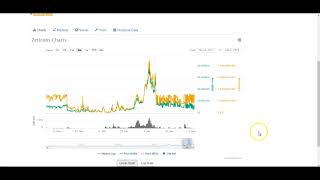
Hempcoin (THC) will China ban stunt its growth?

Hempcoin (thc) will china ban stunt its growth?

Hempcoin (THC) will China ban stunt its growth?

Hempcoin (thc) will china ban stunt its growth?Hempcoin has been popular in China, but since the Chinese Crypto ban, will it be hurting now?
———————————
Coinbase/GDAX — https://www.coinbase.com/join/5a1dccf1861324011170da77

Binance — https://www.binance.com/?ref=11517630

Coin Payments — https://gocps.net/sfg4o8djcwr5fdo0iy0y7osuxa41/

Coinexchange: https://www.coinexchange.io/?r=e89d432b — for trading small cryptos like Stronghands

Bleutrade: https://bleutrade.com/exchange/191209
——————————————————-
Coinpot Faucets:

Moon Doge: http://moondoge.co.in/?ref=e28684360608
Moon Litecoin: http://moonliteco.in/?ref=22fe36b272ac
Moon bitcoin: http://moonbit.co.in/?ref=9388c2a7dbd8
Moon Dash: http://moondash.co.in/?ref=0D7978418906
Moon bitcoin Cash: http://moonb.ch/?ref=291787173567
Bonus bitcoin: http://bonusbitcoin.co/?ref=CA4F8BA20E27
bitcoin fun: http://bitfun.co/?ref=AF394F2CC1EB

Join Faucethub for tons of Faucets:

http://faucethub.io/r/31763114

Others:
Free Bit Coin: https://freebitco.in/?r=10980540
Free Dogecoin: http://freedoge.co.in/?r=1539538

If you want to leave me a tip, here are the addresses, Dogecoin is preferred, I don’t give refunds, so please enter the right amount:

Doge: DDvsYXw2vtBaTRd9G8JyZekmJ9LFvjGjhc

Pac Coin: AyiaZzjHszKeaXejo5Qt5N7JXuGtvziypF

Pot Coin: PVsuc4MazQjacdFM499G7Tovf2qkzaNncx

Litecoin: Lcab1UZcPSXxjH8PfyzoGt8JTFSBfkMxM1

bitcoin: 16BKWthynKYcawY8ivatbY6qg58nBQQ56a

Ethereum: 0xc49c42e1aEd6F645d67DA4eA512b69C31f7d477

Previous Article

IoT Chain (ITC) price prediction 2018

Next Article

High Times Launches First Ever IPO to Accept Bitcoin, Ethereum

You might be interested in …

HitChain Project Biweekly Report:14 January — 25 January, 2019

HitChain Project Biweekly Report:14 January — 25 January, 2019 1.Project Progress 1) Discuss and adjust Hitchain technology architecture: a. Using Ethereum block chain technology, private chains are built through Ethereum to deal with HIT transactions. The functions […]

Lambda Protocol: Decentralizing Access to Decentralized Applications

Lambda Protocol: Decentralizing Access to Decentralized Applications

The Lambda Protocol has announced a decentralized, open-source solution for unrestricted access to decentralized applications (DApps). Utilizing the Lambda Protocol, DApp developers can leverage existing browsers such as Chrome or Safari to open up their applications to millions of devices currently being used. The Lambda Protocol plans to launch with support for both the Ethereum and bitcoin blockchains, adding support for permissioned blockchains such as Hyperledger Fabric in the future.

The Lambda Protocol team, based in Singapore and Australia, is headed by CEO Taiyang Zhang. Team mentors include Santiment COO Dorjee Sun, KyberNetwork CEO Loi Luu and Liquidity.Network co-founder Arthur Gervais.

In an interview with bitcoin Magazine, Zhang explained that there are two main problems when it comes to DApps: centralized access points and lack of interoperability between browsers and wallets.

Currently, most browsers for the decentralized web are centralized. For example, Google Chrome extensions and iOS applications allow users to access and interact with DApps on the Ethereum Network. These DApp browsers are controlled by private corporations, and they all share a common weakness: a single point of failure. They can easily be removed at a corporation’s discretion, no questions asked.

Zhang compared this single point of failure to a hypothetical in which a portal to search the entire web is hosted on a single website.

All it takes is for an ISP/Government to block one website, which defeats a core premise of decentralization.

All decentralized applications require a cryptocurrency wallet to function. Because of this restrictive prerequisite, desktop users must either integrate a wallet into a browser such as Chrome or Firefox by installing an add-on or create a new wallet by installing a new browser.

Users seeking to access DApps on mobile devices face greater limitations. Native iOS and Android apps do not support third-party browser/extension embedding, and popular mobile web browsers such as Chrome and Safari do not support add-ons.

The Lambda Protocol

The Lambda Protocol is an open-source internet protocol. “Our goal is to allow users to access the decentralized applications of the future in the browsers of today,” said Zhang.

To facilitate this access to DApps, the Lambda Protocol plans to develop a decentralized messaging layer. This messaging layer has the capability to connect browsers such as Chrome and Safari to cryptocurrency wallets such as Ledger Nano S, Trezor, imToken and Jaxx. By utilizing the Lambda Protocol, DApp developers can open their applications to the millions of devices and applications that users currently use.

Conversely, users can connect to DApps via the Lambda decentralized protocol. For example, users can trade bitcoin on decentralized exchanges using hardware wallets without downloading additional software. And they can use decentralized applications on mobile devices without downloading additional applications.

Previously, it was impossible to access any DApps without downloading software that acts as a centralized point of access. But with the Lambda Protocol, users are offered a frictionless, decentralized entry point to the “Web 3.0.”

How the Lambda Protocol Works

DAP (Decentralized Application Particle) tokens fuel the Lambda Protocol. Zhang described the protocol’s basic structure from three standpoints: developers, users and relayers:

“Developers utilizing the Lambda Protocol pay DAP tokens to request a user’s wallet to sign a transaction. Users sign transactions, which are then broadcast to the network. Relayers (users who facilitate the execution of a transaction) earn DAP tokens by broadcasting and generating a proof.”

The amount of DAP required for an individual transaction varies and is calculated dynamically. A staking and rate-limiting mechanism is employed to ensure developers are only charged for on-chain transactions.

The Lambda Protocol plans to launch its testnet in Q1 of 2018.

The post Lambda Protocol: Decentralizing Access to Decentralized Applications appeared first on Bitcoin Magazine.