The Fundamentals of bitcoin’s Divisibility
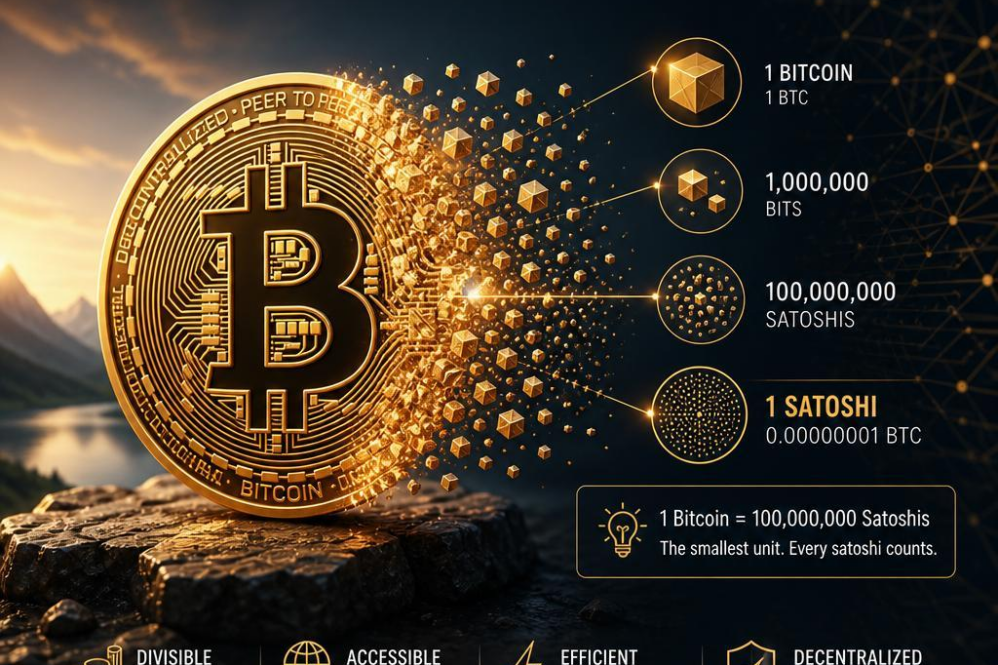
bitcoin’s divisibility is often understated but it’s a cornerstone of cryptocurrency functionality and utility. Unlike physical gold or fiat currencies,bitcoin operates on a fixed and divisible unit,the Satoshi,named after the mysterious bitcoin creator,Satoshi Nakamoto. A single bitcoin (BTC) is divisible up to eight decimal places, forming a system where 1 BTC equals 100 million Satoshisor 108. This level of divisibility allows individuals to buy, selland trade BTC in fractions that are far more granular than most conventional financial instruments.
This granular divisibility is crucial in both practical and speculative contexts. For everyday users, the ability to transact in micro-fractions of a bitcoin makes the cryptocurrency accessible, even in its current high-value state where a single BTC might be out of reach for many. In speculative markets, the divisibility of bitcoin enables traders to hedge small bets and experiment with various financial strategies without committing to large sums. The table below summarizes the relationship between bitcoin and its smallest unit, the Satoshi:
| bitcoin (BTC) | Satoshis |
|---|---|
| BTC 1.00 | 100,000,000 Satoshis |
| BTC 0.01 | 1,000,000 Satoshis |
| BTC 0.001 | 100,000 Satoshis |
When discussing bitcoin’s divisibility, it’s essential to consider the practical applications it enables in the real world. As the price of bitcoin fluctuates, the divisibility allows for more equitable exchange and pricing. For example, during a period of high value, users can transact in smaller denominations to manage their funds more efficiently and effectively. This adaptability is central to the vision of a global digital currency that bitcoin aspires to be.
Decoding Satoshis and Their Role in bitcoin Transactions
bitcoin,the first and most well-known cryptocurrency,is built on a system that allows for incredible precision in financial transactions. At its core, bitcoin is divisible down to the satoshi level, enabling users to send and receive amounts as low as one hundred millionth of a bitcoin, a concept that is both revolutionary and practical. This divisibility is crucial for many use cases, especially in countries where the value of bitcoin far exceeds the local currency equivalent for everyday transactions.
To put it into outlook, one bitcoin is equivalent to 100 million satoshis.This division can be a bit confusing at first, but it essentially allows for micropayments to thrive within the bitcoin network. Micropayments are a key component of future financial innovations, such as tipping on social media platforms, content subscriptions on a per-article basisand even micropayments for public WiFi services. These transactions would be nearly impractical to execute without the low denominations provided by satoshis.
Beyond basic financial transactions, understanding satoshis also has broader implications for investing and hodling strategies. As an example, many investors find it easier to track their investments when their transactions are divided into smaller units. This divisibility also supports the development of second-layer solutions,such as the Lightning Network,which greatly enhances bitcoin’s scalability by handling payments off the main blockchain.These advancements in bitcoin technology are making the currency more accessible to a wider range of users and use cases.
Strategies for Managing Satoshis in Your Digital Wallet
One effective way to manage your Satoshis is to set up alerts in your digital wallet. These alerts notify you when the balance in your wallet reaches a certain threshold, such as when it dips below a specific number of Satoshis. This helps prevent accidental overspending and ensures you can monitor your funds closely. integrating a budgeting system within your wallet allows you to track and allocate Satoshis towards different spending categories, much like you would with traditional currency.
Another strategy is to use a trusted exchange that allows for easy conversion between Satoshis and other cryptocurrencies or fiat currencies. This can be particularly useful when you need to quickly adjust your portfolio or withdraw funds in a more familiar currency format. By doing this, you can avoid holding too many Satoshis that might fluctuate significantly in value, especially during market volatility.
| Strategy | Description |
|---|---|
| Set up balance alerts | Automatically informed when your wallet balance reaches specific levels. |
| Integrate budgeting | Allocate Satoshis based on financial goals and spending habits. |
| Exchange conversion | Convert Satoshis into more stable or useful forms of currency as needed. |
Lastly, consider using advanced wallet features such as subaccounts or multisig wallets, which offer enhanced security and control over your Satoshis. Subaccounts help keep different transactions separate and organized, while multisig wallets require multiple signatures to spend Satoshis, providing an extra layer of security that can protect against theft and unauthorized access.
The Future of bitcoin: Evolution of Divisibility
bitcoin’s journey into the future is marked by enhancements in utility and accessibility, and a crucial aspect of this evolution is the concept of divisibility. The native unit of the bitcoin network, the satoshi, represents the smallest divisible unit within the currency-one hundred millionth of a bitcoin. This level of divisibility is a cornerstone of bitcoin’s flexibility, allowing users to transact in minute quantities, which is essential for both large and small-scale economic activities.
As the world of finance continues to shrink distances and amplify value transactions, bitcoin’s divisibility acts as a unifying factor across diverse economic landscapes. In regions where the currency’s base value might seem prohibitively high, the ability to transact in satoshis can dramatically increase accessibility. This is especially important for communities looking to embrace digital currency without being hampered by high transactional barriers.
To better grasp the role of satoshis, consider how they enable a broader range of financial activities beyond just speculative trading or large-scale economic transfers. Small businesses, for example, can list prices in satoshis, enabling customers to make precise payments down to the hundred-millionth of a bitcoin. In a table format, the contrast between bitcoin’s base unit and its smallest fraction becomes clearer, illustrating how divisibility supports widespread adoption.
| Unit | Value (BTC) |
|---|---|
| bitcoin (BTC) | 1 |
| Satoshi | 0.00000001 |
Best Practices for Minimizing Losses Associated With Small Transactions
When dealing with bitcoin, understanding how to handle small transactions effectively is crucial, especially when transacting in satoshis. To minimize losses associated with these small transactions, it’s important to be proactive and strategic.One of the key strategies is to avoid sending or receiving extremely small amounts of bitcoin, which can accumulate transaction fees that surpass the value of the transaction itself. As an example, if you’re sending a few satoshis, the transaction fee might eat up the entire amount and then some.
Another best practice is to maintain a transaction fee that is appropriate for the size of the transaction. While it’s tempting to set extremely low fees to save money,this often results in delayed confirmations,which can lead to higher fees when the transaction is finally sent. Conversely, setting fees that are too high to ensure speedy confirmations can be impractical for smaller transactions. It’s a delicate balance that requires monitoring the network activity and adjusting your fees accordingly.Such as, if you’re dealing with small amounts during times of high network congestion, it’s better to pay a bit more to expedite the transaction rather than waiting for hours or even days for a low-fee transaction to process.
it’s wise to consolidate your bitcoin wallet into a few larger amounts rather than leaving it scattered in numerous small accounts. This consolidation not only simplifies your account management but also reduces the number of transactions you make, which in turn lowers the overall transaction fees. You can achieve this by periodically combining small amounts into a single, usable unit. To illustrate, consider a scenario where you have multiple wallets with small balances.Rather of keeping them separate, consolidate them into a main wallet, significantly reducing the number of transactions and, consequently, lower fees. This approach can be seen as a more efficient way to manage digital assets.