
May 19, 2026

Capitalizations Index – B ∞/21M

Heavy Borrowers and Near-Failed States Likely to Drive Hyperbitcoinization

Heavy borrowers and near-failed states likely to drive hyperbitcoinization

Heavy Borrowers and Near-Failed States Likely to Drive Hyperbitcoinization

Heavy borrowers and near-failed states likely to drive hyperbitcoinization

A CIA World Factbook entry listing nations’ current account balances shows that big economies and near-failed states share something in common – massive debt. This liability making them strong cases for hyperbitcoinization, which could be exacerbated by an anticipated global economic slowdown.

Also read: Governmental Overreach in Developing Nations Will Hasten Hyperbitcoinization

 Debt-Ridden Economies Prime Cases for Hyperbitcoinization

Hyberbitcoinization theorists have little faith in the fiat establishment. They believe that state authorities, who control national currencies, will erode them to a point where citizens will be forced to ditch them for bitcoin, resulting in entire countries being powered by peer-to-peer decentralized currency.

The hyperbitcoinization theory (H-theory), published by Daniel Krawisz of the Satoshi Nakamoto Institute in 2014, predicts that bitcoin will lead to demonetization of curreAmen ncies that will lose value, as people settle for bitcoin as a superior option. bitcoin will be attractive as it is not subject to capital controls, maintains value as fiat currencies erode, and is an inclusive financial instrument into other economies.

Heavy borrowers and near-failed states likely to drive hyperbitcoinization

Though purely numeric, the CIA list, running up to 2017, details governments’ long-standing habits, from the heavy-borrowing, war-like giants at the bottom, to struggling ones in the middle and disciplined spenders at the top. “Current account balance compares a country’s net trade in goods and services, plus net earnings, and net transfers to and from the rest of the world during the period specified,” the agency explains in regards to the criterion of the list, which is calculated on an exchange rate basis.

The U.S. sits at the bottom of the intelligence agency’s list with a negative balance of -$466.2 billion, just beneath the U.K which is also wallowing in borrowed affluence with a balance of -$106.7 billion. India, Canada, Turkey, France and Australia make up the bottom eight with 11-digit negative balances.

Citizens commonly bank on their authorities to painlessly manage debt and forestall dramatic ripples in their own lifestyles. Governments, in turn, are given to their habits, from shoring up geopolitical hegemony and staging spectacles in endless wars, to printing money for bloated civil service payrolls and punishing the poorest citizens with austerity when the day of reckoning arrives.

Fiat Currency Overlords Leave Citizens Poorer

Since Jack Ma criticized the U.S. for blowing its fortune on war at Davos, the country has failed to sizeably reduce its military footprint and in fact gotten closer to confrontation with military giants like Russia, China and North Korea, with potential proxy battle zones like Venezuela emerging. The national debt incurred by the military-industrial complex is ultimately spread across households, with taxpayers on the hook for trillions of dollars of spending.

The U.S. is also notoriously oil-intensive, with 50 percent of its consumption going to oil imports. The value of the dollar is, therefore, tied to oil prices, and has depreciated as oil prices doubled between 2001 and 2006 and then went up 50 percent between 2006 and 2008, affecting domestic households through reduced purchase power. There is an upside to this however in that America’s status as one of the world’s most technologically advanced nations would work in its favor in the event of hyperbitcoinization occurring.
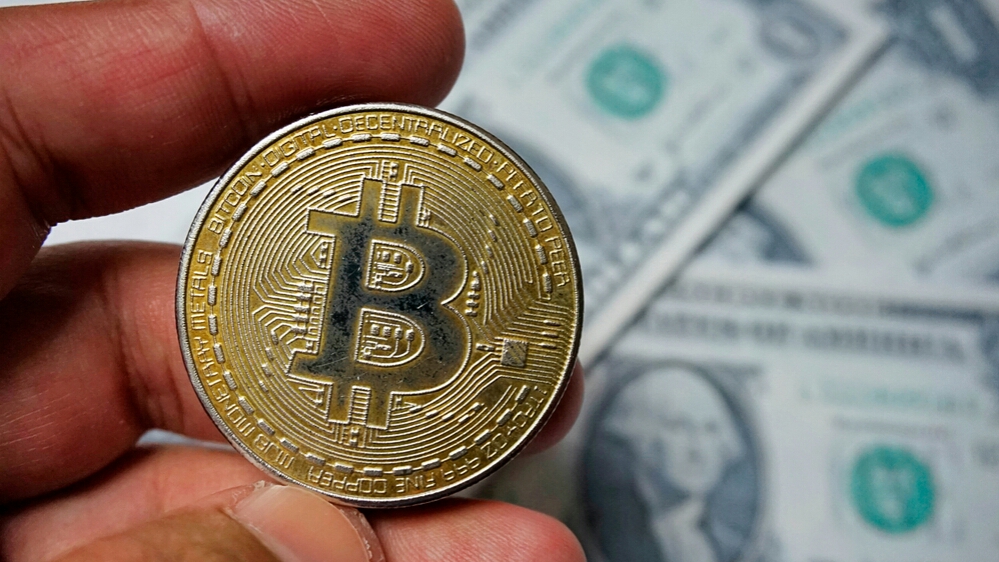
Heavy borrowers and near-failed states likely to drive hyperbitcoinization

In countries like North Korea, military might takes primacy over the economic wellbeing of citizens. Countries like Zimbabwe are not known aggressors but military spending helps insulate the regime from economic discontent. Citizens have experienced central bank heists in two decades in which their savings were substantially eroded by questionable monetary policies.

In Venezuela, where a humanitarian breakdown is now coupled with political confrontation, citizens have resorted to bitcoin to keep their heads above the chaos. Zimbabwe has been slower to transition to bitcoin, but the perennial erosion of the currency is a strong case for cryptocurrency and an increasing number of students are redirecting.

Hyperbitcoinization in oil-rich Venezuela would be driven by cheap electricity which makes bitcoin mining ideal. The more affluent states on the list, particularly the U.K, are advanced in technology, making the penetration of cryptocurrency easier, whereas their counterparts in the global south will be affected by the divide. Some rural populations in the southern hemisphere lack reliable electricity and internet connectivity, placing crypto transactions out of reach.

Hyperbitcoinization is a dystopian bet. Having nurtured the infrastructure required to disrupt fiat hegemony, bitcoin visionaries are waiting for state actors to torch their own world and drive citizens to cryptocurrency. Unlike fiat currencies which can be inflated from reserve bank printing presses, there is a finite amount of bitcoin that can ever enter circulation. Safe from capricious state authorities and free from central control, it is emergency money, on standby for any nation whose people need it.

What do you think about the concept of hyperbitcoinization and which countries are mostly likely to be affected by such an event? Let us know in the comments section  below.


Images courtesy of Shutterstock.


Express yourself freely at bitcoin.com’s user forums. We don’t censor on political grounds. Check forum.bitcoin.com

Tags in this story
Bitcoin, CIA World Factbook, Cryptocurrency, Current account balance, Daniel Krawisz, debt, Failed state, hyperbitcoinization, N-Featured, Satoshi Nakamoto Institute, U.K., U.S.

Heavy borrowers and near-failed states likely to drive hyperbitcoinization
Jeffrey Gogo

Jeffrey Gogo is an award winning financial journalist based in Harare, Zimbabwe. A former deputy business editor with the Zimbabwe Herald, the country’s biggest daily, Gogo has more than 15 years of wide-ranging experience covering Zimbabwe’s financial markets, economy and company news. He first encountered bitcoin in 2014, and began covering cryptocurrency markets in 2017


Published at Sun, 10 Feb 2019 16:30:49 +0000

Previous Article

Bitcoin – bullish opportunity

Next Article

Bakkt furthers acquisitions, pushes for increased manpower in anticipation of imminent launch

You might be interested in …

University Student Involvement Supports Australia’s Booming Blockchain Community

University Student Involvement Supports Australia’s Booming Blockchain Community

The blockchain industry is booming in Australia recently after the Australian Tax Office (ATO) announced changes to tax laws in the 2017–2018 budget summary by the Australian government, surrounding how digital currencies are treated in the country. In the few weeks since the announcement, active blockchain communities and events such as RegHack DownUnder have launched across the country, supported by universities and government regulators.

Australia has traditionally held strict tax laws when it comes to how they handle bitcoin and other digital currencies, defining bitcoin as a separate asset class to fiat currency and requiring that transactions involving digital currencies are taxed twice by the Australian Tax Office. The new budget summary removes any general sales tax made more than once in the supply chain using digital currency, in an attempt to “make it easier for new innovative digital currency businesses to operate in Australia” and to grow their nascent community into a global innovation hub.

The summary states, “The Government is committed to establishing Australia as a leading global financial technology (FinTech) hub and is announcing a new package that aims to position our local fintech industry as a world leader.”

This new regulatory environment has spurred growth in the community, from university campuses all the way up to the government regulators. Students have begun to launch clubs at universities across the country, and regulators and business executives have begun to take notice.

“We’re excited blockchain [technology] can finally move to our campus and Australia in a big way. There’s been a significant increase in interest from the community in the past few weeks,“ said Ryan Pousson, the regional head of the Blockchain Education Network (BEN) in Brisbane and the founder of the UQ Blockchain Club, in a statement to bitcoin Magazine. This perspective was echoed by Jared Piper, a region head of the Blockchain Education Network in Melbourne.

Aaron Schwartz, the director of global engagement at BEN and partner at MLG Capital, told bitcoin Magazine, “It’s super exciting to be part of a decentralized organization like BEN that is doing something unique with a swarm-style model. We are quickly spreading to countries all across the world with new chapters opening up across Australia, Colombia, Nigeria and Bangalore, just to name a few. We encourage anyone in a blockchain community around the world to reach out to get started growing their local community.”

On the weekend of May 12–14, government representatives in the energy sector and banking executives in the financial services industry came together to judge RegHack DownUnder. The brightest developers, UI/UX designers and entrepreneurs across Australia were encouraged to spend the weekend in Melbourne to develop blockchain technology solutions to solve some of the problems it faces in these two heavily regulated sectors.

In advance of the hackathon, Adam Lemmon, a blockchain expert from Toronto, flew down to Melbourne to present an overview of Ethereum development and Solidity to the community. Following the event, Lemmon said, “RegHack was an amazing experience and it was inspiring to see such a young blockchain community so excited about the technology.”

Chami Akmeemana, the organizer of RegHack DownUnder, predicts a fast growth in the community. He said to bitcoin Magazine following the event: “It was a mammoth success. Close to 100 participants spent three days exploring tech solutions to regulatory issues. We now have 100+ blockchain enthusiasts, that I expect [will grow] to over 1000+ by the end of the year. I’m hoping to see some world-class blockchain applications coming out of Australia and I’m stoked to be part of this boost to the ecosystem.”

The regulators in Australia are on board too with this digital transformation. Igor Simunovic, a representative from the Australian Transaction Reports and Analysis Centre (AUSTRAC), said in a statement following the event that “the event provided opportunity for industry (including government) and freelancers/students/developers to meet, integrate and share through the problem solving required to address the Hackathon ‘problems.’ Such meeting and teamwork opportunities are rare and often bound by the [confines] of conferences or meet-ups. The process of discovering new technologies and frameworks was just a bonus.”

It is still the beginning in the growth trajectory of the blockchain community in Australia, but it is an exciting time to be part of a global movement. For example, in the few months following November’s RegHack TO, the first hackathon hosted by a securities regulator in Canada and inspired by Chami Akmeemana, the number of people attending meetups in Toronto has tripled from 200 to over 700 at the most recent blockchain meetup in Toronto. Getting the entire community on board from universities to business executives to government regulators is an important milestone for any community striving to become a blockchain hub.

The post University Student Involvement Supports Australia’s Booming Blockchain Community appeared first on Bitcoin Magazine.

Bitcoin future guess

Bitcoin Future Guess

bitcoin Future Guess EN English (UK) EN English (IN) DE Deutsch FR Français ES Español IT Italiano PL Polski SV Svenska TR Türkçe RU Русский PT Português ID Bahasa Indonesia MS Bahasa Melayu TH ภาษาไทย […]