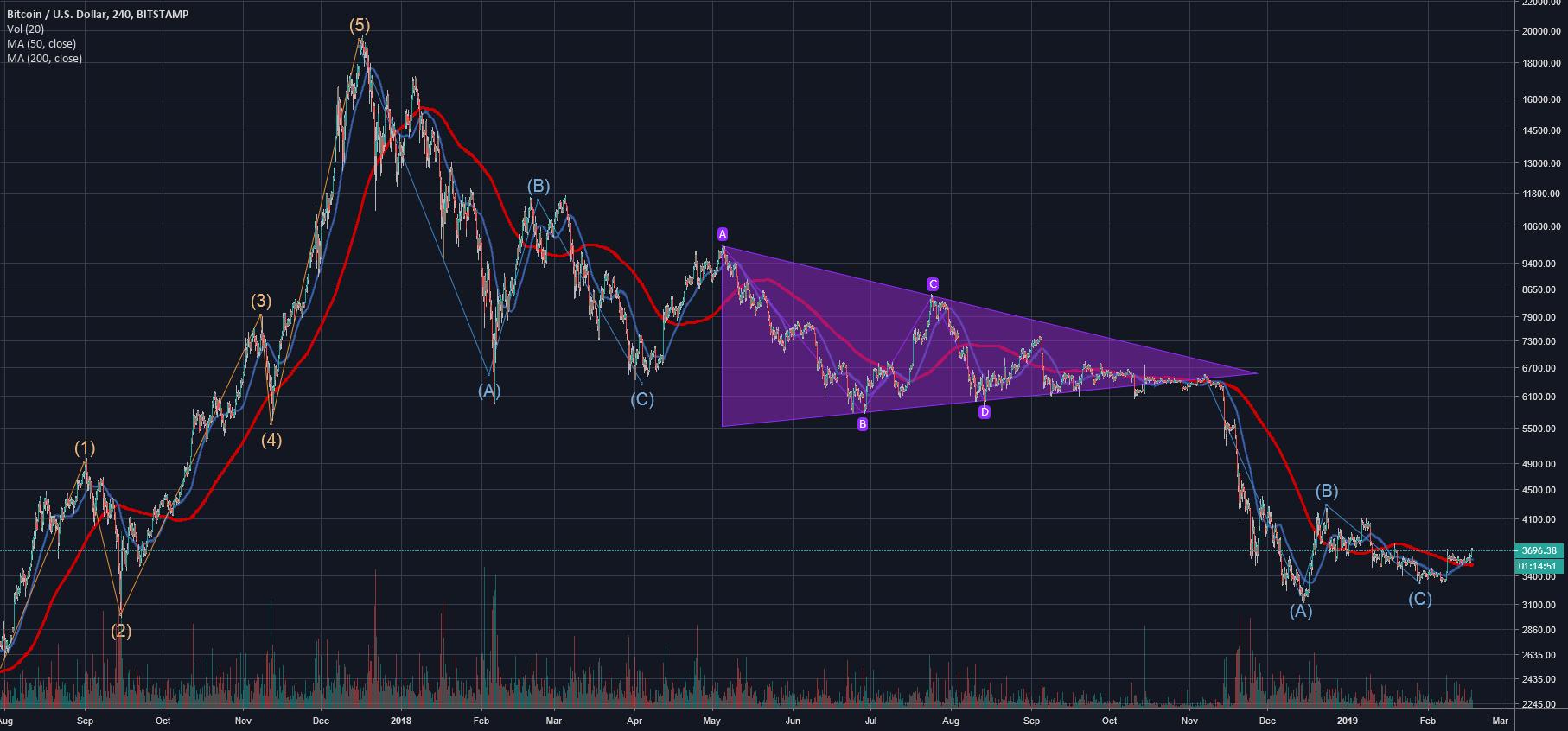
bitcoin’s Fixed Supply Schedule and Its Role in Monetary Scarcity
At the core of bitcoin’s revolutionary economic model lies a fixed supply cap of 21 million coins, an unalterable parameter embedded in its very code. Unlike traditional currencies, which governments can inflate or deflate at will, bitcoin’s supply trajectory is transparent and governed by predetermined rules. This scarcity echoes the finite nature of precious metals like gold,creating a digital asset whose availability diminishes over time as it approaches its limit.
The mechanism ensuring this scarcity is the halving event, a programmed reduction in the reward miners receive for validating transactions approximately every four years. As miners receive fewer bitcoins with each cycle, the rate of new issuance declines in a predictable fashion. This model establishes a scarcity curve that fundamentally contrasts with fiat inflationary systems, preserving bitcoin’s value proposition as a deflationary asset.
| Year | Block Reward (BTC) | Cumulative Supply (approx.) |
|---|---|---|
| 2009-2012 | 50 | 10.5 million |
| 2012-2016 | 25 | 15.75 million |
| 2016-2020 | 12.5 | 18.375 million |
| 2020-2024 | 6.25 | 19.55 million |
Through this rigid supply schedule, bitcoin enforces a form of monetary discipline that is resistant to external political and economic pressures. The assurance that no more than 21 million bitcoins will ever exist has fostered a global community that values predictable monetary policy and scarcity. Consequently, this engineered scarcity distinguishes bitcoin not simply as a cryptocurrency, but as a paradigm shift in how wealth, trust, and money can coexist in the digital age.
The Technical Foundations Ensuring bitcoin’s Supply Immutability
At the core of bitcoin’s supply immutability lies its ingenious codebase, which embeds a predetermined issuance schedule directly into the protocol. This schedule governs the rate at which new bitcoins are minted through the mining process and halves every 210,000 blocks – roughly every four years - until the maximum supply of 21 million coins is reached.This mechanism, known as “halving,” not only controls inflation but also solidifies the scarcity that underpins bitcoin’s value proposition. Crucially, this schedule is enforced by every full node on the network, meaning any attempt to deviate would be rejected by consensus.
Several technical pillars ensure this schedule remains unaltered and enforceable:
- Consensus Rules: All nodes validate blocks according to strict rules that include the number of bitcoins generated in each block, forbidding any block that produces more than allowed.
- Decentralization: Thousands of independent participants worldwide maintain identical copies of bitcoin’s ledger, making coordinated manipulation virtually impossible.
- Cryptographic Verification: The entire blockchain history is cryptographically secured, making it tamper-evident and resistant to retroactive adjustments in supply.
| Technical Feature | Role in Supply Immutability |
|---|---|
| Halving Interval | Enforces gradual supply reduction every ~4 years |
| Consensus Algorithm (Proof of Work) | Prevents unauthorized block creation and enforces rules |
| Full Node Verification | Validates supply rules independently on each participant |
| Cryptographic Hashing | Secures ledger integrity across time |
Economic Implications of a Predetermined Cryptocurrency Supply
The fixed supply schedule of bitcoin introduces a fundamental economic principle seldom seen in traditional fiat currencies: scarcity as a built-in feature. Unlike central banks, which can alter money supply through policy decisions, bitcoin’s issuance is algorithmically capped at 21 million coins. This predetermined cap protects the cryptocurrency from inflationary pressures by ensuring that no additional units can enter circulation beyond what’s programmed, fostering a deflationary habitat distinct from fiat economies.
As supply becomes tightly controlled, the dynamics of demand shift dramatically. bitcoin holders anticipate scarcity-induced value appreciation over time, so treating the asset more like digital gold than a volatile currency. This influences spending behavior-users may choose to hold rather than transact, impacting liquidity and adoption rates. Moreover, scarcity incentivizes mining efforts early on, but as issuance dwindles, transaction fees are expected to sustain network security, adapting the economic model towards user-paid network maintenance.
| Aspect | Impact of Fixed supply |
|---|---|
| Inflation | Virtually zero-fixed supply limits inflation. |
| Store of Value | Enhanced due to scarcity and predictability. |
| Transaction Behavior | Potentially reduced spending, increased holding. |
| Mining Economics | shift from block rewards to transaction fees. |
Ultimately, bitcoin’s predetermined supply offers a paradigm shift to economic policymaking-where monetary expansion is replaced by programmed limitation, promoting long-term value preservation. However, its deflationary attribute also calls for new models in financial behavior and incentives, challenging existing monetary norms and requiring innovative economic theories to accommodate this new digital scarcity.
challenges and Risks Associated with bitcoin’s fixed Supply Limit
The finite supply of bitcoin, capped at 21 million coins, introduces unique challenges that differentiate it from traditional fiat currencies. One key risk stems from potential deflationary pressures. As more users adopt bitcoin, the scarcity effect intensifies, potentially discouraging spending and slowing economic activity within the network. This deflationary spiral could lead to hoarding behaviors, where holders delay transactions, expecting future value appreciation, which might inhibit bitcoin’s practical use as a medium of exchange.
Another challenge relates to the network’s security model. bitcoin’s miners are incentivized through block rewards, which decrease over time as the fixed supply approaches its limit. This reduction in block rewards could lead to diminished mining profitability, risking a decline in miner participation. Without sufficient miners, the security and integrity of the blockchain could be compromised, making the network more vulnerable to attacks, such as the infamous 51% attack.
Additional risks include:
- Increased price volatility as supply remains capped but demand fluctuates unpredictably.
- Potential centralization of wealth, since early adopters and large holders control notable portions of the limited supply.
- Challenges for bitcoin as a unit of account, as deflation can distort long-term price stability.
| Risk Factor | Impact | Potential Mitigation |
|---|---|---|
| Deflationary Spiral | Reduced transaction velocity | Promote use cases beyond store of value |
| Mining Incentive Decline | Lower network security | Transaction fee market development |
| Wealth Concentration | Market manipulation risks | Encourage decentralization initiatives |
Strategies for Investors Navigating bitcoin’s Limited Availability
Investors need to adopt a disciplined approach when engaging with bitcoin, given its fixed supply of 21 million coins. The scarcity factor inherently drives demand, making traditional inflation-hedging strategies less applicable. A long-term holding mindset is crucial, emphasizing patience through volatility rather than seeking rapid profits. This approach recognizes that as fewer bitcoins remain to be mined, their value proposition based on scarcity will strengthen.
To effectively navigate these dynamics, diversification remains key. Incorporating bitcoin within a broader portfolio can moderate risk while capitalizing on its unique attributes. Consider the following strategies:
- Gradual accumulation: Spread purchases over time to mitigate market timing risks.
- Periodic portfolio rebalancing: Adjust holdings in response to bitcoin’s price movements and overall portfolio objectives.
- Utilize secure storage solutions: Protect holdings through hardware wallets or trusted custodial services, ensuring the integrity of limited assets.
| Strategy | Rationale | Key Benefit |
|---|---|---|
| Dollar-Cost Averaging | Reduces impact of volatility | Lower average acquisition cost |
| Portfolio Diversification | Balances risk across assets | Improved risk-adjusted returns |
| Secure Storage | Prevents loss/theft of assets | Maintains asset integrity |
Long-Term Perspectives on bitcoin’s supply and Market Dynamics
bitcoin’s supply is uniquely characterized by its predetermined scarcity, defined by a fixed issuance schedule hardcoded into its protocol.Unlike traditional fiat currencies, which can be printed at will by central banks, bitcoin’s maximum supply is capped at 21 million coins. This immutability stems from the decentralized consensus among miners and nodes, which collectively enforce the supply rules without exception. The halving events, occurring roughly every four years, systematically reduce the block reward by half, ensuring a gradual deceleration in the creation of new bitcoins and embedding a deflationary engine within its very architecture.
This enforced scarcity shapes long-term market dynamics fundamentally. As the issuance rate slows and approaches the final bitcoin, the network transitions into a mature asset with rewards driven predominantly by transaction fees rather than block subsidies. Market participants anticipate that diminished supply growth combined with increasing demand could amplify volatility and price appreciation. The fixed supply schedule creates a predictable supply curve that strategically contrasts with inflationary fiat systems, positioning bitcoin as a digital store of value immune to dilution.
| Year | Block Reward (BTC) | Approximate Supply Issued | Halving Event |
|---|---|---|---|
| 2009-2012 | 50 | 10.5 million | None |
| 2012-2016 | 25 | 5.25 million | First Halving |
| 2016-2020 | 12.5 | 2.625 million | Second Halving |
| 2020-Present | 6.25 | ≈1.3 million | Third Halving |
Moreover, the immutability of bitcoin’s supply schedule fosters a unique form of trust and predictability in an often uncertain financial ecosystem. Unlike assets susceptible to sudden policy changes or inflation surprises, bitcoin assures holders a transparent issuance rate that can be independently verified on the blockchain.this trust underpins the asset’s growing adoption as “digital gold,” with investors valuing the combination of scarcity, clarity, and security over central authority interference. Consequently, bitcoin’s long-term supply perspective is not simply a technical feature-it is the cornerstone of its revolutionary value proposition.