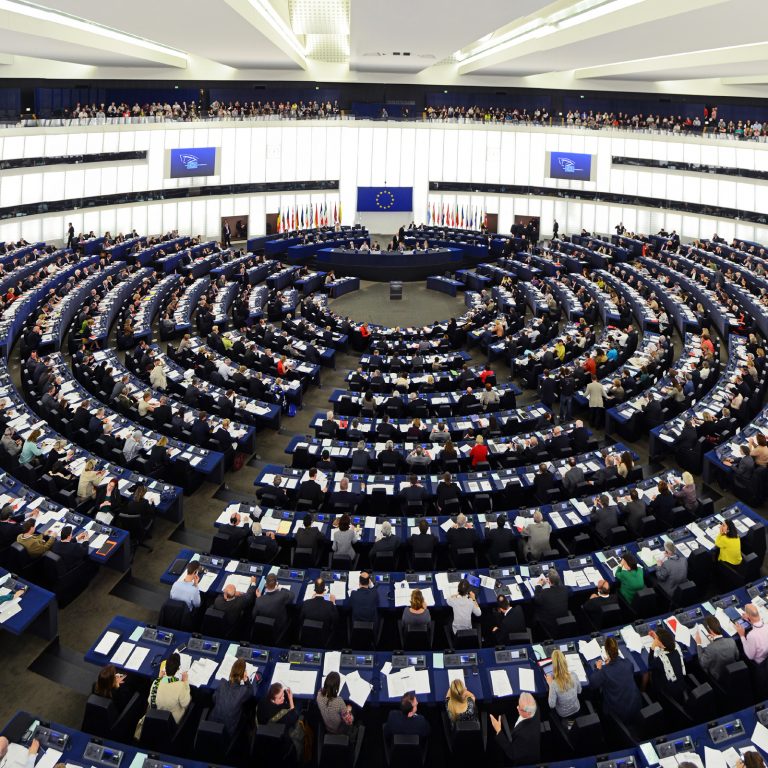
The European Parliament has voted in favor of stricter regulations in the crypto sector. Crypto exchanges and wallet providers will be required to introduce customer due diligence procedures, including identity verification. The platforms will have to apply for registration in order to offer their services. The new measures come with the latest update of the EU Anti-Money Laundering Directive.
Also read:
Under “Closer Regulation”
Members of the European Parliament supported on Thursday an agreement reached with the European Council in December to bring cryptocurrencies under “closer regulation”. The decision was passed with 574 votes, 13 nays and 60 abstentions, the parliament’s press service announced. The agreement represents the fifth and latest update of the EU Anti-Money Laundering Directive.
The amendments are intended to address “risks linked to virtual currencies”. To end the anonymity associated with them, cryptocurrency trading platforms and custodian wallet providers will be obliged to introduce customer due diligence controls, including identity verification procedures. In the future, these businesses will apply for registration in order to offer regulated exchange and payment services.
The changes also target anonymity provided by payment card issuers. MEPs have approved the reduction of the threshold for identifying holders of prepaid and virtual cards – from the current €250 to €150. This will affect companies offering crypto to fiat conversion as part of non-custodial payment services.

European officials claim they are introducing the measures partly in response to the terrorist attacks of 2015 and 2016 in Paris and Brussels, as well as the leaks. “Criminals use anonymity to launder their illicit proceeds or finance terrorism,” said Krišjānis Kariņš, co-rapporteur on the amendments. In his words, the new legislation will “address the threats to our citizens… by tightening rules regulating virtual currencies and anonymous prepaid cards.”
“We lose billions of euros to money laundering, terrorism financing, and tax evasion – money that should go to fund our hospitals, schools and infrastructure,” his colleague Judith Sargentini added. “We introduce tougher measures, widening the duty of financial entities to undertake customer due diligence. This will shine a light on those who hide behind companies and trusts and should keep our financial systems clean,” she insisted.
Attempt at Coordination
The updated Anti-Money Laundering Directive will enter into force three days after its publication in the Official Journal of the European Union. Then, EU member-states will have 18 months to transpose the new rules into national law. They come to replace the lack of coherent policies regarding cryptocurrencies in Europe. Individual member-states have so far applied their own regulations or simply waited for a common legal framework.
Crypto taxation in the European Union is also governed by uncoordinated decisions on national level. This year’s tax filing campaign came with varying widely between 0 to 50 percent. Some governments decided to apply their current tax codes in regards to crypto incomes and profits. Others have partially cryptocurrencies in order to tax gains from crypto transactions.

The only coordinated move so far was the signing of the Declaration on the Establishment of a European Blockchain Partnership. Earlier this month, 22 countries agreed to cooperate in launching EU-wide blockchain applications. The initiative aims do “avoid fragmented approaches” in the deployment of blockchain-based services “for the benefit of the public and private sectors”. The document, however, does not cover cryptocurrencies.
What is your opinion on the measures aimed at ending the anonymity of cryptocurrency users? Share your thoughts in the comments section below.
Images courtesy of Shutterstock, Brookings.
Express yourself freely at bitcoin.com’s user forums. We don’t censor on political grounds. Check.bitcoin.com.
The post appeared first on .