October 4, 2026

Capitalizations Index – B ∞/21M

Ethereum(Eth) and Ripple(XRP) are ‘Noncompliant Securities,’ Says Fmr. CFTC Chairman

Ethereum(eth) and ripple(xrp) are ‘noncompliant securities,’ says fmr. Cftc chairman

Ethereum(Eth) and Ripple(XRP) are ‘Noncompliant Securities,’ Says Fmr. CFTC Chairman

Ripple
Advertisement

Join our community of 10 000 traders on Hacked.com for just $39 per month.

The two most valuable altcoins are most likely “noncompliant securities” under US law, claims a former markets regulator.

Gary Gensler, a former head of the Commodity Futures Trading Commission (CFTC), said that he believes Ether and XRP have been issued through unregistered securities offerings and are trading illegally on the hundreds of cryptocurrency exchanges that list them. Gensler chaired the CFTC from 2009 to 2014 during the Obama administration and later served as chief financial officer for Hillary Clinton’s presidential campaign. Now, he works as a blockchain researcher at the Massachusetts Institute of Technology (MIT), where he also serves as a special adviser to the blockchain-friendly Media Lab and a senior lecturer at the Sloan School of Management.

“There is a strong case for both of them — but particularly Ripple — that they are noncompliant securities,” Gensler told the New York Times.

That’s because both cryptocurrencies have been sold by their creators and purchased primarily as investments for speculative reasons. bitcoin, in contrast, was never issued in this manner and is thus unlikely to be deemed a security by regulators. As CCN reported, Ethereum was bootstrapped in an initial coin offering-style presale in 2014, through which investors purchased Ether units that were distributed once the Ethereum network launched in July 2015. Following that initial distribution, new units of Ether have been distributed through mining, and the Ethereum Foundation now controls less than one percent of the Ether supply. However, top officials at the Securities and Exchange Commission (SEC) reportedly recently refused to assure an industry working group backed by venture capital firms Andreessen Horowitz and Union Square Ventures that Ether is not an unregistered security. Nevertheless, Gensler said that because Ethereum has been functional for nearly three years and has achieved a more decentralized development structure, it has a greater chance of evading the “noncompliant securities” label than XRP and most ICOs. XRP was created by San Francisco-based blockchain startup Ripple, and the company issues tokens at its own discretion through sales, grants, and other centralized means. Ripple has repeatedly claimed that XRP is not a security, though cryptocurrency exchange operator and brokerage firm Coinbase has suggested that it does not believe there is regulatory certainty that prevents it from listing the token.

“XRP does not give its owners an interest or stake in Ripple, and they are not paid dividends,” Ripple spokesman Tom Channick told the NYT. “XRP exists independent of Ripple, was created before the company and will exist after it.”

Gensler, meanwhile, said that he believes 2018 will bring a reckoning for the cryptocurrency industry, as regulators continue to take a more active role in policing ICOs and other token sales that allegedly constitute unregistered securities offerings. “2018 is going to be a very interesting time,” Gensler said. “Over 1,000 previously issued initial coin offerings, and over 100 exchanges that offer ICOs, are going to need to sort out how to come into compliance with U.S. securities law.”

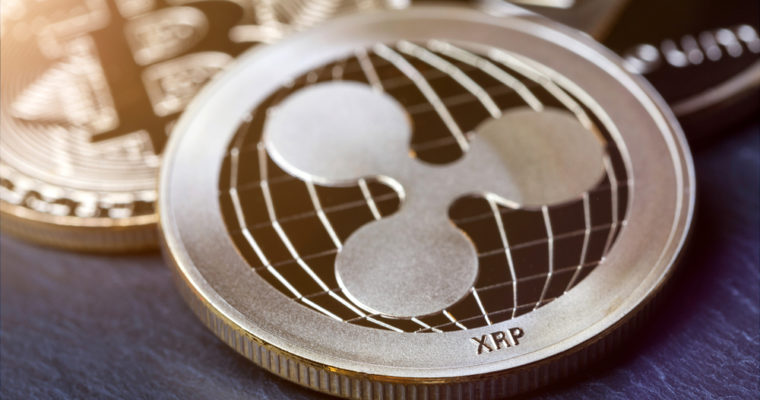
Featured image from Shutterstock.

Follow us on Telegram.
Advertisement

Published at Mon, 23 Apr 2018 17:10:07 +0000

bitcoin Regulation

Previous Article

How Did Marijuana Coins React to 4/20?

Next Article

Casinocoin (CSC) A Digital Currency For The Regulated Online Gaming Sector

You might be interested in …

Japan's GMO Internet Group Will Pay Thousands of Workers in Bitcoin

Japanese Firm GMO Will Pay Thousands of Workers in Bitcoin

Blockchain development companies and the cryptocurrency press have been paying their workers in cryptocurrencies for years, but one realizes that the times are truly changing when mainstream companies start paying their workers in bitcoin.

GMO Internet Group, a Japanese provider of a full spectrum of internet services for both the consumer and enterprise markets, is introducing a system for employees to receive part of their salary in bitcoin.

Headquartered in Tokyo, GMO Internet Group comprises more than 60 companies in 10 countries. In view of the group’s size and financial muscle, this initiative is likely to boost the mainstream adoption of the practice of paying salaries in cryptocurrencies.

The move is partly motivated by the desire to promote the adoption of bitcoin, which is a strategic priority for GMO. In fact, the group is vigorously active in bitcoin trading and mining services, as well as mining hardware development. Therefore, anything that is good for bitcoin is also good for GMO.

In May 2017, GMO launched a cryptocurrency exchange, initially dubbed Z.com Coin and later rebranded as GMO Coin, which features cryptocurrency FX and trading on both computers and smartphones. The exchange offers two types of services: cryptocurrency FX, which is an over-the-counter (OTC) bitcoin margin trading and cryptocurrency trading, which enables buying and selling of virtual currency in JPY in addition to basic features allowing customers to send and receive bitcoins.

In September 2017, GMO announced the upcoming launch of a new bitcoin mining business. “We will operate a next-generation mining center utilizing renewable energy and cutting-edge semiconductor chips in Northern Europe,” GMO stated, emphasizing that they will invest in R&D and manufacturing of hardware including the next-generation mining chip.

“We will use cutting-edge 7 nm process technology for chips to be used in the mining process, and jointly work on its research and development and manufacturing with our alliance partner having semiconductor design technology.” The mining business is scheduled to start in January 2018.

GMO expressed its belief that cryptocurrencies will develop into “new universal currencies” available to anyone from any country or region who wants to freely exchange value, “creating a new borderless economic zone.”

The option to receive part of the salary in bitcoin will initially only be available to employees of one GMO company — GMO Internet Co. Ltd. — starting in March 2018, but it will be gradually extended to more than 4,000 employees in other GMO companies based in Japan.

The minimum bitcoin payment will initially be 10,000 yen (~$88) and the upper limit will be 100,000 yen (~$881). Each salary payment in yen will be reduced by the amount of bitcoin paid, using the exchange rate at the GMO Coin exchange.

Mainichi Japan notes that Japan’s labor code stipulates that businesses must pay employees in a recognized currency such as the yen, but, according to GMO, the move is in accordance with the law because any payments in bitcoin would be consensual, with a chosen amount to be deducted from paychecks and put toward purchasing bitcoin. The cryptocurrency is rising in popularity in Japan with an increasing number of retailers accepting it as a form of payment.

GMO Internet Group wants to contribute to the development of cryptocurrencies in the world by promoting cryptocurrency-related initiatives throughout the group. In particular, GMO wants to promote ownership of bitcoin among its employees — who can be the best evangelists for the group’s products and services related to the digital currency — to improve the employees’ exposure to and understanding of bitcoin.

“Employers can now pay employees a portion of their net earnings in bitcoin by collaborating with niche payroll solution providers such as Bitwage, Wagepoint, or Bitpay, who manage the back-end mechanics, eliminate exposure to price volatility, and reduce compliance and governance risks,” noted Deloitte principal Eric Piscini.

A recent overview of cryptocurrency payroll processors and early adopting clients notes that offering salaries in bitcoin could make it easier for companies to retain and attract talent. Besides compensating current employees, “[cryptocurrencies] could help businesses more effectively tap into the open talent economy, where individual contributors may be drawn to business partners that offer payout features only cryptocurrency makes possible: fast peer-to-peer payments across country borders with minimal friction (or total freedom) from traditional banking systems,” said Piscini.

For now, the GMO press release is available only in Japanese.

The post Japan's GMO Internet Group Will Pay Thousands of Workers in Bitcoin appeared first on Bitcoin Magazine.

Bottom feeders’ time to shine

Bottom Feeders’ Time to Shine

Bottom Feeders’ Time to Shine Big news this morning that everyone’s talking about… The article on cheddar seems to be the source of this news as little has been confirmed by Facebook themselves save for the fact […]