June 23, 2026

Capitalizations Index – B ∞/21M

EOS BP, Explained | Cointelegraph

Eos bp, explained | cointelegraph

EOS BP, Explained | Cointelegraph

Eos bp, explained | cointelegraph

2.

It is based on a consensus mechanism called delegated proof-of-stake (DPoS).

On a PoW blockchain like bitcoin, miners employ large amounts of computational power to solve complex mathematical equations. Once the equation is solved, the miner publishes the answer for verification by the other miners on the network, and consensus is reached. The block is then added to the chain, the miner that solved the equation collects his/her block reward, and everyone moves on to the next equation.

On a PoS network like Cardano, nodes stake an amount of tokens (essentially locking up tokens in a specific wallet address for a set period of time) for the chance of being selected to add the next block of transactions to the chain. Although the selection is random, factors such as the amount staked, the amount of time it has been staked and the reputation of the node are often taken into consideration.

Delegated proof-of-stake is a version of PoS, where instead of validators being chosen at random, they are voted for by the rest of the token holders on the network. Another difference on EOS specifically is that, instead of purely staking EOS tokens, Block Producers stake their investment in the network in the form of infrastructure, community support, development, etc. We’ll look at this more in-depth below.

These delegates are then tasked with upholding the integrity and accuracy of the network by coming to a majority consensus on data or transaction blocks that have to be added to the network.  

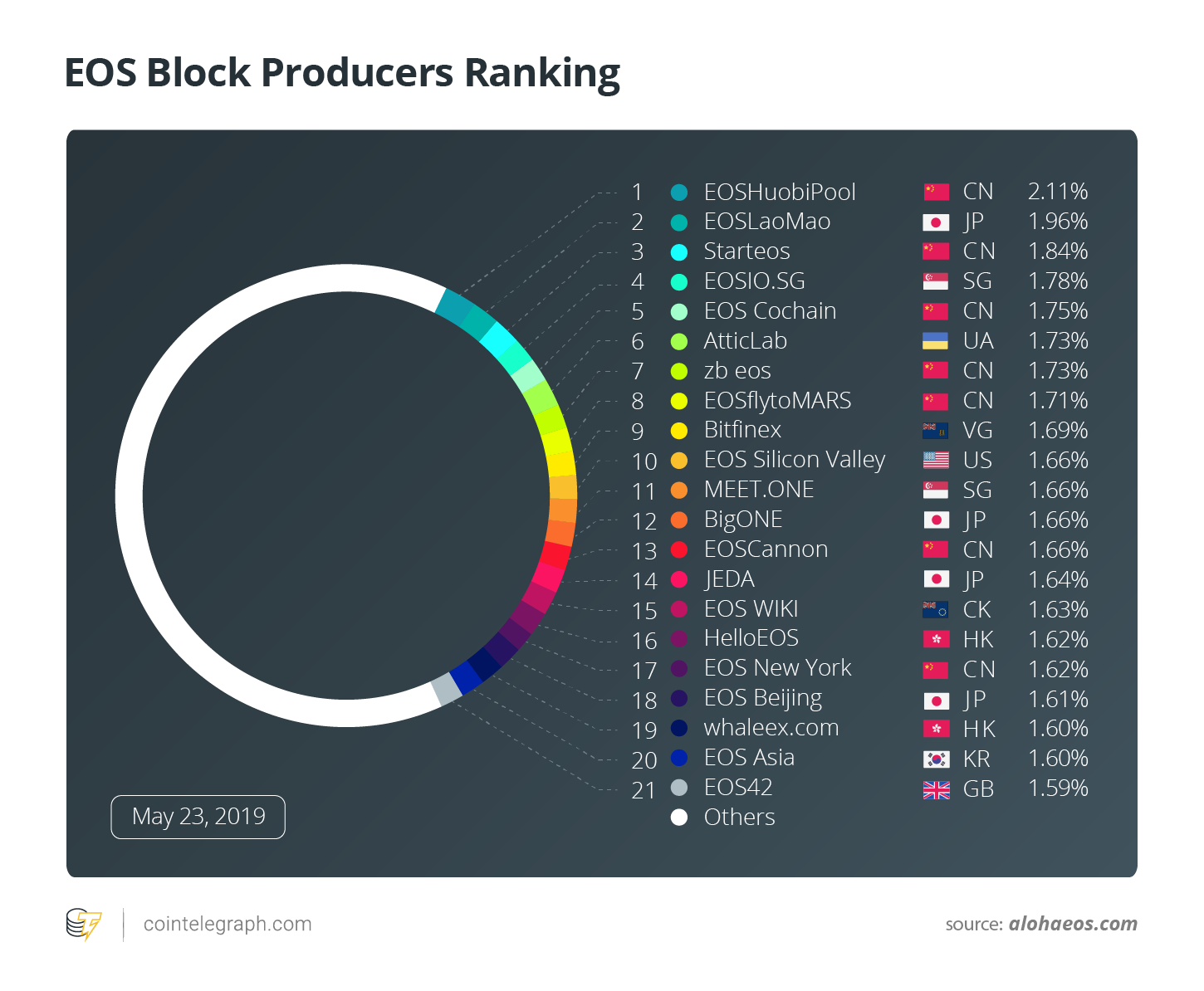
Brendan Blumer, CEO of Block.one, the company behind EOS, describes Block Producers in the EOS.IO technology as “21 elected delegates by the token holders that are actually confirming the transactions of the network.”


Published at Fri, 24 May 2019 03:23:05 +0000
Previous Article

6 Effective Decisions that Can Save Your Business from Drowning

Next Article

Zilliqa Migrates to New Address Format – Zilliqa — Official Blog

You might be interested in …

Bitcoin eyes $10k after high volume drop

Bitcoin Eyes $10K After High Volume Drop

bitcoin Eyes $10K After High Volume Drop bitcoin is looking increasingly heavy and could test the $10,000 mark in the next 24 hours, according to the technical charts. Having failed to cut through resistance around […]

CryptoKitties Creates Massive Backlog on the Ethereum Network

The new decentralized game CryptoKitties launched last week, with the purpose of the game to collect, bred, and trade electronic cats. Due to the game’s unbelievable popularity, the Ethereum network has been seeing record rates of transaction backlog.


Cat-Based Trading Game

CryptoKitties launched at the end of last month as one of the first games based on a decentralized blockchain. A kooky combination of Pokemon meets Beanie Babies on the blockchain, the goal of the game is to buy virtual cats and collect them. Each cat has is unique and has its own “DNA” that is recorded on the blockchain. Once you start acquiring a decent number of cats, you can start breeding them to create new, rarer cats. These cats have a value on the open marketplace, with the first cat created dubbed the “Genesis Cat” fetching upwards of $110,000 in ether.

Image result for crypto kitties

These cats are traded via Ethereum transactions, and it is quickly taking over the network. At the beginning of the weekend, CryptoKitties trades amounted to roughly 4% of the network’s transaction volume. Today they account for almost 15% of the transaction volume. It has gotten to the point where the team behind the game has announced that they are doubling the fees needed to birth a new cat to make sure the transaction can get processed in a timely manner.

We’re beginning to see cracks in the second biggest blockchain in the world, adding an urgency to scaling solutions that blockchain technology desperately needs. bitcoin has been experiencing full or near full blocks for over a year now. With Ethereum soon to be hitting its capacity, research into new options to help decentralized technology scale are needed soon.

Fixing the Problems at Hand

Some people are requesting that miners increase what is known as the gas limit, which is like blocksize in bitcoin. Gas is a measure of computational effort, and each operation has a set amount of gas attached to it. Operations can be things like adding numbers together, calculating a hash, or sending a transaction. The limit is the maximum amount of gas that can be included in a block. With this limit in place, it can cap the block size and the speed of propagation around the network. These two things are essential to maintain the decentralized nature of blockchain technology.

Unfortunately, miners are unlikely to change this parameter as it has its own adverse effects as well. A statement made on Reddit by the operator of EtherChain, a large Ethereum mining pool, has stated

The network uncle rate has already reached levels (~30%) comparable to the Network DoS attacks during October 2016. This means that currently every 3rd Block get orphaned. Increasing the gas limit will likely make the current situation even worse. Without substantial improvements on how those large blocks are processed by the current implementations and distributed through the network I don’t think increasing the gas limit further is feasible right now. While high end systems are still able to validate heavy blocks within several 100 ms, low end systems already take up to a few seconds to validate and distribute a block.Bottom of Form

A solution is needed for the current levels of congestion, as some transaction fees are hitting close to a dollar, a level that the Ethereum Network was never supposed to hit.

What do you think about this new game? Do you own any crypto kitties? Let us know in the comments below!


Images courtesy of CryptoKitties.co, BitInfoCharts

The post CryptoKitties Creates Massive Backlog on the Ethereum Network appeared first on Bitcoinist.com.