June 28, 2026

Capitalizations Index – B ∞/21M

Declining GPU Sales to Cryptocurrency Miners ‘Healthy’: AMD CEO

Declining gpu sales to cryptocurrency miners ‘healthy’: amd ceo

Declining GPU Sales to Cryptocurrency Miners ‘Healthy’: AMD CEO


Amd
Advertisement

Join our community of 10 000 traders on Hacked.com for just $39 per month.

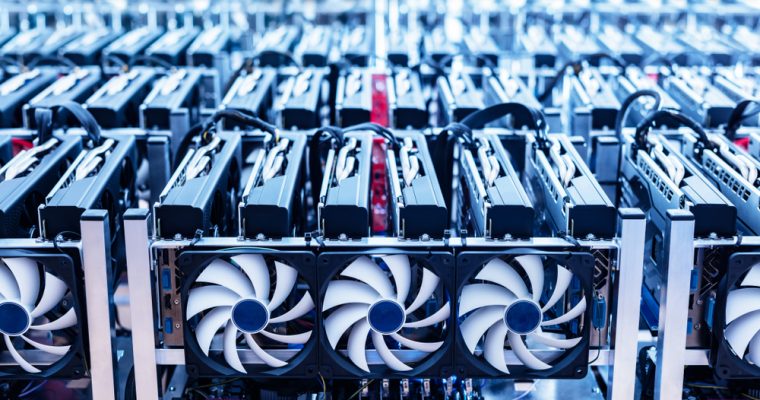
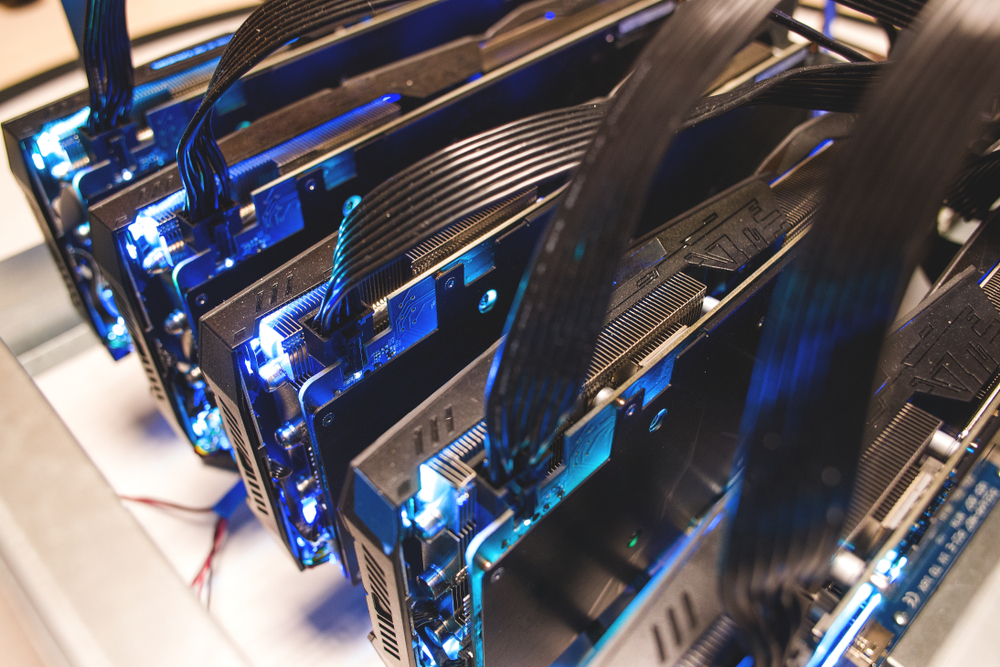
GPU manufacturers Nvidia and AMD each enjoyed massive sales over the past year, partially thanks to miners who buy GPUs to mine cryptocurrencies. However, those sales are now declining.

The demand for GPUs kept increasing as the value of cryptocurrencies went up throughout 2017. But after the market cap reached an all-time high of $830 Billion, the market crashed and is at half that now. The demand for mining has also cooled down as it is not as lucrative it was for a few months when cryptocurrency prices surged.

AMD reported revenue of $1.65 Billion for the first quarter of 2018 and claimed 10% of that was from GPU sales to miners. Nvidia, on the other hand, reported revenue of $3.21 billion, and $289 million (9% of their total revenue) was from sales to miners.

Though the companies have had massive sales in the cryptocurrency industry, they are not keen to expand on it. Both companies want their GPUs in the hands of consumers for gaming and research purposes rather than miners.

Jensen Huang, the CEO of Nvidia, said:

“The reason why they bought [GPU cards] is for gaming, but while they are not gaming; while they are at school, at work, or in bed — they will turn it on and do a little mining. There’s nothing wrong with that.”
Amd
Both amd and nvidia experienced noticeable growth due to last year’s uptick in cryptocurrency mining, but each expects this sector to decline moving forward.

Both companies now expect their revenue from miners to fall in the coming months, but that’s not necessarily because they believe the cryptocurrency market is flaming out.

Bitmain, the largest application-specific integrated circuit (ASIC) miner manufacturer announced ASIC miners for Ethereum last month. Ethereum is the most popular cryptocurrency mined on GPUs, and once the Antminer E3 is out, it might render the existing GPU miners useless.

But Bitmain was gaining ground even before it announced the Antminer E3. Last year, Nvidia posted profit of $3 Billion, which includes all their products like cloud computing and AI chips. Bitmain posted an operating profit of nearly $4 billion selling just ASIC miners.

AMD CEO Lisa Su is bullish on blockchain and does not think it is going to go away. She expects the mining-related demand for GPUs to drop by two-thirds in the second quarter. However, she is not worried about the drop in sales and called it “healthy” for the company.

Commenting on the crypto-related demand for GPUs, Lisa Su said:

“I do think the blockchain infrastructure is here to stay. I think there are numerous currencies. There are numerous applications that are using the blockchain technology. We don’t see a significant risk of secondhand GPUs coming into the market. I think what you find is that, one, there are number of different currencies, and, two, a lot of these users that are buying GPUs these days are actually buying them for multiple use cases, both commercial and consumer.”

Both Nvidia  and AMD have accepted the fact that cryptocurrencies and blockchain are here to stay. Both companies have been embracing these new technologies, but they also aren’t concerned if the revenue from these sales drops in the near future.

Featured Image from Shutterstock

Follow us on Telegram.
Advertisement

Published at Wed, 16 May 2018 23:00:11 +0000

Altcoin Mining

Previous Article

CME Group Says It’s Gauging Client Interest on Ethereum Futures After Index Launch

Next Article

Landscape, Sunset, Vivid, Shepherds Delight, Acrylic Painting on Canvas, Bitcoin, Ethereum, ETH, LTC, Litecoin.

You might be interested in …

Mastercard Blockchain Now Open for Payment Processing

Mastercard has opened up their own blockchain to allow payment transactions to be carried out between selected banks and merchants, but this process uses fiat currency and not bitcoin or other cryptocurrencies.


Quite a few companies have taken a keen interest in what blockchain technology has to offer, and one of these corporate entities is Mastercard, the massive credit card provider. Mastercard has spent the last few years developing its own blockchain, and now the Mastercard blockchain has been opened up as an alternative method of paying for goods and services. The major difference found in the Mastercard blockchain is that it does not use its own cryptocurrency. Instead, it uses real world money.

Mastercard Blockchain Open for Business

The Mastercard blockchain is now open for specific banks and retailers to use as a payment processing system. So far, participation in this blockchain is by invitation only. The last week has been a busy one for Fortune 500 companies and blockchain technology. IMB opened up their own blockchain earlier in the week. Probably the most intriguing aspect of the Mastercard blockchain is that it does not use its own cryptocurrency, which is something that even the IBM blockchain does.

Justin Pinkham, a senior vice president at Mastercard Labs, says:

We are not using a cryptocurrency, and we are not introducing a new cryptocurrency, because that introduces other challenges—regulatory, legal challenges. If you do a payment, then what we can do is move those funds in the way that we do today in fiat currency.

Why the Mastercard Blockchain Could be Very Successful

Some people may look at the Mastercard blockchain and shrug, but there are some factors in why it could be very successful. The first such reason is that Mastercard is lord and master of a vast financial empire, so to speak. It has a settlement network that counts 22,000 banks and financial institutions from all over the world. Few other entities have such a global reach. Another important factor is that the Mastercard blockchain only uses fiat currency, which reduces costs as there’s no need to convert one form of cryptocurrency into another and then, eventually, cash.

This reduction in cost is also amplified by reducing fees for cross-border payments. Normally, a payment that crosses national borders would have to pass through different sovereign banks, racking up fees with each step. The Mastercard blockchain would remove those steps entirely, thus making the payment less expensive and probably faster. Eventually, Mastercard’s blockchain could be used for other items, such as luxury goods to provide “proof of provenance.”

Overall, this is an interesting development. Could the lack of a cryptocurrency tie-in fire a shot across the bow of other blockchains? One also wonders how the energy use for a single transaction on the Mastercard blockchain compares to current credit card transactions and bitcoin. A Dutch bank recently reported that the average energy cost for a bitcoin transaction was 200kWh, and the cost for an Ethereum transaction was 37kWh. By comparison, a credit card transaction only incurred an energy cost of 0.01kWh.

Do you think the Mastercard blockchain will have a major impact? Does the fact that it does not use a cryptocurrency have long-lasting ramifications? Let us know in the comments below.


Images courtesy of Wikimedia Commons, Pixabay, and Flickr.

The post Mastercard Blockchain Now Open for Payment Processing appeared first on Bitcoinist.com.