October 4, 2026

Capitalizations Index – B ∞/21M

Crypto-Positivity Still Big in Japan Despite High Profile Hacks

Crypto-positivity still big in japan despite high profile hacks

Crypto-Positivity Still Big in Japan Despite High Profile Hacks

Emilio Janus · March 28, 2018 · 6:00 pm

As the flying taxi swoops past a building-sized electronic billboard, my robot driver flicks a switch. A screen bursts into life: Five high-pitched squeals in unnecessarily shiny costumes make a noise vaguely resembling music. The message is clear. I swipe my communicator against the console in the taxi and gasp at the questionable number of credits it takes for the ride. And the relentless pounding rain tries and fails to wash the criminal scum from the streets far below.


High-tech Highway

When many of us think of Japan, it is perhaps something along the lines of this cyberpunk inspired vision which comes to mind. And certainly, this is not too far removed from one of the many faces of modern Japan. Bar the flying taxi of course, although who knows how far into the future that will manifest itself.

Billboards, reality TV shows and the Virtual Currency Girls, all exist to push the message of bitcoin and crypto-uptake to the masses.

Not that they require much pushing, as the negligible interest rates offered by banks aren’t exactly a big pull in the other direction.
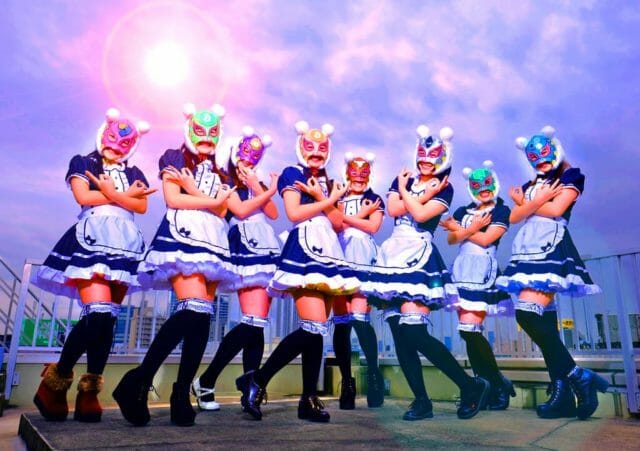
Virtual currency girls in japan

Regulation Station

This might seem a bit of an unlikely scenario, following the hack four years ago of the Tokyo-based Mt. Got exchange. That theft and the subsequent collapse of the Mt. Gox exchange led to the loss of 850,000 bitcoin. It also ushered in one of the earliest regulatory frameworks for bitcoin worldwide.

It is perhaps, due to these relatively strong regulations being imposed that public confidence in cryptocurrencies was restored. Not that they have been able to prevent further hacks, as earlier this year the Coincheck exchange reported a half a billion dollar loss.

Regulation station

Grand Crypto Central

A new organization is being formed, tasked with strengthening existing regulations, although regulations have certainly not harmed the market in Japan so far. Despite and/or because of them, Japan has 16 licensed virtual currency exchanges, and around half of the world’s bitcoin trades are though to utilize yen.

Japan is now bitcoin’s heart, the country that is at the center of its support.

– Yuzo Kano, head of Japan Blockchain Association and CEO of Bitflyer exchange

Do you think that Japan will become the center of all things crypto despite cautionary tales like Mt. Gox and Coincheck? Let us know in the comments below.


Images courtesy of Wikimedia Commons, Cinderella Academy Inc, Shutterstock

Disclaimer: The views and opinions expressed in this article are solely those of the author and do not necessarily reflect those of Bitcoinist.com. Claims made in this article do not constitute investment advice and should not be taken as such.

bitcoinCoincheckCryptocurrencyJapanmt gox Show comments

Published at Wed, 28 Mar 2018 22:00:45 +0000

Altcoin News

Previous Article

Survey: Younger Koreans More Likely to Invest in Crypto

Next Article

NEO, EOS, LTC, IOTA and Lumens: Altcoins Technical Analysis March 29, 2018

You might be interested in …

Blockchain privacy problem

Blockchain Privacy Problem

Blockchain Privacy Problem Failed Normal: https://www.FailedNormal.com Buy Parts and Products HERE: https://www.amazon.com/shop/elithecomputerguy Downloadable Podcasts at: https://failednormal.podbean.com iTunes: https://itunes.apple.com/us/podcast/failed-normal/id1349818284?mt=2

South Korea Tightens Grip, But Won’t Ban Bitcoin Trading

It was only a matter of time until authorities pulled the reins in on one of the biggest crypto trading nations in the world. South Korea, which is responsible for as much as 25% of total crypto trading volume, said on Thursday it will impose additional measures to regulate speculation in crypto within the country.


South Korea Will Ban Anonymous Crypto Trading

As previously reported that more regulations are expected, South Korean regulators have confirmed additional measures to curb illegal activities at cryptocurrency exchanges. According to Reuters, the government noted that trading prices of most digital currencies were much higher on South Korean exchanges than they were on exchanges in other countries.

A government spokesperson made the following statement:

The government had warned several times that virtual coins cannot play a role as actual currency and could result in high losses due to excessive volatility.

The first steps will include a ban on opening anonymous crypto trading accounts. Most exchanges require photographic proof of identity anyway, so this regulation is nothing to be concerned about.

Secondly, however, is a more alarming plan to introduce new legislation which will allow regulators to close virtual coin exchanges if required. This measure had been recommended by the justice ministry, according to the statement.

Previously, South Korea had announced a plan to tax capital gains from cryptocurrency trading to tackle what it perceives as the risk of excessive speculation.

Banks Backing Off

As expected, earlier this week, two major banks in South Korea announced that they are closing reward programs, which allow clients to purchase bitcoins with credit card bonus points.

Commercial banks in the country are increasingly preventing the opening of new virtual accounts, which are necessary to trade on South Korean crypto exchanges.

South Korea Bans Bitcoin Futures As Authorities Consider Crypto Income Tax

In addition to Shinhan Bank and KB Kookmin Bank closing rewards programs next month, Woori Bank and Korea Development Bank also announced that they would be closing all virtual accounts provided to exchanges.

It is no surprise that banks in South Korea and elsewhere are pulling back from crypto; the concept essentially goes against their business model. Unfortunately, in this embryonic industry, traders still need to rely on exchanges, many of which, such as Coinbase, have adopted banking-style models of fees and commissions. Only when crypto trading is truly decentralized and peer-to-peer will the masses start to benefit more than the banks and exchanges.

Will the Korean clampdown affect the markets? Add your thoughts to the comments below.


Images courtesy of Pixabay, PublicDomainPictures, and Bitcoinist archives.

The post South Korea Tightens Grip, But Won’t Ban Bitcoin Trading appeared first on Bitcoinist.com.