Cómo funciona Blockchain. Explicación sencilla visual en español
Explicación esquemática sobre el funcionamiento de ₿itcoin y ₿itcoin.
Todos los comentarios bienvenidos.
Yo uso Coinbase (y su hermano GDAX) para operar en crypto.
Si te unes a coinbase con este link, los dos ganamos $10:
https://www.coinbase.com/join/58db87f12a49420091056dd0
Twitter: @CryptoEsp
Web: cryptoespanol.org
21/11: en la cabecera de los nuevos bloques, se hace el hash solo de la cabecera anterior, no del bloque entero. Es un detalle, pero me lo hizo saber un suscriptor, y me pareció correcto compartirlo con todo el mundo.
News Ohio Ready to Accept bitcoin for Tax Bills more info… Thailand’s SEC Issues Warning Against 14 Unauthorised Websites more info… Cryptovest Securitize Funding Round Attracts Coinbase VC, Blockchain Capital, Xpring and More Digital Asset […]
News – CCN Bitfinex Implicated in Laundering Drug Money, Polish Media Reports Bitfinex, one of the world’s largest cryptocurrency exchanges, has been implicated in a Polish investigation into the Columbian drug cartel’s money laundering operation, […]
Support the show, consider donating:BTC: 17foNL7cdvPXPyiazDGuKfrjjdJQjwUTv1 ()ETH: 0x8cdb49ca5103Ce06717C4daBBFD4857183f50935 ()
For decades, science and academia have leveraged distributed computing to solve massive computational problems. Distributed grid computing schemes allow donors to volunteer their desktop computer’s idle resources toward scientific projects in physics, biology, and chemistry, where large amounts of parallel computing resources are necessary. Relying on software like BONIC, these networks provide features such as built-in fault tolerance and result verification. And with the proliferation of mobile and IoT, the potential for massively distributed grid networks has never been greater.
Gilles Fedak, a researcher at the French computer science research body Inria, joins us to discuss a new project which aims to build a high-performance distributed cloud infrastructure marketplace. Relying on mature grid computing technologies, iExec utilizes Ethreum to organize a peer-to-peer marketplace of computing resources, allowing anyone to rent their idle resources to grid networks. If it succeeds to execute on its vision, this game-changing project could revolutionize distributed computing through cost reduction and the commoditization of resources.
Topics discussed in this episode:
Gilles’ background as a distributed computing researcher
Distributed computing and it’s applications in science and industry
The problems we see in distributed computing networks
The iExec project and its vision for a distributed computing resource marketplace
How iExec works as an Ethereum smart contract
The different components and participants of iExec
The iExec token and upcoming crowds ale
The project’s business model and roadmap
Links mentioned in this episode:
Sponsors:
Jaxx: Wallets that Unify the Blockchain Experience Across Devices –
Ledger: Smart card security for your Bitcoins – Get 10% off your first order when you use the code EPICENTER –
This episode is also available on :
Watch or listen, Epicenter is available wherever you get your podcasts.
Epicenter is hosted by Brian Fabian Crain, S?ƒbastien Couture & Meher Roy.
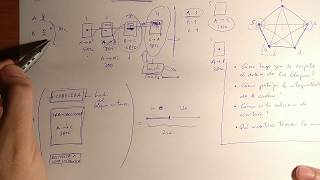
 Explicación esquemática sobre el funcionamiento de ₿itcoin y ₿itcoin.