July 4, 2026

Capitalizations Index – B ∞/21M

China Quietly Makes It Illegal to Run a Node Without Gov’t Approval

China quietly makes it illegal to run a node without gov’t approval

China Quietly Makes It Illegal to Run a Node Without Gov’t Approval

China has introduced new regulations intended to promote the ‘healthy development’ of blockchain technology. However, the new law also entitles the Cyberspace Administration of China to supervise node operators, as well as to request private information. 


New Blockchain Regulations

China’s Office of Central Cyberspace Affairs Commission (CAC) issued new regulations dubbed “Regulations on the Management of Blockchain Information Services.” According to the release, the new law will take full effect on February 15th.

The regulations paint providers of “blockchain information services” with a broad brush defining it as the “provision of information services to the public through Internet sites and applications based on blockchain technology or systems.”

Additionally, blockchain service providers can be an:

entity or node that provides the blockchain information service to the public and the organization or organization that provides technical support for the blockchain information service.

For ‘Healthy Development of Blockchain’

China released draft guidelines back in October 2018, which were geared to halt anonymous blockchain use.

The current regulations are supposedly geared at promoting the “healthy development of blockchain technology and related services.” But the real question is: at what cost?
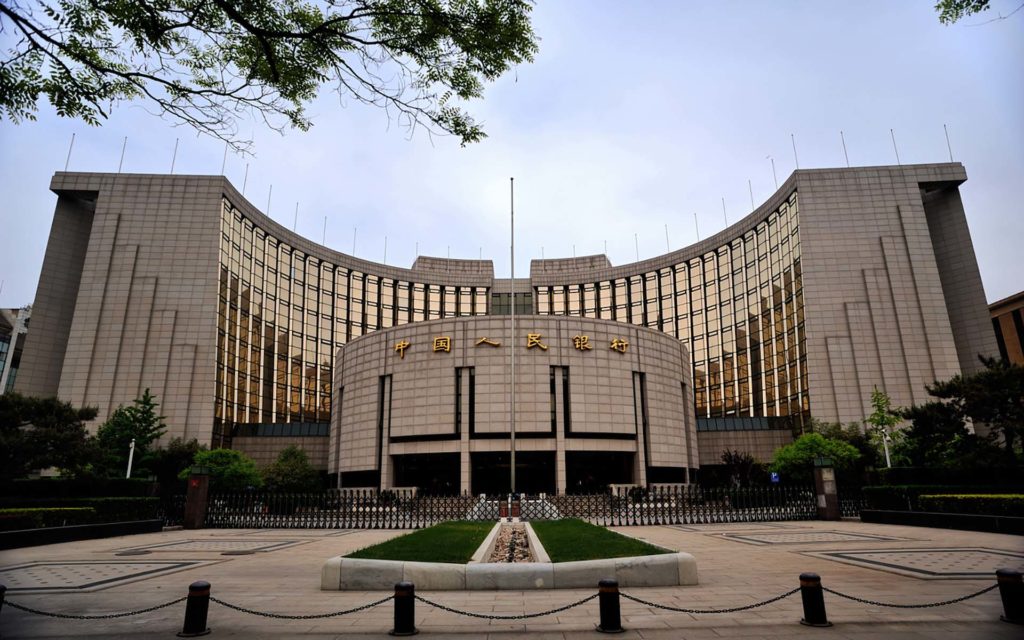
People's bank of china

First off, blockchain service providers will be requested to register their services types, industry fields, names, server address, as well as any changes made to them in future with the CAC. This information would become publicly available.

In other words, the new law makes it illegal for users to download and run BTC’s free and publicly available software client because a “blockchain service provider” can be a node that provides the blockchain information service to the public.

In order to do so, they’d have to go through a registration process and give up their private information. Perhaps users who don’t want to be fined will be better off using Tor – a hidden service allowing most firewalls and network address translation setups to be bypassed.

Today, China accounts for a 3.98% (or 408) of all reachable BTC nodes, according to data from BitNodes.

Additionally, the guidelines also require blockchain service providers to allow the authorities access to their data and to go through registry procedures where users’ ID cards numbers are necessary.

Those who fail to oblige by the new regulations will be subjected to a fine.

It seems that the country’s position on blockchain and cryptocurrencies remains rather tight. In December, Bitcoinist reported that the People’s Bank of China (PBoC) has officially banned security token offerings.

What do you think of China’s new set of regulations? Don’t hesitate to let us know in the comments below!


Images courtesy of Shutterstock

Published at Fri, 11 Jan 2019 17:00:34 +0000

Previous Article

Bitcoin

Next Article

Bitmain Founders Stepping Back As New CEO Steps In

You might be interested in …

How many bitcoins exist? Exploring the 21 million limit

How Many Bitcoins Exist? Exploring the 21 Million Limit

– Understanding the bitcoin Protocol‍ and the Origin of the​ 21 ⁢Million Cap The bitcoin protocol,‌ the underlying technology behind the world’s first‍ decentralized‌ cryptocurrency, was meticulously designed with distinct parameters to ⁢ensure scarcity‌ and […]

AlphaBay Shut Down by Law Enforcement, Admin Commits Suicide in Jail

AlphaBay Shut Down by Law Enforcement, Admin Commits Suicide in Jail

AlphaBay, the most popular marketplace on the dark web, shut down on July 4. At first, many of the users suspected an exit scam; however, it has since become clear that law enforcement has taken down the underground market. According to the Wall Street Journal, an international police action took place in the United States, Thailand and Canada.

On July 5, law enforcement in Thailand arrested Alexandre Cazes, 26, a Canadian citizen who is believed to be one of the operators of AlphaBay. On the same day, the Royal Canadian Mounted Police (RCMP) executed a search warrant at a residence in Trois-Rivières, Quebec, where a high-technology crime unit seized computer equipment.

Melissa Sweeney, a spokeswoman for the U.S. Embassy in Bangkok, stated Cazes was taken into custody by Thai authorities “with a view toward extradition to face federal criminal charges in the United States.” According to the Wall Street Journal, it wasn’t immediately clear whether the defendant had legal representation.

On Wednesday, Cazes was found hanged in his prison cell at the Narcotics Suppression Bureau in Bangkok, Thailand. The death of the alleged AlphaBay operator was confirmed by a spokeswoman for Canada’s foreign affairs department on Thursday. However, she declined to comment further on the case due to privacy reasons.

According to the Bangkok Post, the body of Cazes was found by a duty officer who noticed a towel hanging from the toilet door in his cell. When the officer entered the cell, where the suspect was held alone, he found Cazes dead. Authorities believe the suspect used the towel to hang himself.

Cazes had been living in Thailand with his wife for eight years, working as a computer programmer. The Criminal Court in Thailand issued a warrant for the suspect’s arrest on June 30 at the request of U.S. law enforcement authorities. According to the Bangkok Post, during the arrest on July 5 in the Thawi Watthana district of Bangkok, investigators seized four Lamborghini cars and three houses worth approximately 400 million baht in total (nearly $12 million).

AlphaBay was founded in December 2014, taking the place of the Silk Road Marketplace, which was seized by the FBI in October 2013. Andrei Barysevich, a director at the threat intelligence company Recorded Future Inc., told the Wall Street Journal that AlphaBay not only focused on the sale of drugs, but also allowed the advertising of products and services that other underground markets banned, such as stolen credit card numbers and online fraud tutorials. The researcher stated that AlphaBay sold more than $5 million worth of stolen credit card information in the first half of 2017 alone.

Nicolas Christin, an associate research professor at Carnegie Mellon University studying underground marketplaces, said the total sales on AlphaBay had an average of $600,000 to $800,000 a day. That means the marketplace earned millions of dollars in commissions every year.

Some users on the /r/DarkNetMarkets subreddit blamed the vulnerabilities of AlphaBay for the shutdown of the website.

“An AB vulnerability leading to an IP leak or other de-anonymization issue would not be a surprise — how many bugs were there over the years reported here [in the subreddit]? Seemed like PMs were leaked every couple months … And for every bug you see, there’s a dozen you don’t. I started being surprised a long time ago that AB was still around outliving so many apparently better-run DNMs, having neither exit-scammed nor been hacked nor been raided. Perhaps its time was simply up,” Gwern, an independent researcher, wrote.

The post AlphaBay Shut Down by Law Enforcement, Admin Commits Suicide in Jail appeared first on Bitcoin Magazine.