November 10, 2026

Capitalizations Index – B ∞/21M

CFTC Executive Urges Federal Agencies in the U.S. to Quickly Clarify Ether’s Status

BTCMANAGER
CFTC Executive Urges Federal Agencies in the U.S. to Quickly Clarify Ether’s Status

The cryptocurrency debate seems to be back, and this time it has fallen on ether (ETH) as authorities in the U.S. face pressure to decide whether it should be classified as a cryptocurrency or as a commodity.

Commodity Futures Trading Commission (CFTC) Commissioner Brian Quintenz stated on Monday, May 14 that exchanges have shown interest in providing ether derivatives to their clients.

According to Quintenz, staff members from Securities and Exchange Commission (SEC) and the CFTC have been meeting to discuss whether ether should be classified as a security.

Long-standing Collaboration Between the SEC and the CFTC

It is not the first time that the CFTC and the SEC are working together. They teamed up earlier to combat cryptocurrency fraud and to make sure that there is fairness in the securities market and that investors are protected.

In March 2018, the CFTC released a document in which it stated that it would reward anyone who came forward with information that could help bring to justice to actors in the market, that are responsible for pumps and dumps.

A federal judge recently ruled that bitcoin and other cryptocurrencies can be regulated as commodities in a court case involving a fraud lawsuit filed against a firm called Coin Drop Markets which was founded by Patrick McDonnell. The ruling reinforced the CFTC’s determination of cryptocurrencies as commodities in 2015.

Matters Regarding Timeline

During his speech at a Consensus in New York, Quintenz told reporters that there are a lot of significant issues that need to be dealt with. He revealed that they are working on sorting them out although they did not have a definite timeline. However, he hinted that it might take a few months rather than days, given the lengthy decision-making process in the case of ether.

The SEC and the CFTC have spent months trying to put an end to the jurisdictional issues that have been revolving around cryptocurrencies as the global appetite for these digital currencies rises. The SEC argued that most of the Initial Coin Offerings (ICOs) are categorized under unregistered securities. The CFTC gave the green light for bitcoin futures in December 2017.

Implications of Ether Being Categorized as a Security

One of the reasons why the talks pertaining the whether or not ether should be classified as security are taking long is because it is a highly sensitive price topic. The price of ether might dive if the SEC classifies it as a security. This might end up causing heavy losses especially for retail investors who have been betting on the cryptocurrency.

The reason for the expected decline if the regulatory authority decides to classify ether as security is the fact that none of the significant cryptocurrencies based in the U.S. are registered as securities exchanges with the SEC.

Cftc executive urges federal agencies in the u. S. To quickly clarify ether’s status

Brian Quintenz. Source: Twitter

Ether’s current market cap is approximately $70 billion according to CoinMarketCap. However, such staggering figures have raised concerns from regulatory watchdogs who have been trying hard to bring some regulation into the cryptocurrency market with the goal of making it safer for investors. This is in light of the increasing instances of fraud in the industry.

Quintenz stated that there is some degree of clarity and certainty required in the cryptocurrency market. He also added that there is demand for a product tied to ether from the market as well as from the exchanges.

The post CFTC Executive Urges Federal Agencies in the U.S. to Quickly Clarify Ether’s Status appeared first on BTCMANAGER.

Previous Article

32MB Blocks Means Bitcoin Cash is Prepared for Mass Adoption

Next Article

Jack Dorsey Hopes Bitcoin Will Become The Web's 'Native Currency'

You might be interested in …

AML: US Rules Would Force Declaration Of Crypto At Borders

An update to US anti-money laundering (AML) legislation currently going through Congress would oblige travelers to declare digital currency at the border.


AML Rules Target $10k+ Crypto Holdings

S. 1241, a new bill sponsored by Senator Chuck Grassley, proposes adding the terms ‘digital currency’ and ‘prepaid access devices’ to existing list of financial items subject so such AML procedures.

It would also include reference to “any digital exchanger or tumbler of digital currency.”

Ostensibly designed to prevent trafficking of funds over $10,000 in value, the resulting powers given to border authorities could be nonetheless considerably more sweeping than at present.

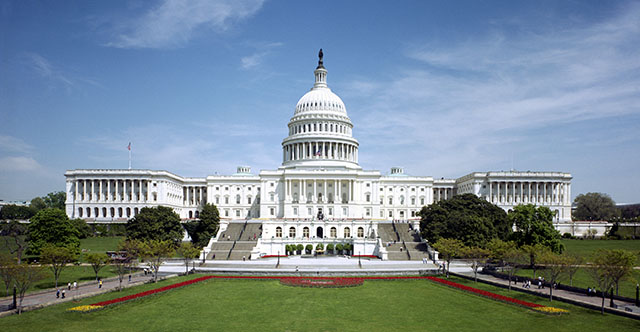
United States Congress

While it is unclear how those arriving in the US would be screened for digital currency holdings, the Bill makes provision for a report to be commissioned ironing out the finer points.

The text states:

Not later than 18 months after the date of enactment of this Act, the Secretary of Homeland Security, in consultation with the Commissioner of U.S. Customs and Border Protection, shall submit to Congress a report—

(1) detailing a strategy to interdict and detect prepaid access devices, digital currencies, or other similar instruments, at border crossings and other ports of entry for the United States; and

(2) that includes an assessment of infrastructure needed to carry out the strategy detailed in paragraph […]

Coin Center ‘Reaching Out’ For Debate

The bitcoin community is already reacting with caution to the legislation as it stands, with multiple questions being raised as to how lawmakers could enforce it in practice.

“We’re reaching out to the relevant offices,” Coin Center CEO Jerry Brito said in a Twitter response.

//platform.twitter.com/widgets.js

EU Focuses On Dark Web, ID Linking

The move is reminiscent of similar plans across the pond in the European Union regarding declaration of digital currency funds, this time at the point of spend.

While border controls are not currently on the table, legislators are keen to enforce similar AML controls on anyone holding any form of virtual funds.

Formally revealed in March, users could soon face obligatory linking of their personal identity to their wallet.

AML could force linking users' ID to their digital wallets

More recently, a joint “consortium” by the European Commission, INTERPOL and others will research ways in which illicit use of the dark web can be curbed. Participants promise that:

“The consortium will analyze legal and ethical requirements and define guidelines for storing and processing data, information, and knowledge involved in criminal investigations without compromising citizen privacy,” participants promise.

What do you think about the Bill being considered by Congress? Let us know in the comments below!


Images courtesy of Wikimedia, Shutterstock

The post AML: US Rules Would Force Declaration Of Crypto At Borders appeared first on Bitcoinist.com.