May 1, 2026

Capitalizations Index – B ∞/21M

AML: US Rules Would Force Declaration Of Crypto At Borders

An update to US anti-money laundering (AML) legislation currently going through Congress would oblige travelers to declare digital currency at the border.


AML Rules Target $10k+ Crypto Holdings

S. 1241, a new bill sponsored by Senator Chuck Grassley, proposes adding the terms ‘digital currency’ and ‘prepaid access devices’ to existing list of financial items subject so such AML procedures.

It would also include reference to “any digital exchanger or tumbler of digital currency.”

Ostensibly designed to prevent trafficking of funds over $10,000 in value, the resulting powers given to border authorities could be nonetheless considerably more sweeping than at present.
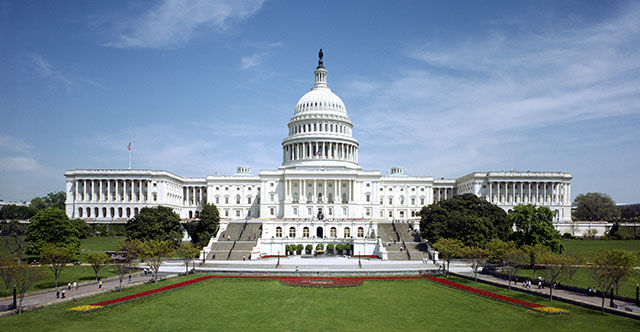
United states congress

While it is unclear how those arriving in the US would be screened for digital currency holdings, the Bill makes provision for a report to be commissioned ironing out the finer points.

The text states:

Not later than 18 months after the date of enactment of this Act, the Secretary of Homeland Security, in consultation with the Commissioner of U.S. Customs and Border Protection, shall submit to Congress a report—

(1) detailing a strategy to interdict and detect prepaid access devices, digital currencies, or other similar instruments, at border crossings and other ports of entry for the United States; and

(2) that includes an assessment of infrastructure needed to carry out the strategy detailed in paragraph […]

Coin Center ‘Reaching Out’ For Debate

The bitcoin community is already reacting with caution to the legislation as it stands, with multiple questions being raised as to how lawmakers could enforce it in practice.

“We’re reaching out to the relevant offices,” Coin Center CEO Jerry Brito said in a Twitter response.

//platform.twitter.com/widgets.js

EU Focuses On Dark Web, ID Linking

The move is reminiscent of similar plans across the pond in the European Union regarding declaration of digital currency funds, this time at the point of spend.

While border controls are not currently on the table, legislators are keen to enforce similar AML controls on anyone holding any form of virtual funds.

Formally revealed in March, users could soon face obligatory linking of their personal identity to their wallet.

Aml could force linking users' id to their digital wallets

More recently, a joint “consortium” by the European Commission, INTERPOL and others will research ways in which illicit use of the dark web can be curbed. Participants promise that:

“The consortium will analyze legal and ethical requirements and define guidelines for storing and processing data, information, and knowledge involved in criminal investigations without compromising citizen privacy,” participants promise.

What do you think about the Bill being considered by Congress? Let us know in the comments below!


Images courtesy of Wikimedia, Shutterstock

The post AML: US Rules Would Force Declaration Of Crypto At Borders appeared first on Bitcoinist.com.

Previous Article

Will Ethereum pass Bitcoin by Aug 5th? Trollbox, Coinbase, Western Union

Next Article

Headwinds or Tailwinds? How US Tax Reform Could Impact Bitcoin's Price

You might be interested in …

University Student Involvement Supports Australia’s Booming Blockchain Community

University Student Involvement Supports Australia’s Booming Blockchain Community

The blockchain industry is booming in Australia recently after the Australian Tax Office (ATO) announced changes to tax laws in the 2017–2018 budget summary by the Australian government, surrounding how digital currencies are treated in the country. In the few weeks since the announcement, active blockchain communities and events such as RegHack DownUnder have launched across the country, supported by universities and government regulators.

Australia has traditionally held strict tax laws when it comes to how they handle bitcoin and other digital currencies, defining bitcoin as a separate asset class to fiat currency and requiring that transactions involving digital currencies are taxed twice by the Australian Tax Office. The new budget summary removes any general sales tax made more than once in the supply chain using digital currency, in an attempt to “make it easier for new innovative digital currency businesses to operate in Australia” and to grow their nascent community into a global innovation hub.

The summary states, “The Government is committed to establishing Australia as a leading global financial technology (FinTech) hub and is announcing a new package that aims to position our local fintech industry as a world leader.”

This new regulatory environment has spurred growth in the community, from university campuses all the way up to the government regulators. Students have begun to launch clubs at universities across the country, and regulators and business executives have begun to take notice.

“We’re excited blockchain [technology] can finally move to our campus and Australia in a big way. There’s been a significant increase in interest from the community in the past few weeks,“ said Ryan Pousson, the regional head of the Blockchain Education Network (BEN) in Brisbane and the founder of the UQ Blockchain Club, in a statement to bitcoin Magazine. This perspective was echoed by Jared Piper, a region head of the Blockchain Education Network in Melbourne.

Aaron Schwartz, the director of global engagement at BEN and partner at MLG Capital, told bitcoin Magazine, “It’s super exciting to be part of a decentralized organization like BEN that is doing something unique with a swarm-style model. We are quickly spreading to countries all across the world with new chapters opening up across Australia, Colombia, Nigeria and Bangalore, just to name a few. We encourage anyone in a blockchain community around the world to reach out to get started growing their local community.”

On the weekend of May 12–14, government representatives in the energy sector and banking executives in the financial services industry came together to judge RegHack DownUnder. The brightest developers, UI/UX designers and entrepreneurs across Australia were encouraged to spend the weekend in Melbourne to develop blockchain technology solutions to solve some of the problems it faces in these two heavily regulated sectors.

In advance of the hackathon, Adam Lemmon, a blockchain expert from Toronto, flew down to Melbourne to present an overview of Ethereum development and Solidity to the community. Following the event, Lemmon said, “RegHack was an amazing experience and it was inspiring to see such a young blockchain community so excited about the technology.”

Chami Akmeemana, the organizer of RegHack DownUnder, predicts a fast growth in the community. He said to bitcoin Magazine following the event: “It was a mammoth success. Close to 100 participants spent three days exploring tech solutions to regulatory issues. We now have 100+ blockchain enthusiasts, that I expect [will grow] to over 1000+ by the end of the year. I’m hoping to see some world-class blockchain applications coming out of Australia and I’m stoked to be part of this boost to the ecosystem.”

The regulators in Australia are on board too with this digital transformation. Igor Simunovic, a representative from the Australian Transaction Reports and Analysis Centre (AUSTRAC), said in a statement following the event that “the event provided opportunity for industry (including government) and freelancers/students/developers to meet, integrate and share through the problem solving required to address the Hackathon ‘problems.’ Such meeting and teamwork opportunities are rare and often bound by the [confines] of conferences or meet-ups. The process of discovering new technologies and frameworks was just a bonus.”

It is still the beginning in the growth trajectory of the blockchain community in Australia, but it is an exciting time to be part of a global movement. For example, in the few months following November’s RegHack TO, the first hackathon hosted by a securities regulator in Canada and inspired by Chami Akmeemana, the number of people attending meetups in Toronto has tripled from 200 to over 700 at the most recent blockchain meetup in Toronto. Getting the entire community on board from universities to business executives to government regulators is an important milestone for any community striving to become a blockchain hub.

The post University Student Involvement Supports Australia’s Booming Blockchain Community appeared first on Bitcoin Magazine.