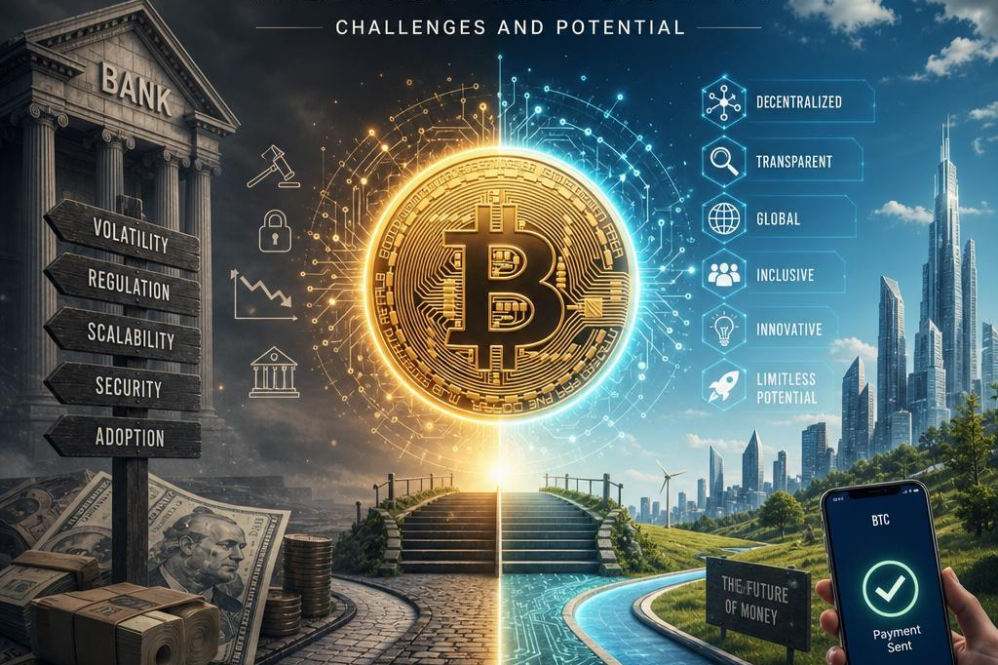
The Evolution of Currency and bitcoin’s Emerging Role
From the earliest days when barter was the norm to the invention of coins and paper money, the concept of currency has always reflected society’s need for a universally accepted medium of exchange. With the rise of digital technology, currency has evolved yet again, giving birth to cryptocurrencies like bitcoin. Unlike conventional fiat money backed by governments, bitcoin operates on a decentralized blockchain, promising clarity, securityand autonomy. This radical shift challenges centuries-old monetary systems while raising critical questions about trust, controland accessibility.
However, several challenges stand in the way of bitcoin’s potential to fully replace conventional money:
- Volatility: The price of bitcoin fluctuates dramatically, making it less stable for everyday transactions.
- Regulatory Hurdles: Governments are still defining how to classify and regulate cryptocurrencies, creating uncertain legal environments.
- Scalability Issues: bitcoin’s current transaction processing speed and capacity struggle to match the demands of global commerce.
- Energy Consumption: bitcoin mining requires considerable energy,raising environmental concerns.
| Aspect | Traditional Money | bitcoin |
|---|---|---|
| Control | Central Banks & Governments | Decentralized Network |
| Transaction Speed | Instant to Minutes | Minutes to Hours |
| Supply | Inflationary | Fixed Cap (21 million) |
| Privacy | Limited,regulated | Pseudonymous,transparent ledger |
Despite thes hurdles,bitcoin’s underlying technology holds transformative potential. It introduces an choice financial paradigm that emphasizes decentralization and user sovereignty, which could address issues like financial inclusion, censorship resistanceand cross-border remittances. While it may not wholly replace traditional money in the near future, bitcoin forces us to rethink the very nature of currency and the future of global finance.
Technical and Regulatory Hurdles Facing bitcoin Adoption
Adopting bitcoin as a mainstream form of money is fraught with notable technical challenges that stem from its intrinsic design and the current limitations of blockchain technology. scalability remains a primary obstacle; with bitcoin’s block size and transaction speed constrained, processing the volume of transactions seen in traditional payment systems like Visa or Mastercard is still unfeasible at a global scale. Additionally, the energy consumption associated with bitcoin mining raises sustainability concerns, perhaps impeding widespread acceptance as societies increasingly prioritize environmentally responsible technologies.
On the regulatory front, the decentralized and pseudonymous nature of bitcoin conflicts with established governmental frameworks aimed at preventing illicit activity and ensuring financial stability. Policymakers face the delicate task of balancing innovation with control, resulting in diverse regulatory landscapes worldwide. This patchwork creates uncertainty for businesses and users alike, hindering bitcoin’s integration into everyday commerce. Concerns around consumer protection, tax complianceand anti-money laundering (AML) obligations intensify the complexity, often leading to stringent measures that curtail bitcoin’s fluidity and global interoperability.
| Technical Hurdles | Regulatory Challenges |
|---|---|
| Scalability limits | Lack of uniform global regulation |
| High energy consumption | Anti-money laundering compliance |
| Network latency and fees | Consumer protection laws |
| Security vulnerabilities in exchanges | Taxation uncertainties |
Addressing these obstacles requires a coordinated effort among developers, regulatorsand industry stakeholders to create solutions that foster trust, efficiency, and sustainability. Innovations such as second-layer protocols and greener consensus algorithms display promise but must gain mainstream traction. Regulatory frameworks that embrace clarity without stifling innovation could pave the way for bitcoin’s gradual incorporation alongside traditional currencies, rather than outright replacement at once.
economic Implications of a bitcoin-Based Monetary System
Transitioning to a bitcoin-based monetary system introduces significant economic shifts. Unlike fiat currencies, bitcoin operates on a decentralized ledger and has a fixed supply capped at 21 million coins. This scarcity creates a deflationary pressure that can challenge conventional economic models traditionally reliant on inflationary currencies to stimulate spending and investment. The unpredictable volatility further complicates its role as a reliable store of value, making it difficult for businesses and consumers to plan long-term financial commitments.
Key Economic Considerations:
- Monetary Policy Constraints: bitcoin’s programmed supply restricts central banks’ ability to adjust money supply in response to economic downturns or crises.
- Transaction Speed and Scalability: While bitcoin offers borderless payments, current blockchain scalability limits could hinder mass adoption and daily transactional use.
- Wealth Distribution impact: Early adopters hold significant amounts of bitcoin, potentially leading to wealth concentration and reduced economic fluidity.
| Aspect | bitcoin-Based System | Fiat-Based System |
|---|---|---|
| Supply Control | Fixed, algorithmic cap | Adjustable by central banks |
| Inflation | Deflationary tendency | Managed inflation rates |
| Policy Flexibility | Limited | high |
| Adoption Barriers | Technical & volatility concerns | Widely accepted |
Strategic Recommendations for Integrating bitcoin with traditional Finance
To effectively bridge the gap between bitcoin and traditional finance, a multi-faceted approach is essential. Financial institutions should begin by adopting robust frameworks for digital asset custody, ensuring security without compromising user accessibility. Embracing open banking APIs can create seamless interoperability between cryptocurrencies and fiat currencies, fostering a unified ecosystem that facilitates smoother transactions and account management.
Regulatory clarity remains paramount. Governments and regulatory bodies must collaborate internationally to craft consistent and adaptive guidelines that accommodate the dynamic nature of blockchain technology. This cooperation will mitigate risks such as money laundering and fraud, while still nurturing innovation and safeguarding consumers. Institutions should also invest in compliance-driven fintech solutions to proactively align with evolving regulatory landscapes, enabling bitcoin’s integration without causing systemic disruption.
education for both consumers and traditional finance professionals plays a critical role. financial literacy initiatives focused on the unique properties and risks of bitcoin equip stakeholders with the knowledge needed to make informed decisions. below is a concise overview highlighting strategic priorities for integration:
| Strategic Priority | Focus Area | Outcome |
|---|---|---|
| Security & Custody | Robust Custodial Solutions | Enhanced Trust |
| Regulatory alignment | Clear and Adaptable Policies | lasting Growth |
| Education & Awareness | Financial literacy Programs | Informed Adoption |
