October 25, 2026

Capitalizations Index – B ∞/21M

Blockchain Trading Network Promises Low Fees And Instant Trades On Financial Assets

Blockchain trading network promises low fees and instant trades on financial assets

Blockchain Trading Network Promises Low Fees And Instant Trades On Financial Assets

Blockchain trading network promises low fees and instant trades on financial assets

An established and regulated broker is launching a Blockchain-based trading network which allows users to trade any financial asset around the world.

ThinkMarkets, the parent company behind the upcoming TradeConnect platform, plans to “democratize” the industry by enabling trades to be settled in seconds rather than days. The intellectual property, development resources and trading infrastructure will be licensed by ThinkMarkets to ThinkCoin.

TradeConnect will initially offer forex (FX) and contracts for difference (CFD) – expanding to futures, bonds, options, commodities, equities and complex derivatives over time.

The platform is being powered by ThinkCoin, with a white paper describing the digital trading token as “simple, secure and user friendly.”

Ending the dominance of big banks

The team behind ThinkCoin and TradeConnect believe Blockchain has the potential to deliver the biggest shake-up to the markets since the advent of electronic trading in the 1980s.

In part, this is because of how Blockchain can reduce a trader’s reliance on brokers and intermediaries – with the company arguing that global markets are currently dominated by big banks who impose unfair charges, lack transparency and sometimes have undue levels of influence on asset prices.

Under the TradeConnect platform, trades are automatically executed through smart contracts which are based on external sources and impartial information. Individuals will also have the chance to trade with each other, and all participants will have “full control of their money.”

The company claims that, in the past, investors have lost their money when financial institutions have collapsed because they were unable to settle their funds. However, TradeConnect claims that using ThinkCoin as a settlement method would mean the risk of this happening again in the future would be “substantially reduced” because of the near-instant nature of trades.

“Vastly lowering the cost of trading”

According to TradeConnect, its wallet will initially support ThinkCoin, Bitcoin, bitcoin Cash, Ethereum, Monero, Dash and Litecoin.

Only ThinkCoin can be used to perform trades on the network. It can currently be purchased during the initial coin offering (ICO) phase, and afterwards, prospective investors will be able to buy tokens using fiat and cryptocurrencies through several exchanges.

A ‘connect fee’ is charged for each trade that is completed on the TradeConnect platform – and the company says 75 percent of the revenue generated will be returned to participants in the ecosystem, with the rest being used to further develop the network.

Investors will also have the ability to purchase “micro shares” – fractions of equity instead of a full share in a publicly listed company – and TradeConnect says this feature, when coupled with lower fees, will “vastly lower the cost of trading” and give flexibility to people who only have small amounts of money to invest.

The TradeConnect timeline

The ThinkMarkets Group is the organization behind ThinkCoin and TradeConnect. The company already has a presence across three continents and “almost a decade’s worth of data on how tens of thousands of traders react and interface on our trading platform.”

The first phase of the pre-ICO for ThinkCoin ends on April 23, followed by a second phase from April 24 to May 14. The ICO itself takes place from May 10 to 25. Funds would be used to generate new users and diversify the trading products which are available through TradeConnect.

Next month will see ThinkCoin listed on cryptocurrency exchanges, and the TradeConnect Wallet will also be launched. A beta version of the Blockchain network is going to go live in August, and the functionality for FX and CFD trades will be introduced in October. Further trading products are expected to be added by the beginning of next year, and the company expects that TradeConnect’s IPO will take place in the summer of 2019.

Disclaimer. Cointelegraph does not endorse any content or product on this page. While we aim at providing you all important information that we could obtain, readers should do their own research before taking any actions related to the company and carry full responsibility for their decisions, nor this article can be considered as an investment advice.

Published at Tue, 10 Apr 2018 23:11:14 +0000

Blockchain
Previous Article

la comunidad bitcoin se une contra los bancos | análisis verge, eth, btc y bch

Next Article

Michio on Bose-Einstein Condensates

You might be interested in …

Bitcoin is Still Illegal in These 6 Countries

As the bitcoin revolution continues to spread throughout the world, there are still some places where buying or using bitcoin is illegal and can get you in trouble.


bitcoin Still Illegal in Some Countries

As bitcoin’s popularity continues to grow throughout the world, some governments are beginning to realize its benefits and potential and are integrating bitcoin and cryptocurrencies in their economy, rather than trying to punish those that use it with restrictive policies and exaggerated taxes.

Japan, for example, has recently passed a law that makes bitcoin a legal form of online payment, removing taxes and setting up a regulatory framework for bitcoin-based businesses. Australia has also taken a stance in favor of cryptocurrencies and removed the double-tax that was penalizing average bitcoin users.

However, not all countries are as forward thinking especially when it comes to cryptocurrencies. Believe it or not, bitcoin is still illegal in some countries, which says a lot about bitcoin as a disruptive technology.

To be clear though, the world’s first decentralized cryptocurrency is not illegal because it poses any risk to the citizens of the countries we will list. Rather, it provides an alternative, open, P2P monetary system — and an exit for some  — which is seen as a threat to their centrally-controlled, legacy monetary system.

All of the countries listed below banned bitcoin in 2014, following the Mt. Gox disaster. As bitcoin begins to gain traction throughout the world, it’s possible that these countries may eventually change their stance on bitcoin and digital currencies.

Vietnam

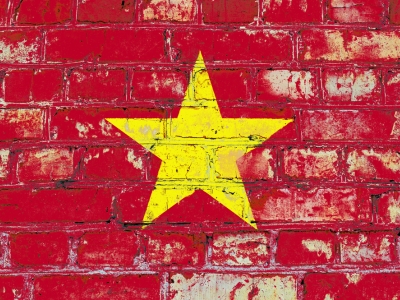
Although bitcoin can be freely used by citizens, the State Bank of Vietnam issued a statement in February 2014 warning against the use of bitcoin and prohibiting credit institutions to deal with the cryptocurrency.

The statement reads:

All bitcoin exchanges that allow users to trade anonymously, therefore, can be used to launder dirty money, sell drugs, hide from paying taxes, exchange and pay for illegal activities.

In December 2016, the government of Vietnam stated that it will consolidate cryptocurrency regulations as its current provisions “fall short.”

Iceland

bitcoin’s legality in Iceland is not very clear. According to a statement issued in March 2014 by the Central Bank of Iceland, dealing with bitcoin may violate the Icelandic Foreign Exchange Act, which specifies that Icelandic currency cannot leave the country and that foreign currency cannot be used in the country.

iceland

bitcoin mining is legal in the country and so is transacting with bitcoin, but apparently if those Bitcoins cannot be purchased from a foreign exchange or have to be mined in Iceland. This leaves a lot of room for questions. The statement reads:

There is no authorization to purchase foreign currency from financial institutions in Iceland or to transfer foreign currency across borders on the basis of transactions with virtual currency. For this reason alone, transactions with virtual currency are subject to restrictions in Iceland.

Bolivia

In May 2014, the country’s central bank, El Banco Central de Bolivia, officially banned any and all currencies not issued and/or regulated by the government, specifying bitcoin, a few other altcoins and any other currencies that do not belong to a state or economic zone.

The statement reads:

It is illegal to use any kind of currency that is not issued and controlled by a government or an authorized entity.

Ecuador

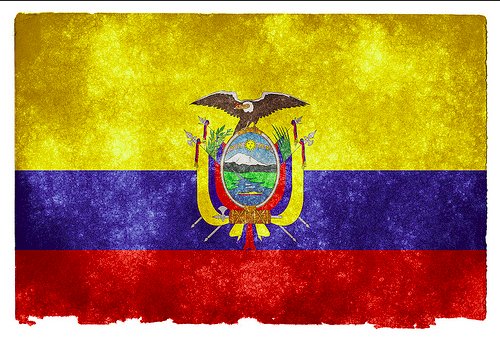
Ecuador not only banned bitcoin and all other cryptocurrencies, but it did so while establishing guidelines for the creation of their own virtual currency.

The National Assembly of Ecuador passed a bill that amends the country’s monetary laws in July 2014, banning cryptocurrencies and allowing the government to issue and transact in its asset-backed “electronic money.”

Kyrgyzstan

In Kyrgyzstan, using bitcoin as a form of payment is illegal, although no law prohibits users from buying, selling and using. In August 2014, the National Bank of the Kyrgyz Republic, issued a statement in which it noted that the use of bitcoin and other cryptos as a form of payment is illegal given that the only legal tender in the country is the country’s Kyrgystani Som (KGS).

The statement reads:

Under the legislation of the Kyrgyz Republic, the sole legal tender on the territory of our country is the national currency of Kyrgyzstan som. The use of ‘virtual currency’, bitcoins, in particular, as a means of payment in the Kyrgyz Republic, will be a violation of the law of our state.

Bangladesh

bitcoin is not legal in Bangladesh. Transacting with any type of decentralized cryptocurrency can get you up to 12 years in jail and it has been so for almost three years.

In September 2014, the Bangladesh Bank issued a statement regarding the use of bitcoin and warning that it is punishable by law. Bank officials said that anyone found guilty of dealing with bitcoin or any other cryptocurrency could be jailed for up to 12 years under current anti-money laundering laws. The central bank went as far as to request citizens not to “spread information about it.”

The statement reads:

bitcoin is not a legal tender of any country. Any transaction through bitcoin or any other cryptocurrency is a punishable offense.

Do you believe these countries will change their stance on bitcoin and build a regulatory framework around it? Let us know in the comments.


Images courtesy of Shutterstock

The post Bitcoin is Still Illegal in These 6 Countries appeared first on Bitcoinist.com.

What is nuls? | a guide to the modular blockchain

What Is NULS? | A Guide to the Modular Blockchain

What Is NULS? | A Guide to the Modular Blockchain What Is NULS? NULS is a modular blockchain that implements a proof of credit (POC) consensus protocol. The team behind it is on a mission […]