May 30, 2026

Capitalizations Index – B ∞/21M

Blockchain and AR is Revolutionizing the Gaming Industry

Blockchain and ar is revolutionizing the gaming industry

Blockchain and AR is Revolutionizing the Gaming Industry

Blockchain and ar is revolutionizing the gaming industry
Advertisement

Get Trading Recommendations and Read Analysis on Hacked.com for just $39 per month.

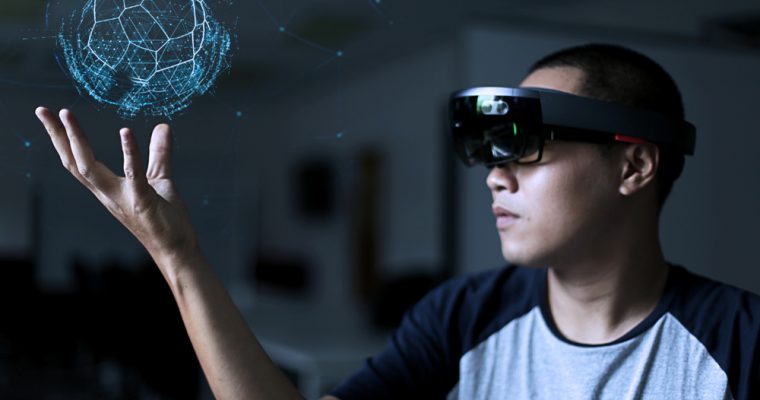
Merging the virtual and real world is a development that is becoming common in the gaming ecosystem. Most of these new games involve the integration of game visuals and audio content with a player’s environment in real time. This phenomenon is described as Augmented Reality (AR).

Real-life Participation

Working with the GPS application of the mobile devices, game players are made to complete tasks and quests around their immediate physical environment. These kinds of games have a way of acquiring several associated benefits to participants depending on the game’s primary dynamics. Exploring one’s immediate environment is what a lot of people hardly engage in. To do so based on the motivation of some form of rewards or challenge makes it an interesting and in most cases captivating system of exploration.

Being a new kind of technology and still in its innovative stages, AR is finding a lot of different implementation in the gaming industry that mirrors real life processes. Some are set in the ancient existence of several ages ago, while others are set in the present day living or projection of future existence. Beyond the timeline, these setups are also organised to represent specific industries, ranging from politics, to commerce, real estate, culture, e.t.c.

AR and Blockchain Implementation

A typical example of AR implementation is the Mossland Reality Reflection which is a location-based Augmented Reality (AR) mobile game that is based on real estate. In Mossland, users identify real properties in the world and add them to the game world. This gives other users the ability to buy and sell real-world properties in the Mossland virtual world. The game utilizes a blockchain-based cryptocurrency to facilitate trades, sales and purchases by users of in-game properties, emulating the real-world property market in the game and giving players a new way to interact with each other.

Temple Treasure Hunt is another example where Indian mythological characters come up as treasure guardians in a game that uses real map of a location. This geolocational game centres around mystery lovers who play roles of either treasure protectors or treasure hunters.

Various AR games abound in today’s gaming ecosystem, but the fascinating element is how blockchain implementation is enabling the transfer of real value across the gaming ecosystem. In one of the examples mentioned above, mimicking the real-life real estate marketplace involves actual trading and other commercial exercises. Being connected across a global network automatically requires a reliable platform where transactions can be secure and transparent.

Value Extraction in Gaming

Blockchain in the gaming world enhances the value of tokenization as it offers the flexibility that is needed to connect people across different countries and cultures. Blockchain tokens (for example, Moss coin in the case of Mossland) serves as the universal unit of value transfer which influences the liquidity that is necessary in the gaming marketplace. Be it for purposes of auction or reward, the underlying tokens remain the connecting units that enable the fulfillment of gaming contracts.

In order to extract real value from any gaming marketplace, blockchain will always play an important role. These tokens are cryptocurrencies that can be exchanged for other cryptocurrencies or fiat in order to derive usable value. Apparently, Blockchain and AR are practically causing a total revolution in the way gaming is interpreted. Unlike in the past when gaming was mostly about fun and recreation, several tangible benefits are currently being attached to the experience nowadays.

Beyond the social values of connecting individuals from different parts of the globe, Blockchain and AR are taking gaming to another level. Education, exploration, research and commercial benefits are just a few of the values that are currently being extracted from within the ecosystem.

Featured image from Shutterstock.

Follow us on Telegram.
Advertisement

Published at Sun, 18 Mar 2018 09:43:57 +0000

bitcoin & Blockchain Investments

Previous Article

Fractal-Blockchain-CEO Julian Leitloff: “Die Kommunikation ist eine besondere Herausforderung”

Next Article

Top Crypto Currencies may benefit from Google’s Advertisement Ban.

You might be interested in …

Creating Intrinsic Value in Cryptocurrencies

Particl Thumb 2

The investment banker Jamie Dimon caused a stir when he declared
recently
that bitcoin will collapse because it is “worth nothing.”
bitcoin’s current market value, he claimed, is driven almost entirely by speculation,
rather than by any real and present intrinsic value that bitcoin actually
provides.

Casting aside the debate over whether bitcoin
has intrinsic value or not, it seems fair to say that Dimon doesn’t know the
cryptocurrency market well. If he did, he might have noted that bitcoin is only
one of dozens of major tokens available. Some tokens were designed with
intrinsic value as a specific goal.

Background

Particl, which was created last spring, is
building a decentralized eCommerce platform, a framework for third party apps,
and a suite of privacy tools to go with it.

PART solves various privacy problems associated with BTC, such as
the ability of third parties to trace transactions. Adding multiple cryptographic
proofs like Ring Signature Confidential Transactions (RingCT) and Confidential
Transaction (CT) plus trustless mechanisms like MAD escrow, Particl provides
100 percent anonymity to people who buy and sell using PART.
While the Particl privacy platform and upcoming Marketplace supports
most major cryptocurrencies, PART serves as its utility token.

PART
and Intrinsic Value

The value of bitcoin has risen astronomically over the past
several years in part because people believe bitcoin will one day be widely
used and provide services that other forms of currency cannot. For this reason,
the growth in value of bitcoin has far outpaced actual bitcoin adoption.
PART is different. PART’s value is based on more than the
potential future worth of the Particl Platform or PART tokens. People who own
PART tokens derive immediate benefits from them, including the following.

Token Flexibility

PART is a flexible cryptocurrency, especially with respect to the
level of privacy and anonymity users wish to have.

Voting Rights

PART ownership confers voting rights within the PART community.
The future development of the Particl Project and its privacy platform is
decided by users who own PART tokens. In this sense, PART tokens have an
intrinsic value that is absent from a cryptocurrency like bitcoin, where the
ability to propose or vote on platform changes is not linked to coin ownership.

Passive Income

PART tokens generate passive income for their owners through
working for the network (staking) and from fees collected from privacy DApps
built on the platform like the upcoming Marketplace. PART is an inflationary
token, therefore its supply increases by 5 percent in the first year and
decreases by one percentage point until the fourth year, when the inflation
rate reaches 2 percent. Inflation is then maintained at a 2 percent rate
indefinitely.

Utility Coin

Default transactions on the Particl network are pseudo-anonymous
like bitcoin. The network is Proof of Stake (PoS) so only default and stealth
addresses can stake PART. Exchanges and services also transact with the network
using public PART addresses.

If they wish, PART users can benefit from features like RingCT in
order to gain a privacy experience equivalent to using a token like Monero, which
created RingCT. Alternatively, they can use PART tokens with CT blinding
features applied to hide amounts sent between addresses.
This flexibility adds to PART’s intrinsic value because it allows
PART to be used for different sorts of transactions and is 100 percent based on
user preference. If — as proponents of bitcoin
pointed
out
in response to Dimon’s criticisms — bitcoin provides intrinsic
value in part by enabling transactions that traditional currency can’t, then
PART’s ability to accommodate a range of transaction types and use cases makes
it even more valuable.
 
In each of these ways, simply owning PART tokens generates
additional income independent of increases in the market value of the tokens on
an exchange.
 
Last but not least, as noted above, PART serves as the utility
coin on the Particl Platform. Sellers who use Particl Marketplace are always
paid in PART tokens (even though buyers can use any cryptocurrency of their
choice). In addition, like Ethereum, any decentralized application built on
Particl’s platform will transact using PART which also goes to stakers.
PART is therefore intrinsically linked to the Particl Platform. As
the adoption of the overall platform grows, so does the value of PART.

If you want to make the case that cryptocurrencies have intrinsic
value based on services they provide today, PART is a good subject to work
with. More so than bitcoin, PART derives its value from benefits that it
provides to all token holders natively, on its own privacy platform. Owning
PART is the furthest thing from speculating on tulip bulb futures (a historical
blunder to which Dimon compared bitcoin) as you can get.

The post Creating Intrinsic Value in Cryptocurrencies appeared first on Bitcoin Magazine.