bitcoin’s Issuance Rate Explained: Mechanisms and Historical Trends
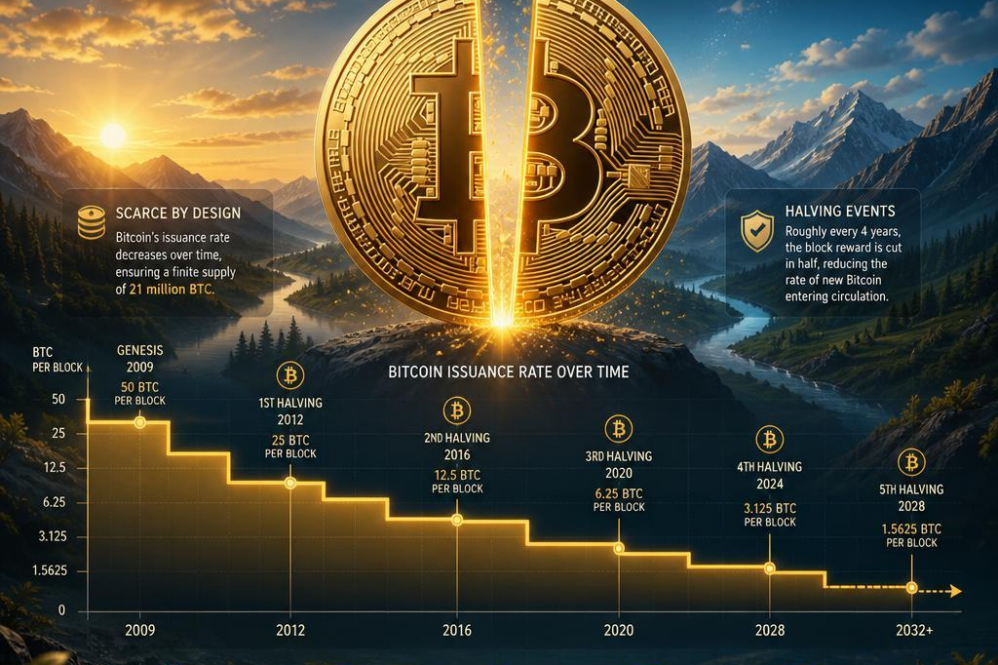
bitcoin’s issuance rate is defined by a predetermined algorithm embedded in its code,designed to control the supply growth over time.Initially,the network rewarded miners with 50 bitcoins per block,but this reward halves approximately every four years in an event known as a “halving.” This halving mechanism reduces the number of new bitcoins entering circulation, making bitcoin a deflationary asset by design. This scarcity feature is vital to its value proposition,as it curbs inflation and aligns supply with increasing demand over the long term.
Each halving event not only halves the block reward but also indirectly affects miner economics and market sentiment. miners must adjust to reduced rewards by seeking greater operational efficiency or relying on increased bitcoin prices to cover costs. Historical data has shown that halving events frequently enough precede significant market shifts, contributing to heightened volatility and eventual price rallies. These events serve as a predictable mechanism that both market participants and miners anticipate, making bitcoin’s issuance uniquely clear compared to conventional fiat currencies.
| Halving Event | Block Reward (BTC) | Approximate Year | Market Impact |
|---|---|---|---|
| 1st Halving | 25 | 2012 | Major price surge |
| 2nd Halving | 12.5 | 2016 | Increased miner network stability |
| 3rd Halving | 6.25 | 2020 | Historic bull run |
- Supply regulation: Halving ensures a diminishing rate of new bitcoins, promoting scarcity.
- Predictability: The fixed schedule allows stakeholders to plan and react accordingly.
- Market cycles: Each halving correlates with notable price and network activity changes.
Analyzing the Economic Impact of bitcoin Halving Events on Market Dynamics
bitcoin’s issuance rate is fundamentally predetermined by its underlying protocol, which halves the reward miners receive approximately every four years. This purposeful reduction,known as the “halving,” is a powerful economic mechanism that influences supply inflation and,afterward,market behaviour. By lowering the influx of new bitcoins over time, halvings create scarcity – a factor that historically has had pronounced effects on bitcoin’s market price and investor sentiment.
Market dynamics around halving periods frequently enough exhibit distinctive patterns. Before each event, speculation intensifies, contributing to heightened volatility. Post-halving, reduced issuance can cause supply-demand imbalances, driving price gratitude if demand sustains or grows. However, these events also impact miner economics: miners face narrower profit margins, sometimes disengaging less efficient operations, which can temporarily affect network hash rates and transaction processing.
| Halving Event | Block Reward (BTC) | Approximate Date | market Reaction |
|---|---|---|---|
| 1st Halving | 50 → 25 | Nov 2012 | Price surge after 1 year |
| 2nd Halving | 25 → 12.5 | Jul 2016 | Gradual bullish trend |
| 3rd Halving | 12.5 → 6.25 | may 2020 | Increased volatility,followed by market rally |
Understanding these economic ripples is essential for investors and miners alike. The interplay between reduced issuance, market speculationand miner sustainability shapes bitcoin’s maturation as both a currency and store of value.Future halvings will likely continue to reveal new facets of this intricate economic dance.
Strategic considerations for Investors During and After Halving Cycles
Investors navigating the complex landscape of bitcoin must adopt a nuanced approach during halving cycles to optimize long-term gains. Market volatility typically surges around halving events as reduced issuance constrains supply, often provoking speculative activity. During this period,strategic asset allocation becomes vital; investors should consider balancing between short-term trading opportunities and maintaining core long-term holdings to capitalize on the inherent scarcity dynamics that halving enforces.
Post-halving, the emphasis shifts to closely monitoring macroeconomic indicators and bitcoin’s network fundamentals. This phase often features a sustained bull run or consolidation, dependent on broader market sentiment, adoption ratesand technological developments within the ecosystem.Investors are advised to watch key metrics like hash rate growth and transaction volume as signals for network health, which critically influence price trajectories in the months and years following each halving event.
To enhance decision-making, consider the following strategic guidelines:
- Assess Market Sentiment: Gauge investor enthusiasm and institutional involvement to anticipate demand shifts.
- diversify Exposure: Incorporate a mix of bitcoin-related assets to mitigate risks posed by price swings.
- Stay Informed: Leverage real-time data analytics and professional insights to timely adjust positions.
| Halving Event | Pre-Halving Strategy | Post-Halving Focus |
|---|---|---|
| 2012 | Accumulate with cautious entry | Monitor adoption and network growth |
| 2016 | Balance trading and holding | Analyze hash rate & transaction volume |
| 2020 | leverage institutional momentum | Track macroeconomic drivers |
Forecasting bitcoin’s Long-Term Scarcity and Its Implications for Value Growth
bitcoin’s issuance rate is an engineered feature designed to decrease over time, cutting the number of new bitcoins created roughly every four years through a process known as “halving.” This programmed scarcity is crucial in reinforcing bitcoin’s value proposition as a digital asset immune to inflationary pressures prevalent in traditional fiat currencies. Each halving event reduces the block reward miners receive by 50%, ensuring a progressively slower introduction of new supply into the market.
Key effects of the halving on bitcoin’s ecosystem include:
- Supply constraint: by halving the issuance rate, bitcoin intrinsically limits supply expansion, which could foster upward price momentum over the long term.
- Market anticipation: Halving events often stimulate speculative interest, driving increased trading volumes and media coverage.
- Incentive realignment: As rewards shrink, miners rely more on transaction fees and operational efficiency, influencing network security and fee dynamics.
| Halving Year | Block Reward (BTC) | Cumulative Supply (Millions BTC) |
|---|---|---|
| 2012 | 25 | 10.5 |
| 2016 | 12.5 | 15.75 |
| 2020 | 6.25 | 18.375 |
This predictable supply tapering creates a scarcity narrative that is widely regarded as a foundation for bitcoin’s long-term value growth. Investors and market participants often use these halving milestones as benchmarks for assessing potential price appreciation, making bitcoin’s programmed supply dynamics a unique phenomenon in the landscape of global finance.