BitcoinS Fundamental Unit and Its Role in Cryptocurrency Transactions
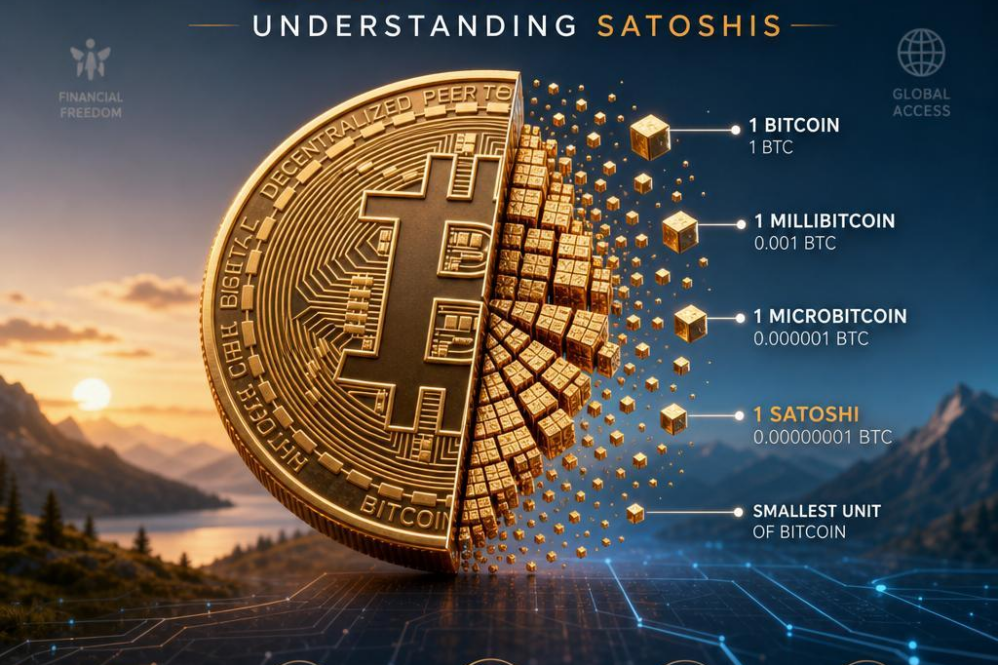
At its core, bitcoin is designed to be highly divisible, breaking down into teh smallest unit known as a Satoshi. Each bitcoin consists of 100 million Satoshis, making it possible to conduct microtransactions with precision and adaptability. This divisibility not only facilitates everyday use but is vital for scaling bitcoin’s utility in global commerce where fractions of a dollar value need to be transferred seamlessly.
The meaning of these tiny units becomes clear when we consider transaction fees and payments. Users can transmit exact amounts of value, whether it’s a fraction of a cent or whole Bitcoins. This precision helps avoid wasted value during transfer and reduces the barrier for entry for users who may not be able to purchase a full bitcoin outright. As transactions on the blockchain record values in Satoshis, it ensures consistency and clarity in the ledger, promoting transparency and trust.
| bitcoin Unit | Value in Bitcoins | Description |
|---|---|---|
| 1 bitcoin (BTC) | 1 BTC | Primary cryptocurrency unit |
| 1 Satoshi | 0.00000001 BTC | smallest possible unit, named after the founder |
| 1 Millibitcoin (mBTC) | 0.001 BTC | Common for moderate-sized transactions |
| 1 Microbitcoin (μBTC) | 0.000001 BTC | Used for small payments or tips |
Understanding Satoshis reinforces the necessity of divisibility in cryptocurrency. Beyond just a technical detail, it empowers users with more control over their digital assets and expands bitcoin’s potential as a universal medium of exchange. This granularity is foundational to bitcoin’s continued relevance and adaptability as it moves toward mainstream adoption.
The Concept and significance of Satoshis in bitcoin Economy
bitcoin’s fundamental unit is divisible up to eight decimal places, making the satoshi the smallest fraction possible within its ecosystem. Named after bitcoin’s pseudonymous creator, Satoshi Nakamoto, the satoshi represents one hundred millionth of a single bitcoin (0.00000001 BTC). This granular divisibility not only facilitates everyday microtransactions but also democratizes access to bitcoin for users who might not afford whole bitcoins, given the soaring price levels. Understanding satoshis is essential to appreciating how bitcoin sustains its utility as a practical digital currency across vastly different scales of value.
The importance of satoshis goes beyond convenience. They enable a monetary ecosystem where:
- Precision in Transactions: Every payment or transfer can be executed with exactitude, ensuring fairness and reliability.
- Microeconomics: Small-value transactions, like tipping or micropayments for digital content, become feasible and cost-effective.
- Scalability: As bitcoin adoption grows, the ability to divide units extensively supports everyday use without inflating token price barriers.
| Unit | Equivalent in bitcoin | Use Case |
|---|---|---|
| bitcoin (BTC) | 1 | Large investments,store of value |
| Millibitcoin (mBTC) | 0.001 | Everyday payments, small purchases |
| Satoshi (sat) | 0.00000001 | Micropayments, tipping, precise accounting |
How bitcoin’s Divisibility Enhances microtransactions and Accessibility
bitcoin’s ability to be divided into extremely small units, known as satoshis, revolutionizes how value can be transferred on its network. Unlike customary currencies, bitcoin can be split down to one hundred millionth of a single coin, allowing for precise, fractional ownership and facilitating transactions of very low value-something crucial for microtransactions. This level of divisibility effectively removes barriers that prevent the use of digital currencies for everyday small purchases,such as buying a coffee or paying for digital content.
Microtransactions, once impractical or prohibitively expensive due to transaction fees in conventional payment systems, find new life in bitcoin’s ecosystem. The minimal divisibility enables users to send or receive amounts as small as a few satoshis, fostering innovative use cases like tipping content creators, paying for incremental usage of servicesor enabling pay-per-use models without overspending. With this system, businesses and consumers benefit from increased flexibility and financial inclusion.
| Feature | Benefit | Example |
|---|---|---|
| 1 Satoshi = 0.00000001 BTC | Enables precise value transfers | Paying $0.01 for an article |
| Low transaction minimums | Supports microtransactions | Streaming music payments per second |
| Fractional ownership | Improves accessibility | Partial investment in assets |
Moreover, bitcoin’s divisibility empowers users worldwide by lowering entry thresholds. People in regions with weaker currencies or unstable banking infrastructure can participate through fractions of a bitcoin, fostering greater economic inclusion. As satoshis represent the building blocks of bitcoin’s digital economy,they symbolize the potential for a decentralized financial system accessible to all,regardless of wealth or geography.
Technical Mechanisms Behind bitcoin’s Subdivision into Satoshis
bitcoin’s subdivision relies fundamentally on its protocol’s inherent design, which supports up to eight decimal places of precision. This capability means a single bitcoin (BTC) can be divided into 100 million smaller units known as satoshis. The blockchain’s native architecture encodes transaction values in satoshis, allowing users to transfer and store fractions of a bitcoin with absolute accuracy. Such granularity is crucial in facilitating microtransactions and making bitcoin practical for everyday use, irrespective of its market price fluctuations.
At the core of bitcoin’s technical mechanism is the use of integer arithmetic to represent amounts in satoshis rather than floating-point numbers. This ensures precision and averts rounding errors during transactions. when a user initiates a transaction, the wallet software calculates the quantity of satoshis involved and broadcasts this exact amount to the network, which verifies and records it immutably in the UTXO (Unspent Transaction Output) set. This well-defined unit of account is essential for maintaining consensus and the integrity of the ledger.
| Unit | Equivalent in BTC | Decimal Places |
|---|---|---|
| bitcoin (BTC) | 1 | 0 |
| millibitcoin (mBTC) | 0.001 | 3 |
| microbitcoin (μBTC) | 0.000001 | 6 |
| Satoshi | 0.00000001 | 8 |
Moreover,this system unlocks versatility through the use of hierarchical deterministic wallets where keys and addresses can be generated for any satoshi amount. The blockchain’s scripting language and transaction format are equipped to handle these denominations seamlessly, preserving scalability and privacy. Essentially, the satoshi not only symbolizes bitcoin’s divisibility but also embodies the precision demanded by a decentralized financial ecosystem.
Practical Applications and Everyday Uses of Satoshis in Financial Activities
In today’s digital economy, the relevance of Satoshis, the smallest units of bitcoin, extends well beyond mere theoretical value. When executing microtransactions, such as paying for online content, tipping creatorsor settling small service fees, users leverage Satoshis to avoid the impracticalities tied to whole bitcoin units. Their divisibility allows seamless participation in the bitcoin network regardless of transaction size, promoting financial inclusivity and practicality in everyday interactions.
Retailers and platforms increasingly accept bitcoin payments denominated in Satoshis, enabling precise pricing and obvious accounting.For example, vending machines or pay-per-use services can charge amounts equivalent to a few thousand Satoshis. This granularity supports an evolving ecosystem where digital currency adapts fluidly to conventional use cases without losing the advantages of blockchain security and speed. Consider how mobile wallets prominently display balances in Satoshis for enhanced clarity and ease of use during such daily transactions.
Below is a concise overview of common financial activities utilizing Satoshis, illustrating their practical scope:
| Use Case | Typical Satoshi Range | Benefit |
|---|---|---|
| Micro-donations and tips | 100 – 10,000 | Enables small-value gratitude for creators |
| Retail purchases (e.g., coffee, snacks) | 5,000 – 50,000 | Precise pricing without rounding losses |
| Service pay-per-use billing | 1,000 – 20,000 | Flexible and transparent fee structures |
Future Implications of bitcoin’s Divisibility for Market Expansion and Innovation
The remarkable capability of bitcoin to be divided into incredibly small units-known as satoshis-serves as a foundational catalyst for the currency’s potential in both market expansion and technological innovation. By enabling transactions that can be as minuscule as one hundred millionth of a bitcoin, the ecosystem fosters inclusivity, allowing users of all economic backgrounds to participate in digital finance. this granularity means microtransactions, which were once impractical with traditional currencies due to fees and logistical constraints, can now thrive, unlocking new business models and services previously deemed unviable.
Key avenues where this divisibility drives growth include:
- Integration into IoT and machine-to-machine micropayments, where devices autonomously perform economic exchanges.
- Expansion of tipping, crowdfundingand content monetization platforms to engage users with low-cost transactions.
- Facilitation of cross-border remittances with minimized transfer costs, enhancing global financial inclusion.
| Feature | Impact | Potential Innovation |
|---|---|---|
| High Precision Divisibility | Enables micro and nano transactions | Pay-per-use services for digital assets |
| Scalable Value Transfer | Supports small and large value exchanges | Global decentralized marketplaces |
| Low Transaction Barriers | Reduces cost for tiny payments | New models in content creation monetization |
as bitcoin’s divisibility continues to underpin innovations, its influence will likely extend well beyond current uses, inspiring novel financial instruments and decentralized applications. This fluid scalability assures stakeholders that bitcoin can adapt to a rapidly evolving digital economy, fostering creativity and sustaining its relevance as an inclusive and flexible monetary network.
![Boden erreicht? Jetzt bitcoin [btc] nachkaufen?](https://ohiobitcoin.com/storage/2019/01/ZMLBW6.jpg "Boden erreicht? Jetzt bitcoin [btc] nachkaufen?")
