* Understanding bitcoin’s Decentralized Monetary Policy
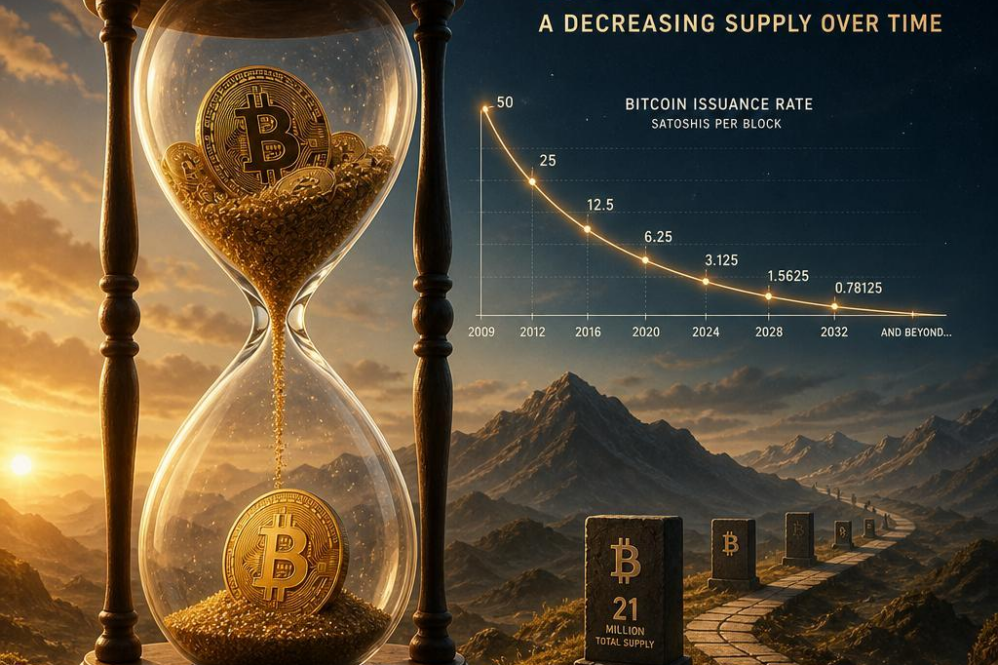
bitcoin’s Built-in Inflation Cap: A Decreasing Supply Over Time
bitcoin’s unique monetary policy is one of its defining features. While customary fiat currencies rely on central authorities to regulate their supply, bitcoin’s protocol-built mechanism ensures that only a predetermined amount of currency will ever be in circulation. This inflation cap is achieved through a deliberate reduction in the block reward for miners, which decreases the rate at which new coins are introduced into the market.
The effect of this decrease in issuance rate can be seen clearly when comparing it to other forms of digital scarcity. Unlike art or rare collectibles, whose value is derived from market demand adn supply, bitcoin’s value is intrinsic – tied directly to its limited availability. To illustrate, consider a table comparing the rates at which various assets are produced:
| Asset | Annual Production Rate |
| Cents in the US economy | Billions of dollars (unlimited) |
| BTC (in block rewards only) | 1.8M - 6.25BTC per block (decreasing) |
| Rare art | Sporadic releases,often years apart (limited) |
As a result of this controlled inflation cap,the perceived value of each bitcoin increases over time. This scarcity is not dependent on external factors but is baked into the protocol itself, ensuring that the money supply will be strictly managed by an algorithm rather than central intervention.Even as individual transactions become more frequent and users interact with their coins at an accelerating pace,the steady drumbeat of decreased availability reinforces their intrinsic value.
* The Impact of Halving on bitcoin’s Supply
bitcoin’s unique blend of decentralized governance and scarcity makes its inflation cap notably noteworthy. At its core, bitcoin’s supply is governed by a built-in mechanism that ensures the cryptocurrency’s total circulation never exceeds 21 million units. This hardcoded limit has meaningful implications for investors and users alike.
The most notable consequence of this limited supply is the gradual decrease in new bitcoin issuance over time.As more blocks are mined, fewer new Bitcoins are created to reward miners for their efforts. This means that as bitcoin becomes increasingly rare, its scarcity can impact price volatility and investor expectations. As an example:
- The block reward halves every 210,000 blocks mined, which currently equates to approximately four years.
- This halving event increases the cost of mining a new block, making it more challenging for miners to maintain profitability.
To illustrate this effect, consider the table below, showing the cumulative supply of bitcoin versus time:
| Year | Total Supply (approximate) |
|---|---|
| 2023 | 16,200,000 Bitcoins |
| 2027 | 18,500,000 Bitcoins |
| 2031 | 20,900,000 Bitcoins |
This decreasing supply, combined with bitcoin’s growing reputation as a store of value and medium of exchange, underscores the cryptocurrency’s unique characteristics and potential applications.As more users and investors turn to bitcoin due to its scarcity and security features, it is indeed essential to understand how this built-in inflation cap influences its overall economic dynamics.
* How Block Reward reduction Affects Investment Demand
bitcoin’s unique design features a built-in inflation cap that sets it apart from more traditional fiat currencies. At its core, this mechanism is tied to the concept of block reward reduction over time.
As new blocks are added to the blockchain, they contain a set of transactions verified by powerful computers around the world through a process called consensus algorithm. But there’s an critically important twist: with each 210,000th block mined, both the complexity of solving the mathematical puzzle for mine and the reward paid in newly minted bitcoins is reduced by half. While this might seem counterintuitive at frist glance – after all,isn’t a reduction in rewards usually detrimental to miners? This halving actually results in a more efficient use of scarce computing power.
Consider the following table illustrating the total reduction in expected supply over time for bitcoin:
| block height | Original Reward (per block) | New Reward (per block) |
|---|---|---|
| 1-210,000 | 50 BTC | 25 BTC |
| 50 BTC/6.31 hours | 12.5 BTC/12.63 hours ,
|
In time, this block reward reduction contributes to the decreasing supply of freshly minted bitcoins entering circulation, which in turn can bolster interest from investors who perceive this dynamic as a form of scarcity – a quality often driving up prices for rare commodities in other markets. This perceived value boost is a result of the combined effect of both reduced inflation rate and total cap on circulation supply.
bitcoin’s unique design features make it possible for its user base to predict the exact time when block reward will be cut by half (210,000 blocks or approximately every 4 years) and the impact this has on overall rarity.
* The Shift from Abundance to Scarcity in bitcoin’s Economy
bitcoin’s economy is undergoing a significant shift from one of abundance to scarcity.This change can be attributed to its built-in inflation cap,which ensures that the supply of bitcoin decreases over time.
At the heart of this scarcity lies the halving process,where the block reward for mining new Bitcoins is cut in half. This event has occurred three times since bitcoin’s launch: in 2012, 2016and 2020. The effect of each halving is substantial: with fewer new Bitcoins being introduced into circulation, the overall supply decreases and the value of existing coins increases.
To illustrate this trend let’s take a look at some numbers. In the first two years after its launch, bitcoin’s supply increased by an average annual rate of 50%. However, following the halving in 2012, this growth slowed down dramatically. By 2020, the rate had decreased to less than 15% annually. This steady decline points towards a future where scarcity becomes the primary characteristic of bitcoin’s economy.
The reduced supply does have its benefits, though: it incentivizes miners to secure the network and validate transactions more efficiently, thus increasing the chances for the block reward to be claimed in subsequent blocks. However, this dynamic also implies that as time passes fewer new coins will become available to support new development and infrastructure growth within the ecosystem.
The trend towards scarcity presents both opportunities and challenges for bitcoin’s widespread adoption. As users become increasingly aware of the rare nature of each coin, they may begin to reassess their storage options accordingly.But it also raises questions about whether the decreased supply will eventually become a bottleneck for innovation in areas like smart contracts and decentralized applications.
| block Reward (BTC) | Halving Date |
|---|---|
| 50 | Nov 28, 2012 |
| 25 | July 9, 2016 |
| 12.5 | May 11, 2020 |
The scarcity of bitcoin has far-reaching implications for the network’s dynamics and user adoption strategies. As it becomes increasingly rare, the coin’s value may rise even further - posing both benefits and challenges to individual owners and institutional investors alike.
* Balancing Inflation and Deflation: bitcoin’s Self-Correcting Mechanism
bitcoin’s unique design ensures that its supply decreases over time,thereby regulating inflation. This built-in mechanism helps maintain the cryptocurrency’s value and prevents excessive monetary expansion, a common issue in fiat currencies.
At the core of bitcoin is its limited supply, estimated to reach around 21 million units by the year 2140 or earlier depending on mining rate adjustments. To put this into perspective, consider the following examples: small countries like Malta have populations less than 20% of this total, while larger countries like Indonesia have approximately twice the population of the entire bitcoin supply. As miners extract and verify new blocks, their reward is reduced by half approximately every four years in an attempt to slow down the rate at which new coins enter circulation.
Here’s a brief illustration of how this works: | Block reward Reduction | Approximate Years |
| — | — |
| 50 BTC per block | Initial (2009-2020) |
| Halved to 25 BTC per block | Block reward reduction 1 (2012) |
| Halved to 12.5 BTC per block | Block reward reduction 2 (2016) |
note that this gradual reduction in rewards ensures a sustained decrease in the supply of new Bitcoins entering circulation, effectively regulating inflation and maintaining stability within its network.
* Consequences of a Decreasing Supply for bitcoin Price Stability
bitcoin’s unique design allows it to have a built-in inflation cap through a decreasing supply over time. This is accomplished through its protocol, which limits the total number of bitcoins that can ever exist – 21 million. As the network has been running for yearsand new blocks are added regularly, the rate of issuance slows down, contributing to this scarcity.
The consequences of such a decreasing supply are multifaceted.One significant impact is on the price of bitcoin itself. With less digital currency being introduced into circulation and no way to print more, each individual unit becomes worth more as the collective pool decreases in size. This basic principle is in stark contrast to traditional fiat currencies issued by governments, where inflation can erode purchasing power, decreasing their value over time.
Several key metrics underscore the scarcity and supply of bitcoin:
| Metric | Explanation |
|---|---|
| Halving,2020/04 | A predetermined schedule (every four years) leading to a reduction in block reward for miners,slowing down new unit creation. |
Miners’ Marginal Role: Miners add new Bitcoins into circulation as a byproduct of solving complex mathematical problems that validate the network’s transactions, but with diminishing returns due to decreased block rewards and increased difficulty in finding valid solutions. This makes it essential to analyze the intricate relationships between bitcoin’s supply, its value, and their interconnectedness within the overall economic system.
A fundamental aspect of this concept lies not just in numbers or values but also in understanding how scarcity influences supply and demand dynamics.

