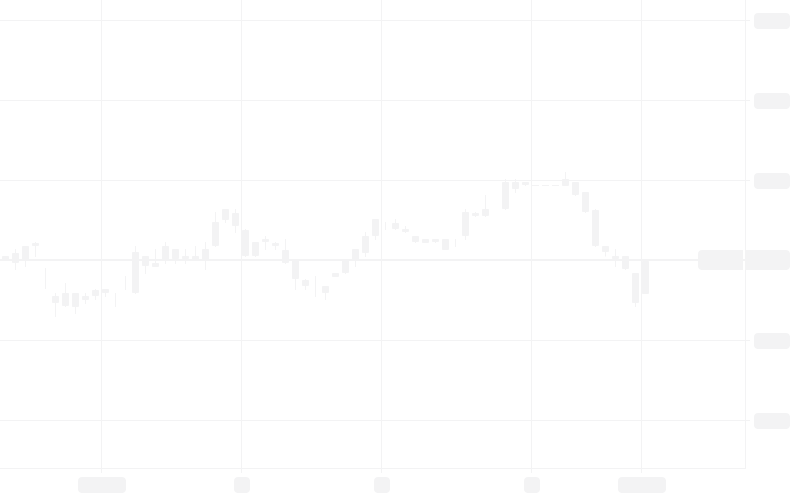
bitcoin Transaction Fees Surge Amid Network Congestion periods
During periods of heightened activity on the bitcoin network, transaction fees often experience rapid increases, reflecting the underlying congestion.This phenomenon occurs when an influx of transactions overwhelms the limited space available in each block,prompting users to compete by offering higher fees to prioritize their confirmations. As a result, average fees can skyrocket, sometimes reaching levels that substantially outpace normal transaction costs.
Key factors contributing to fee surges include:
- Network Demand: Increased usage by retail and institutional investors during market volatility or speculative rallies drives the fee spike.
- Block Size Limitations: The maximum block size restricts the number of transactions that can be confirmed, creating a queue of pending transactions.
- Priority Fee Bidding: Users willing to pay more expedite their transaction clearance, pushing average fees upward.
| Metric | Normal Periods | Congestion Periods |
|---|---|---|
| Average Transaction Fee | $1.20 | $15.50 |
| Average Confirmation Time | 10 minutes | 30+ minutes |
| Pending Transactions (Mempool) | 2,000 | 50,000+ |
Understanding these dynamics is essential for anyone transacting in bitcoin or developing applications on its blockchain. Stakeholders must factor in potential fee surges during peak demand periods to optimize transaction costs and timing effectively.
Understanding the causes Behind Rising bitcoin Transaction Costs
The escalation of bitcoin transaction fees can be traced primarily to a surge in network congestion. When the number of transactions waiting to be confirmed skyrockets, miners prioritize those who pay higher fees, leaving others to face delays or increased costs.This dynamic creates a competitive environment were users must bid higher fees to ensure faster confirmation times. The limited block size capacity, capped at 1MB of data per block, restricts the number of transactions that can be processed every ten minutes, exacerbating congestion during high demand periods.
Another critical factor influencing the rise in fees is the growing adoption of bitcoin as both a store of value and transactional medium. With more users participating-ranging from retail investors to institutional players-the demand for block space intensifies. The impact is particularly noticeable during market surges, when volumes spike sharply. Additionally, complex transactions, such as those involving multi-signature wallets or smart contract interactions, consume more block space, leading to higher fees for these operations.
Key Causes Behind Rising bitcoin Transaction Fees:
- Network Congestion: Increased volume of unconfirmed transactions competing for limited block space.
- Block Size Limitation: Fixed capacity restricts the number of transactions processed per block.
- Transaction Complexity: Advanced scripts require more data, driving up fees.
- Market Activity Spikes: Events like price rallies cause temporary surges in demand for transaction confirmations.
| Factor | Impact on Fees |
|---|---|
| Network Volume | High demand pushes fees upward |
| Block Size | Limits transaction throughput |
| Transaction Type | More complex = higher fee |
| Market Events | Cause temporary fee spikes |
The Impact of Network Congestion on Transaction Confirmation Times
Network congestion in the bitcoin blockchain arises when the volume of pending transactions exceeds the capacity of miners to include them in the next block. This overflow causes a backlog, leading to significantly prolonged confirmation times. During these periods, transactions with lower fees often experience delays, as miners prioritize those offering higher rewards, creating a competitive landscape for fee bidding.
Key factors exacerbating transaction delays include:
- High trading activity and sudden spikes in network usage
- Limited block size restricting the number of transactions per block
- Surges in demand caused by market volatility or popular token launches
| Transaction Fee (satoshis/byte) | Average Confirmation Time |
|---|---|
| 1-5 | 30+ minutes |
| 6-20 | 10-30 minutes |
| 21-50 | 5-10 minutes |
| 50+ | under 5 minutes |
As network congestion intensifies,the dynamic fee market encourages users to increase their transaction fees to secure faster confirmations. This environment amplifies fee volatility and can significantly challenge casual users and small-scale transactions. Understanding these dynamics is essential for both developers optimizing wallet fee estimation algorithms and users seeking cost-effective transaction strategies.
Analyzing Fee market Dynamics During Peak bitcoin Usage
Throughout periods of intense network activity, bitcoin’s transaction fees experience notable fluctuations driven primarily by supply and demand dynamics within the fee market. When the mempool-the collection of unconfirmed transactions-becomes saturated, miners face an influx of pending transactions competing for limited block space.This scarcity prompts users to increase fees to ensure faster confirmation.Consequently, fee rates often spike, reflecting the urgency and willingness of participants to prioritize their transactions.
Several key factors contribute to these fee escalations:
- block Size Limits: bitcoin’s fixed block size limits the number of transactions per block,creating bottlenecks during peak usage.
- User Behavior: Higher fees incentivize miners to select transactions with greater rewards, incentivizing users to bid competitively.
- Network Events: Sudden surges can be triggered by market volatility or mass adoption milestones, increasing transaction volume abruptly.
| Peak Period (UTC) | Avg Fee (sats/byte) | Mempool Size (MB) | Tx Confirm Time (mins) |
|---|---|---|---|
| 12:00 - 14:00 | 120 | 15 | 45 |
| 18:00 - 20:00 | 180 | 22 | 60 |
| 22:00 - 23:30 | 140 | 18 | 50 |
Understanding these market interactions is crucial for strategizing transaction timing and fee allocation, especially during congestion to optimize costs and confirmation times. Enhanced fee estimation algorithms and Layer 2 solutions continue to play pivotal roles in mitigating the impact of these peak congestions.
Strategies for Users to Minimize Transaction fees Effectively
One of the most effective approaches to reducing transaction fees is to time your transactions carefully. bitcoin network congestion typically fluctuates throughout the day and week. By avoiding peak periods,users can save significantly on fees.Tools like mempool explorers and fee estimator websites provide real-time insights into current network activity and recommended fee rates necesary for prompt confirmations. Monitoring these indicators empowers users to schedule their transactions during off-peak intervals, when demand is lower and fees decrease substantially.
Optimizing transaction structure is also essential in minimizing fees. Users should consider batching multiple payments into a single transaction rather than sending multiple separate ones. This approach reduces the overall data size processed on the blockchain, leading to lower cumulative fees. Additionally, consolidating unspent transaction outputs (UTXOs) during periods of low fees can streamline future transactions by reducing the number of inputs, which directly impacts the fee calculation, making subsequent transfers more economical.
Another valuable technique involves using advanced wallet features and emerging technologies. Many modern bitcoin wallets support Replace-By-Fee (RBF) and Child Pays for Parent (CPFP) functionalities that allow users to adjust transaction fees post-submission when network conditions change. Moreover, leveraging layer-2 solutions like the Lightning Network offers near-instant transactions with minimal fees by conducting most exchanges off-chain. Incorporating these strategies creates significant cost-saving opportunities without compromising transaction speed or security.
Future Outlook and Potential Solutions to Alleviate Network Bottlenecks
As bitcoin adoption continues to expand globally, enhancing the network’s scalability is paramount to preventing future fee surges during peak congestion. Developers and stakeholders are increasingly advocating for innovations such as second-layer solutions, with the Lightning Network at the forefront. This protocol allows microtransactions to be processed off-chain, minimizing the load on the primary blockchain and significantly reducing transaction fees and confirmation times.
Additionally,ongoing improvements to the base protocol itself promise to address bottlenecks. The implementation of Segregated Witness (SegWit) has already improved block capacity, but future upgrades like Tapscript and Taproot are poised to introduce better transaction efficiency and privacy features. these enhancements help optimize space usage within blocks and can lead to smoother fee dynamics by enabling more complex transactions to coexist without disproportionately increasing data size.
| Potential Solution | Impact on Fees | Status |
|---|---|---|
| Lightning Network | drastically lowers small transaction fees | Active & expanding |
| SegWit Enhancement | Increases block capacity, reducing congestion | Implemented |
| Taproot Upgrade | Improves transaction efficiency and privacy | Activated |
- Encouraging adoption of off-chain transactions can ease mainnet congestion.
- Continued protocol upgrades ensure sustainable growth and security.
- Collaborative efforts between developers and users are essential for network health.