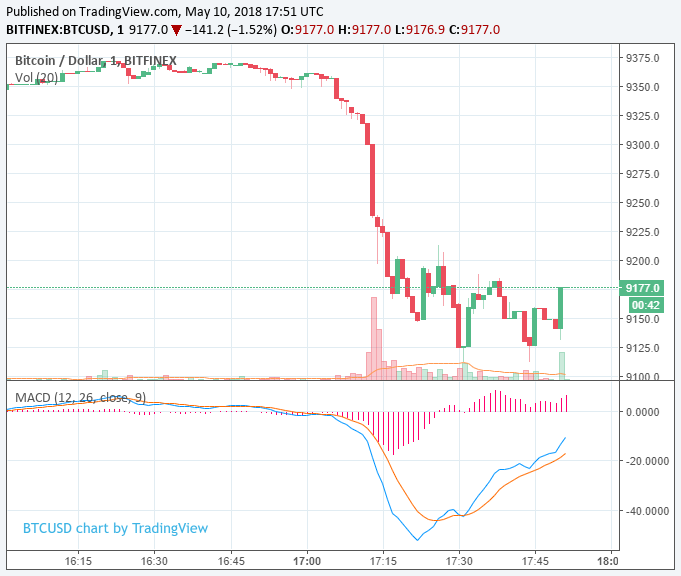
The [BTC] has remained firm despite bitcoin [BTC]-negative news hitting the wires this week.
The value of bitcoin [BTC] dropped by around three week-on-week but managed to remain above the $3,600 mark, giving a signal to bitcoin [BTC] bears that it may be time to start buying again.
Somewhat surprisingly, the news of the [BTC] ETF withdrawal did not cause a sell-off despite the profound positive effect a bitcoin [BTC] ETF approval could have on the price of bitcoin [BTC]. It seems that bitcoin [BTC] traders have priced in that the likelihood of a bitcoin [BTC] ETF trading on U.S. exchanges being rather low in the coming months. Hence, the price barely moved followed the announcement.
Moreover, the attempt by BCG Digital Ventures founder, Jeff Schumacher, claiming that will go to zero at a CNBC-hosted discussion panel at the Davos meetings. Given that Schumacher is a blockchain investor, it should come as no surprise that he promotes the “blockchain not bitcoin [BTC]” narrative.
bitcoin bear and Ripple CEO Brad Garlinghouse, who previously said that he believes that bitcoin [BTC] will not become a global currency, said he that he does not think the value of bitcoin [BTC] will drop to zero.
The altcoin market was mostly slightly in the red, as you would expect when bitcoin [BTC] is down three percent, with only Tron (TRX) standing out as an outperformer with a week-on-week price increase of over 15 percent, boosted by the news of being deployed on the Tron network.
This week’s contributions were provided by , , , and .
According to an published by the U.S. Securities and Exchange Commission () on January 23, 2019, the Cboe BZX Exchange has withdrawn its proposed rule change which could have resulted in the listing of the VanEck SolidX bitcoin [BTC] Trust on the exchange.
Unfortunately, chances for a ETF took a major dive on January 23, 2019, as the SEC informed the public that the long-pending ETF application filed by has been withdrawn by the exchange amid the ongoing U.S. government shutdown.
Advertisement
Advertisement
The VanEck ETF story started in June 2018, when the investment firm a deal with financial services provider SolidX to provide a bitcoin [BTC] ETF offering backed by physical .
On June 26, 2018, Cboe Global Markets a proposed rule change with the SEC. This rule change, if amended, would enable the exchange to offer SolidX bitcoin [BTC] Shares to the public.
However, the SEC has since continually deferred making a final call on the matter. On September 20, 2018, the SEC that it was seeking “more feedback” on the listing process, even after having more than 1,400 comment letters on the joint proposal filed by VanEck and SolidX.
On December 6, 2018, the SEC for more time to think over the proposed rule change filed by VanEck. This time, however, the Commission came with a hard-stop date of February 27, 2019, meaning it couldn’t delay the decision beyond this date.
A January 18, 2019, report from has revealed that the amount of spent daily on the darknet doubled in 2018 despite the crash in crypto markets.
On the dark web, many illegal activities take place seemingly in the open. There has been speculation of the sale of weapons, drugs, and even reports of human trafficking. Naturally, because there is so much illegal activity going on, the payments that take place on these platforms need to be done discreetly. One method of payment that has caught on in recent times, however, is the use of bitcoin [BTC] which doubled in 2018.
This information comes via a form Chainalysis, a blockchain analysis firm, which states that by the end of 2018, the daily bitcoin [BTC] transaction on the darknet was $2 million, twice what it was at the beginning of the year. Even more interesting is that the volume of bitcoin [BTC] usage was largely unaffected by the late-2018 crash in price.
, the blockchain project of U.S. retail heavyweight Overstock, has announced that accredited investors holding its tZERO security tokens can now trade them with other certified investors through a digital securities brokerage account at Dinosaur Financial Group, LLC, a New York-based Financial planner, which serves as tZERO’s introducing broker-dealer.
Per the press release, in a bid to make the secondary trading process a huge success, its subsidiary, PRO Securities, LLC, a firm whose primary objective is to offer an “alternative trading system to provide market access for the tokens during market hours initially,” registered by the Securities and Exchange Commission ().
Commenting on the remarkable milestone, Patrick Byrne, founder of Overstock.com and executive chairman of tZERO, stated that:
“A new efficient and transparent path for capital formation through blockchain technology is now a reality,”
According to a by 8BTC published on January 24, 2019, an “inconsistent” business model might be to blame for cryptocurrency mining giant Bitmain’s diminishing chances of being listed on the Hong Kong Stock Exchange ().
Speaking on the sidelines of the World Economic Forum in Davos, Charles Li Xiaojia, the CEO of Hong Kong Exchanges and Clearing () asked companies looking to go public in HK to show some “consistency in their business models.”
Xiaojia’s above statement was in response to a question raised by journalists regarding the status of IPO applications from digital currency mining firms like Bitmain, Canaan, and Ebang International Holdings.
Xiaojia :
“If a company made billions of US dollars through Business A, but suddenly said it will do Business B without showing any performance, or said Business B is better, then I don’t think the Business A featured in their application will be sustainable.”
However, he ensured that the HK Exchange will provide “procedural justice” to the applicants and that all three companies will have a right to appeal.
On January 23, 2019, the Italian Senate Committee approved an regarding blockchain technology, which is a first for the country.
The amendment is called “Decreto semplificazioni” and was approved by the Senate committees of Constitutional Affairs and Public Works. The amendment serves as a foundational document and helps to properly define cryptocurrency and blockchain terms as well as shed some light on their legal status. The document touches on distributed ledger technology based technologies and definitions. The amendment also states that blockchain-powered digital documents can validate documents at the time of registration.
Now that the amendment has been approved, it still needs a review from the Chamber of Deputies and the Senate of the Republic. Once this approval is given, the amendment will be legally binding and blockchain can be used for the validation of various documents. The efficiency of blockchain also means that timestamping of official documents will be easier and done with little error.
Lawmakers in New Hampshire put forward a new bill on January 3, 2019, which would see cryptocurrencies legitimized as an acceptable payment method for “taxes and fees” in July 2020. Meanwhile, Pennsylvania excludes crypto from the definition of money but eases operations for cryptocurrency businesses.
was introduced by Representatives Michael Yakubovich and Dennis Acton who are looking to follow in the footsteps of Ohio who in became the first U.S. state to legalize with cryptocurrency. Furthermore, the bill would allow for third-party entities to also accept fees with crypto.
It is expected that the bill will be reviewed on January 29, 2019, and have a final decision deadline for March 14. Should the bill be passed, the state treasurer would have until November 1, 2019, to establish an integration plan for agencies.
Moving a little further west, the Pennsylvania Department of Banking and Securities () which in essence, excludes cryptocurrencies from the definition of money.
They clarify that the Money Transmitter Act () does not apply to cryptocurrency exchanges and therefore, businesses engaging in the transfer of digital currencies do not need to obtain a Money Transmission Business Licensing Law.
Focusing on what constitutes as legal tender, the memo titled “Money Transmitter Act Guidance for Virtual Currency Businesses,” goes on to state that cryptocurrencies are not admissible under MTA definitions and that “to date, no jurisdiction in the United States has designated virtual currency as legal tender.”
The Singaporean government has declared that cryptocurrencies aren’t legal tender and has cautioned business owners against accepting it, just as has announced that crypto would be accepted in their stores.
The legality of cryptocurrency varies from place to place. While countries like have fully embraced the use of , their national cryptocurrency, other places haven’t quite caught on. One such place is as their Ministry of Law has formally that cryptocurrency is not a form of legal tender and also advised businesses to exercise caution before accepting them as payment.
Just last week, a new was introduced that addresses money laundering and terrorism financing in the precious stones and metals industry. This coincided with the of SK Jewellery, a Singapore-based jeweler, to begin accepting cryptocurrency at their stores.

Published at Mon, 28 Jan 2019 17:00:20 +0000