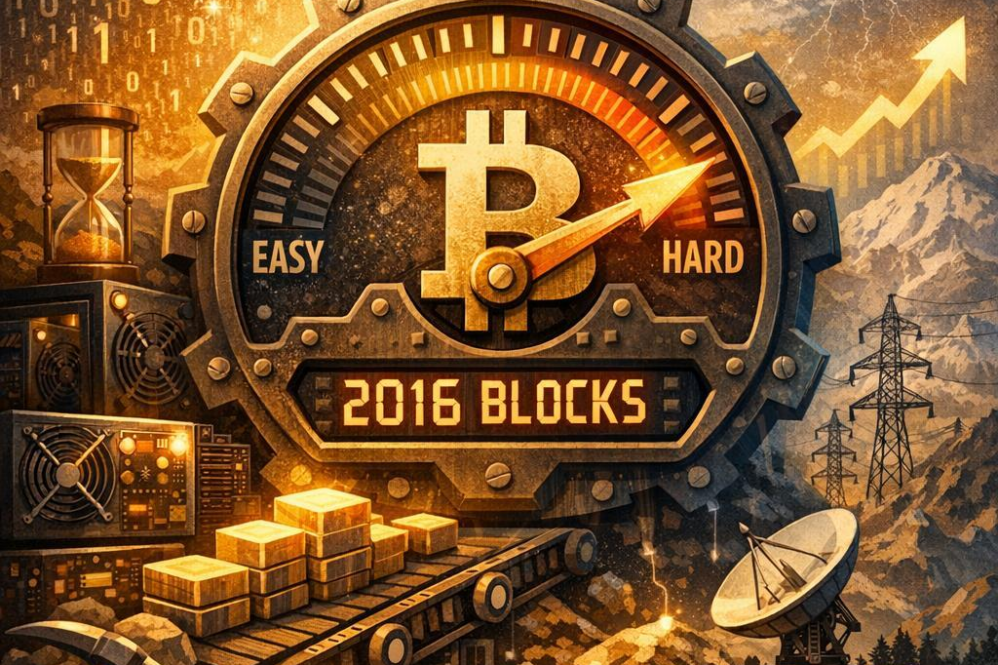
bitcoin Mining Difficulty and Its Role in Network Security
The bitcoin network is designed to maintain a constant block finding time of approximately 10 minutes. To achieve this, the mining difficulty dynamically adjusts every 2016 blocks – roughly every two weeks. This automatic recalibration ensures miners collectively solve cryptographic puzzles neither too fast nor too slow. When more computational power competes to mine blocks, the difficulty increases, making the puzzles harder to solve. Conversely, if mining power drops, the difficulty decreases, restoring balance and stability to the system.
Key factors influencing the mining difficulty adjustment include:
- The total hashrate of the network, representing the combined mining power
- The elapsed time it took to mine the previous 2016 blocks
- The targeted 20160-minute period for processing those blocks
By aligning wiht these parameters, bitcoin preserves its decentralized ethos and predictable issuance schedule. The automated nature of difficulty adjustment prevents miners from dominating the network and safeguards against abrupt disruptions in block times, which could undermine transaction finality.
| Metric | Value |
|---|---|
| Blocks per Adjustment | 2016 |
| Target Time (min) | 20160 |
| Block Time (approx.) | 10 min |
Ultimately,difficulty adjustment plays a crucial role in network security. By continuously matching the challenge with the collective mining strength, bitcoin prevents the rapid takeover by malevolent actors. This mechanism maintains the integrity and trustworthiness of the blockchain, ensuring that confirming transactions remains a fair and resource-intensive process, critical for sustaining bitcoin’s long-term resilience.
Mechanics Behind the Automatic adjustment of Mining Difficulty
The mining difficulty in bitcoin is a dynamic variable that ensures the rate of block discovery remains consistent, targeting an average of one block every ten minutes. This is achieved by adjusting the complexity of the cryptographic puzzle miners must solve. Roughly every 2016 blocks, or about every two weeks, the protocol evaluates how much time the previous set of blocks took to be mined.If blocks were discovered faster than the 10-minute goal, the system increases the difficulty; if slower, the difficulty decreases. This mechanism maintains network stability despite fluctuations in total computational power.
Key components of this process include:
- The actual time taken to mine the previous 2016 blocks compared to the expected two-week period.
- The recalculation of the difficulty target based on this time, implemented as a percentage adjustment.
- The enforcement of a cap, limiting difficulty changes to a factor of four either up or down per adjustment period, preventing extreme swings.
| Metric | Expected Value | Impact on Difficulty |
|---|---|---|
| Time for 2016 blocks | 20160 minutes (14 days) | Baseline for adjustment |
| Actual time less than 14 days | Faster mining | Increase difficulty |
| Actual time more than 14 days | Slower mining | Decrease difficulty |
This elegant feedback loop allows bitcoin to adapt automatically to changes in miner participation and hardware efficiency while preserving the integrity and predictability of block production. Consequently, miners must continually invest in better technology or operate efficiently to remain competitive, fostering a robust and decentralized network security model.
Impact of Difficulty Adjustments on Miner Profitability
The automatic adjustment of bitcoin mining difficulty plays a pivotal role in determining miner profitability. When the network detects that blocks are being mined too quickly, the difficulty increases, requiring more computational power to solve the cryptographic puzzles. Conversely, if blocks are taking longer than the targeted 10 minutes, the difficulty decreases, providing miners a relatively easier path to earning rewards. This dynamic process ensures that the blockchain maintains a consistent rate of progress despite fluctuations in the total mining power.
From a profitability perspective, this means miners must constantly evaluate their operational efficiency. Higher difficulty translates directly to greater energy consumption and hardware strain, which increase operational costs. Small or inefficient mining rigs may find themselves priced out of the market during times of rising difficulty, while larger, optimized operations can maintain margins. The challenge for miners is not just raw computational power, but the ability to adapt to fluctuating conditions and optimize their setups accordingly.
Consider the following simplified overview of how difficulty adjustments affect miners:
- Difficulty Increase: More competition, longer time per block – leads to reduced reward frequency per miner unless hashing power is scaled.
- Difficulty Decrease: Less competition, shorter time per block – increases chances for smaller miners to secure rewards.
- Stable Difficulty: Indicates a balanced network hash rate, stable profitability prospects for consistently efficient miners.
| Difficulty Level | effect on Mining | Miner Type Impacted |
|---|---|---|
| Low | Blocks mined faster, less computational cost | Small-scale and hobby miners benefit |
| Medium | Optimal balance of rewards and costs | Most miners maintain stable profits |
| High | Increased energy and hardware demands | Large-scale miners dominate |
How Mining Difficulty Influences bitcoin Transaction Confirmation Times
The time it takes for a bitcoin transaction to be confirmed hinges significantly on the mining difficulty level, a dynamic metric that ensures the blockchain’s integrity and steady issuance of coins. When mining difficulty rises, it means that miners must expend more computational power to discover a new block. While this slows down individual attempts, the network’s automatic adjustments mean that, on average, blocks continue to be mined approximately every 10 minutes, despite fluctuations in collective mining power.
Factors impacted by mining difficulty include:
- The rate at which transactions enter the blockchain
- The overall transaction backlog or mempool size
- Transaction fees, often increasing during periods of high difficulty
| Difficulty Level | Approximate Confirmation Time | Transaction Fee Trend |
|---|---|---|
| Low | ~10 minutes | Stable or low fees |
| Medium | ~10 minutes | Moderate fee increase |
| high | ~10 minutes (network adjusts) | Higher fees due to competition |
It is essential to remember that mining difficulty is self-regulated based on the total network hash rate every 2016 blocks, or roughly every two weeks. If miners contribute more power, difficulty increases, making blocks harder to solve but sustaining the average confirmation time. Conversely, if miner power drops, difficulty decreases, preventing transaction delays. This balancing mechanism directly influences transaction confirmation speed and the cost paid by users to expedite processing.
Strategies for Miners to Adapt to Difficulty Fluctuations
Mining profitability can fluctuate significantly as the computational difficulty recalibrates with every 2016 blocks. To maintain a competitive edge and ensure steady returns, miners must prioritize efficiency improvements.This includes upgrading to more advanced ASIC hardware that offers higher hash rates and better energy consumption ratios. Additionally, optimizing cooling systems reduces operational costs, helping to sustain profitability even during periods of increased difficulty.
Strategic mining pool participation is another essential approach. By joining pools that provide consistent payouts and low fees, miners can stabilize income despite the unpredictable nature of difficulty adjustments.Pools with frequent payouts and robust infrastructures offer a cushion when individual block rewards become harder to obtain, balancing out the income fluctuations miners experience.
miners should actively monitor network conditions and adapt their strategies accordingly. Utilizing real-time analytics to assess hash rate trends and difficulty forecasts allows for timely decisions-whether scaling operations up, temporarily reducing power usage, or reallocating resources. Effective risk management through diversification of cryptocurrency portfolios or energy sourcing can further mitigate the financial impact of difficulty swings.
| Strategy | Benefit | Implementation Tips |
|---|---|---|
| Hardware Upgrades | Higher efficiency | Invest selectively in next-gen ASICs |
| Mining Pool Selection | Stable payouts | Compare fees and reliability before joining |
| Real-time Monitoring | Informed decision-making | Use analytics tools for hash rate & difficulty insights |
Future implications of Difficulty Adjustments on bitcoin’s Decentralization
bitcoin’s difficulty adjustment mechanism inherently influences the network’s decentralization dynamics by regulating how accessible mining remains across varying conditions. As mining difficulty increases to maintain the 10-minute block interval,smaller or less efficient miners may find it challenging to compete,potentially consolidating mining power among those with superior technology or cheaper electricity.This dynamic can inadvertently prioritize mining centralization, as entities with significant resources can absorb the increased difficulty costs, while marginal players may exit the network.
Though, the automatic adjustment also functions as a stabilizing force:
- It prevents runaway computational arms races by responding to changes in total hash rate.
- It incentivizes innovation in mining hardware and energy efficiency, thereby balancing prospect for newer entrants.
- It safeguards the integrity of block production timing, fostering trust in the blockchain’s reliability and security.
The careful equilibrium maintained by difficulty adjustments means that while it exerts pressure on decentralization, it also ensures the protocol remains robust and fair over time.
| Effect | Potential Impact on Decentralization |
|---|---|
| Increased difficulty | May marginalize small-scale miners |
| Difficulty Reduction (due to miner drop-off) | Encourages re-entry by under-resourced miners |
| Stable Difficulty | Maintains current decentralization balance |
Looking ahead,the interplay between mining difficulty and decentralization will remain a critical focal point as the bitcoin ecosystem evolves. Innovations such as more energy-efficient mining hardware, alternative consensus solutions, and changes in energy costs may tip the scales. Nevertheless, the automatic difficulty adjustment ensures that bitcoin adapts organically, preserving its decentralized ethos by continuously calibrating network participation barriers in real time.