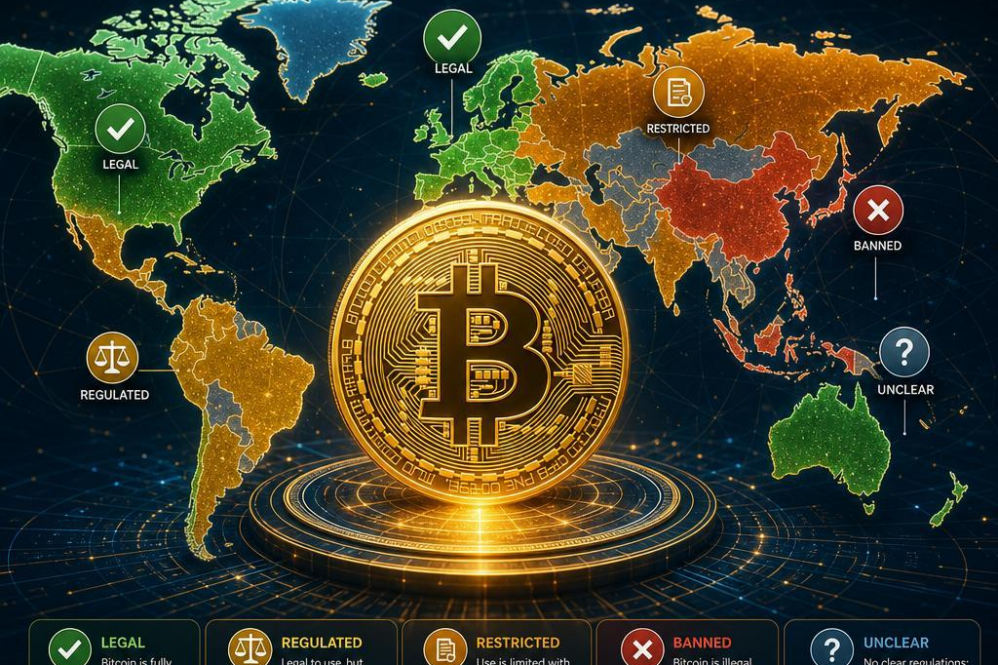
bitcoin Legality Across Different Continents and Economic Regions
bitcoin’s legal standing varies widely across the globe, driven by economic policies, regulatory approachesand cultural attitudes toward cryptocurrency. In North America,countries like the United States and Canada generally accept bitcoin as a legitimate digital asset,regulating it under financial and anti-money laundering laws. Mexico, however, poses more restrictions but still allows bitcoin-related activities within controlled frameworks. The regulatory environment in this region emphasizes consumer protection and taxation, creating a somewhat balanced ecosystem for traders and institutions.
Moving to Europe and Asia, the landscape unfolds with complex contrasts. The European Union collectively endorses bitcoin as a form of property or digital asset, imposing standardized guidelines for exchanges and wallet providers, yet individual member states maintain their own interpretations. Conversely, Asia presents a patchwork of regulations: Japan formally recognizes bitcoin as legal tender, supporting innovation, while China enforces strict prohibitions to curb speculative trading and financial risks. Southeast Asian nations such as Singapore take a more pragmatic stance, fostering crypto-friendly regulations that encourage fintech development.
| Continent/Region | Legal Status | Key Regulatory Focus |
|---|---|---|
| North America | Permissive with regulations | consumer protection, taxation |
| Europe | Regulated with EU coordination | Standardization, anti-money laundering |
| Asia | Varied: from acceptance to bans | Market control, financial stability |
| Africa & South America | Emerging adoption, spotty clarity | Innovation encouragement, informal markets |
In Africa and South America, bitcoin enjoys growing popularity despite unclear or evolving legal frameworks. Many countries here use bitcoin as an choice to unstable local currencies, fostering informal markets with minimal oversight.Governments are gradually recognizing the potential of cryptocurrencies to boost financial inclusion, leading to tentative regulatory measures. This contrasts sharply with other regions where legal rigidity often stifles innovation,highlighting that bitcoin’s global legality depends as much on economic context as on formal legislation.
Key Regulatory Challenges Facing bitcoin Adoption Worldwide
As bitcoin continues to gain traction around the world, regulatory bodies find themselves grappling with its unique challenges. Central to these hurdles is the cryptocurrency’s decentralized nature, which defies conventional financial regulations rooted in centralized control. Governments are particularly concerned about issues such as money laundering, tax evasionand consumer protection. Consequently, they struggle to design oversight mechanisms that both safeguard their financial systems and respect bitcoin’s boundary-pushing framework.
Another complicating factor arises from the diverse approaches governments have adopted. Whereas some countries embrace bitcoin with open arms,crafting clear legal frameworks and encouraging innovation,others impose stringent restrictions or outright bans. This regulatory patchwork creates a volatile environment for investors and businesses attempting to operate internationally. The lack of uniform regulatory standards means compliance costs soar and uncertainty persists, dampening broader adoption.
- privacy concerns: balancing anonymity with regulatory demands for transparency
- Financial stability: mitigating risks from market volatility and speculative bubbles
- Technological evolution: keeping pace with rapid changes like DeFi and NFTs
| Region | Regulatory Approach | Impact on Adoption |
|---|---|---|
| North America | Moderate regulation with focus on AML/KYC | Steady institutional interest |
| Europe | Progressive but fragmented | High innovation, varied legal clarity |
| Asia | Mixed; from strict bans to open markets | Market volatility and uncertainty |
| middle East & Africa | Emerging regulations, cautious stance | Slow but growing adoption |
Comparative Analysis of National bitcoin Laws and Enforcement Practices
Across different jurisdictions, bitcoin’s legal status presents a mosaic of regulatory approaches, ranging from outright bans to explicit endorsements. While some nations embrace cryptocurrency innovation with thorough frameworks for licensing exchanges and protecting consumers, others adopt caution by imposing stringent controls or prohibiting use altogether. This disparity often reflects each country’s economic priorities, technological readinessand appetite for financial decentralization.
Enforcement mechanisms also vary considerably. In regions where bitcoin is legal but regulated, authorities typically emphasize anti-money laundering (AML) and know-your-customer (KYC) requirements to mitigate illicit activities. Conversely, jurisdictions that classify bitcoin as illegal usually pursue aggressive legal sanctions against participants engaging in trading or mining, leveraging law enforcement to curb adoption. These enforcement philosophies highlight contrasting national stances on balancing innovation with security.
| Country Category | Legal Treatment | Enforcement Focus |
|---|---|---|
| Regulated Friendly | legal with licensing and oversight | Consumer protection,AML,KYC |
| Restrictive Controls | Permitted with significant limitations | Monitoring transactions,limited bans |
| Prohibited | illegal to trade or mine | Criminal prosecution,asset seizures |
Moreover,the enforcement effectiveness and regulatory clarity strongly correlate with a country’s institutional capacity. In emerging economies, vague or fragmented policies impede consistent submission of bitcoin laws, often leaving users vulnerable to legal uncertainty.In contrast, developed nations tend to have synchronized regulatory bodies that ensure compliance is both systematic and transparent, thereby fostering a more orderly environment for digital asset growth.
Impact of Legal Status on bitcoin Market Stability and Investor Confidence
Legal recognition plays a pivotal role in shaping the stability of the bitcoin market globally. When jurisdictions clearly define bitcoin’s legal status-be it as an asset, currencyor commodity-market participants gain a transparent framework for trading, investingand compliance.This clarity reduces speculative volatility by reassuring investors that their holdings are protected under local law. Conversely, ambiguous or rapidly changing regulations create an uncertain landscape, frequently enough triggering sharp price fluctuations and hampering long-term market confidence.
Investor sentiment is intrinsically tied to the degree of regulatory acceptance. In regions where bitcoin is embraced with supportive regulations, investors benefit from enhanced security, easier access to exchangesand broader acceptance from financial institutions.This environment fosters innovation and attracts more institutional capital, which collectively contributes to steady growth and reduced systemic risks. Contrastingly, countries imposing strict bans or outright prohibitions force investors into informal, less secure channels, undermining confidence and increasing the risk of fraud and market manipulation.
| Legal Status | Market Impact | Investor Confidence |
|---|---|---|
| Regulated as Commodity | Moderate price stability | High transparency and trust |
| Banned or Restricted | High volatility, grey market growth | Low, due to legal risks |
| Recognized as Currency | Increased adoption, lower volatility | Strong infrastructure support |
| No Clear Legislation | Unpredictable price movement | Investor uncertainty |
- Clear regulation: Ensures legal protections and reduces fraud.
- Uncertainty or bans: Lead to reduced liquidity and increased speculative risks.
- Supportive frameworks: Encourage institutional involvement and long-term investment.
Guidelines for Navigating bitcoin Transactions Within Complex Regulatory Frameworks
Successfully managing bitcoin transactions amidst diverse regulatory environments requires a keen understanding of local laws and the readiness to adapt to evolving legal standards. Due diligence is paramount; before initiating any transaction, users must confirm the legality of bitcoin use in their jurisdiction, including any licensing requirements for exchanges and wallet services.Awareness of tax obligations and reporting mandates also plays a critical role in maintaining compliance and avoiding penalties.
Employing robust verification processes can mitigate risks linked to regulatory scrutiny.Using Know Your Customer (KYC) protocols and Anti-Money laundering (AML) measures not only aligns users with regulatory expectations but also enhances transaction transparency. When dealing with cross-border transfers,special attention should be given to regulations that differ between countries to prevent inadvertent breaches of foreign exchange controls or sanctions.
Below is a practical framework to consider when handling bitcoin transactions across multiple regulatory regimes:
| Aspect | Consideration | Best Practice |
|---|---|---|
| Legality | Is bitcoin recognized or restricted? | Verify latest government stance before transactions. |
| Taxation | Obligations on capital gains or income | Maintain detailed records; consult tax professionals. |
| AML/KYC | Regulatory compliance requirements | Use verified exchanges and adhere to identity checks. |
| Cross-border | Import/export and currency laws | Research bilateral agreements and restrictions. |
Recommendations for Policymakers to Foster Secure and Transparent bitcoin Use
Governments should prioritize establishing clear regulatory frameworks that balance innovation with consumer protection. Transparent guidelines help mitigate risks associated with fraud and money laundering, while also fostering trust among investors and users. Emphasizing compliance with global anti-money laundering (AML) and know your customer (KYC) requirements will enhance bitcoin’s legitimacy and facilitate its integration into traditional financial systems.
Supporting robust technological standards is critical for maintaining the security and integrity of bitcoin transactions. Policymakers can encourage collaboration between cybersecurity experts and financial authorities to develop best practices for blockchain security, addressing challenges such as network vulnerabilities and privacy concerns. Incentivizing secure infrastructure deployment, including hardware wallets and multi-signature authentication solutions, will further safeguard user assets and transaction transparency.
Promoting educational initiatives and open dialog is essential in demystifying bitcoin use and reducing regulatory uncertainty. countries that invest in public awareness campaigns and stakeholder consultations can better anticipate market shifts and technological advancements, adapting policies accordingly. Below is a concise overview of priority actions recommended for policymakers:
| Policy Focus | Recommended action | Expected Impact |
|---|---|---|
| Regulatory Clarity | Issue definitive legal definitions and compliance rules | Enhanced investor confidence and reduced illicit activities |
| Security Infrastructure | Set standards for encryption, authenticationand transaction audits | Robust protection against cyber threats and fraud |
| Educational Outreach | Launch campaigns and industry forums on bitcoin risks and benefits | Informed public and flexible, adaptive policymaking |