October 4, 2026

Capitalizations Index – B ∞/21M

Bitcoin History Part 6: The First Bitcoin Exchange

bitcoin News
bitcoin History Part 6: The First bitcoin Exchange
Bitcoin history part 6: the first bitcoin exchange

Aside from mining, the only way to obtain bitcoin in the very early days was by trading it on forums or IRC. This arrangement relied on the other party fulfilling their side of the deal, since there were few escrow services back then. bitcoin didn’t have to wait long for a dedicated exchange to spring up, thankfully, with the first cryptocurrency exchange going live in March 2010.

Also read: Bitcoin History Part 5: A Wild Altcoin Appears

bitcoin Gets Its First Market

The first cryptocurrency exchange wasn’t Bitstamp, Vircurex, or Btc-e. It was in fact a now defunct platform called Bitcoinmarket.com. The site was proposed on the Bitcointalk forum (where else?) by “dwdollar” on Jan. 15, 2010. “Hi everyone. I’m in the process of building an exchange,” he wrote. “I have big plans for it, but I still have a lot of work to do. It will be a real market where people will be able to buy and sell Bitcoins with each other.” He elaborated:

I am trying to create a market where Bitcoins are treated as a commodity. People will be able to trade Bitcoins for dollars and speculate on the value. In theory, this will establish a real-time exchange rate so we will all have a clue what the current value of a bitcoin is, compared to a dollar.

Dwdollar’s quest was a much-needed one, for at the time there was little common consensus on how much a bitcoin was worth. Most price charts only go back as far as summer 2010, at which point 1 BTC was trading for around $0.05, though when Bitcoinmarket.com launched in March of that year, a single bitcoin was priced at around $0.003 – that’s 333 BTC to the dollar.

Bitcoin history part 6: the first bitcoin exchangeBitcoinmarket.com
Bitcoinmarket.com Goes Live

On March 17, 2010, Bitcoinmarket.com went live. Like all platforms that sprung up in those early days, the exchange was rickety, and holes were often patched following feedback from Bitcointalk forum members. The site accepted Paypal initially as its means of exchanging BTC for fiat. This system worked for a while, but as bitcoin grew, so did the number of scammers. Following a string of fraudulent trades, Paypal was removed from the exchange on June 4, 2011.

On the same day, a forum user captured the giddiness that was starting to encircle the bitcoin community, writing: “That market is going nuts. Yesterday, I saw a guy selling BTC on ebay for $20. Thought he wouldn’t sell any right away. Sold all 30 to 4 diff bidders in 12 hours. Now this morning I see bitcoinmarket.com at $23.99! I’m usually a buy and hold kinda guy, but this rapid growth is freaking me out. I only own 75 BTC, but feel like the rich guy.”

Bitcoin history part 6: the first bitcoin exchangeBy this point, Bitcoinmarket.com’s days were numbered. There was a new exchange poised to open its virtual doors to a tsunami of bitcoiners, many of whom had been wooed after learning of a deep web marketplace known as Silk Road which launched in February of that year. Bitcoinmarket.com’s successor launched in July 2011 and by 2014 was handling 70% of all global bitcoin trades. Its name, of course, was Mt. Gox.

bitcoin History is a multipart series from news.bitcoin.com charting pivotal moments in the evolution of the world’s first and finest cryptocurrency. Read part five here.

Images courtesy of Shutterstock.

Need to calculate your bitcoin holdings? Check our tools section.

The post Bitcoin History Part 6: The First Bitcoin Exchange appeared first on Bitcoin News.

Previous Article

PwC FinTech Lead Shares Positive Outlook for Crypto Market in 2019

Next Article

PwC FinTech Lead Shares Positive Outlook for Crypto Market in 2019

You might be interested in …

_mg_7057

_MG_7057

_MG_7057The Peace Plus One – World Sustainability Project www.WorldSustainability.Org is interested in the opportunities afforded to young people in the new economy of Caring Currency. The currency of the 99%. The concept of Caring Currency […]

The New Era of Large-scale, Commercial Crypto Mining

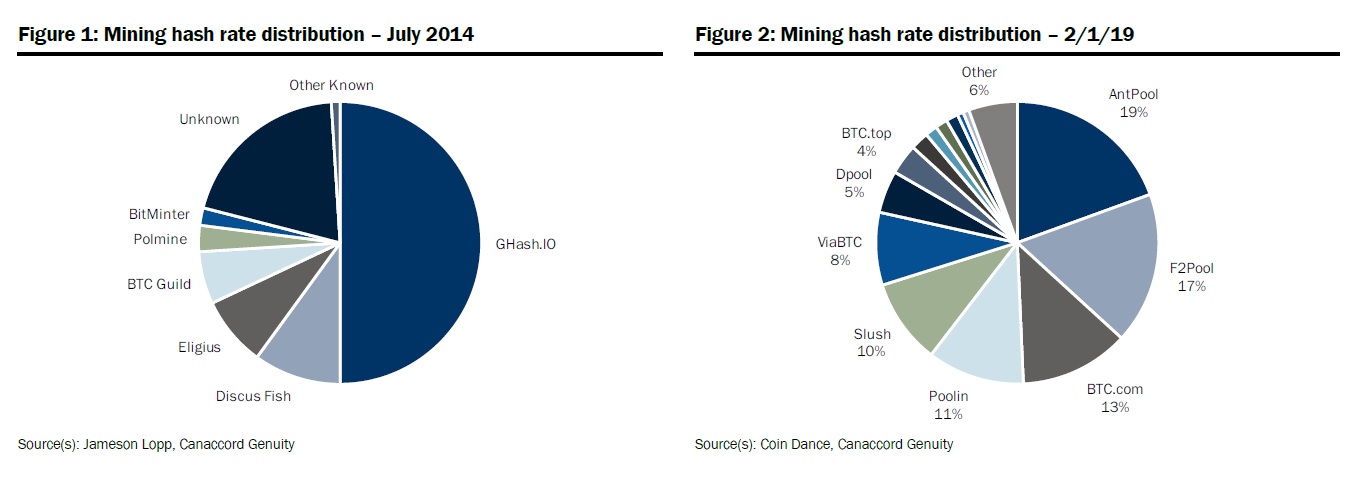
The New Era of Large-scale, Commercial Crypto Mining The New Era of Large-scale, Commercial Crypto Mining The Sichuan mountains located in China, the Columbia basin that runs through Seattle and Grindavík in Iceland all have […]

Viabtc explains why they don’t support segwit

ViaBTC Explains Why They Don’t Support SegWit

ViaBTC’s latest blog post sheds some light on why the mining pool is opposing the bitcoin scaling proposal, SegWit.


ViaBTC, bitcoin Core and SegWit

ViaBTC just published a blog post in which they explain the reason behind their opposition to SegWit, citing the concerns regarding the complexity of the soft fork, the irreversible damage it may and the introduction of second-tier networks like Lightning Network. The mining pool also mentions Bitcoin Core’s impact on bitcoin and the community as a negative, claiming that they are “abusing their previous influence”. The post reads:

Today, bitcoin is in urgent need of diversified dev teams and implementations to achieve decentralization in bitcoin development.

As companies and mining pools choose their side of the debate, SegWit or Bitcoin Unlimited, most have released statements regarding which solution they are backing and why. While most companies favor the activation of SegWit, mining power has been on the side of BU. Among the pools that support BU, Antpool and ViaBTC have been two of the most vocal regarding bitcoin Core and the Segregated Witness proposal. On ViaBTC’s transaction accelerator page, a popup service statement reads:

ViaBTC is of the opinion that the current “bitcoin Core + Blockstream” bitcoin development team is not taking satisfactory steps to ensure the growth and advancement of bitcoin in accordance with satoshi’s original white paper, and is in fact actively harming the health of the bitcoin economy by actively stifling efforts to solve some of bitcoin’s most pressing problems.

“SegWit doesn’t solve the most urgent capacity issue”

In the latest blog post dubbed “Why we don’t support SegWit”, ViaBTC states that SegWit is a soft fork solution for transaction malleability and that it cannot solve the current network overcapacity problem which is currently the most urgent issue in the bitcoin network.ViaBTC goes on to state that second-tier networks like Lightning Network cannot be considered as a block scaling solution. The blog post reads:

LN transactions are NOT equal to bitcoin’s peer-to-peer on-chain transactions and most bitcoin use scenarios are not applicable with Lightning Network. LN will also lead to big payment “centers”, and this is against bitcoin’s initial design as a peer-to-peer payment system.

However, the SegWit is not Lightning Network (LN). SegWit introduces a much-needed fix for a pressing issue in bitcoin, which is transaction malleability. This fix would allow LN to be implemented in bitcoin.

Bitcoin network overcapacity

However, ViaBTC seems to be missing some very important points. The introduction of a patch to one of bitcoin’s bugs should not be considered as harmful just because it allows developers to build a second network on top of bitcoin. bitcoin should be cleared of bugs like transaction malleability and developers should be free to build whatever they want (which is what has happened so far) on top of bitcoin.

The fact that a mining pool would block an important fix like this due to the possibility of losing out on transaction fees is, at best, selfish. ViaBTC also seems to have missed the fact that some forms of second-tier networks are already possible in bitcoin, even without the transaction malleability fix, and are being developed right now. Lastly, one should also note that without these channels, users that are looking for the advantages they would provide will find them elsewhere either through altcoins or centralized payment systems, which can only result in the loss of use cases for bitcoin with nothing gained.

ViaBTC’s statement that “SegWit doesn’t solve the most urgent capacity issue” is, however, correct. While it may be considered as a “quick-fix” that will double the network’s capacity, further updates will have to be made in the future. This is where bitcoin Unlimited seems to please its supporters, their Emergent Consensus protocol proposes a fix that is somewhat “permanent” as it allows the block size limit to change according to demand.

“SegWit makes it harder for future block scaling”

Here, ViaBTC cites some real concerns regarding the possibility for future scaling updates which are indeed made harder by SegWit’s changes. SegWit allows blocks to reach a 4MB limit due to the way witness data is accounted for. However, this limit is not meant to be reached, as the only data that is read differently is the witness data and not the tx. inputs and outputs. This results in a ~2MB block limit under regular circumstances.

This means that a possible attack vector is to create 4MB block which is a problem for the network. So, any future increases, for example from a ~2MB limit to a ~4MB limit, will theoretically allow a block that is four times bigger to be created, in the example above this would mean a ~16MB limit. This, however, is extremely unlikely and is not seen as a problem for bitcoin Core developers.

The problem is that if a way to implement this attack did come along, SegWit could not be reversed. The blog post reads:

On technical terms, SegWit uses a transaction format that can be spent by those who don’t upgrade their nodes, with segregation of transaction data and signature data. This means SegWit is irrevocable once it’s activated, or all unspent transactions in SegWit formats will face the risk of being stolen.

While this may be a real concern to a certain degree, the prospect of an attack vector that is currently considered impossible and would theoretically become a problem once the network implements a second scaling update, which may never happen, doesn’t seem to be a valid reason for blocking SegWit.

“SegWit will deepen Core’s impact on the community”

In the last section of the blog post, ViaBTC states its concerns regarding the bitcoin Core development team and its influence on the bitcoin community, citing problems like the infamous censorship perpetrated by bitcoin Core on Reddit and bitcoin forums. This seems to be completely off from what bitcoin is supposed to be, a global apolitical currency.

bitcoin forums, boards and development teams are not part of bitcoin. They are exterior to the network. If there is indeed censorship going on in these places, users should abandon them. If the bitcoin Core team is trying to turn bitcoin into a centralized payment system (or whatever), the community/miners should not approve their updates. However, rejecting an update based on the developer that proposed it, and not on the actual code, is childish. This reason could easily be turned around on the bitcoin Unlimited development team, which has had its fair share of controversy.

Conclusion

While we do believe that both scaling proposals have their strengths and weaknesses, ViaBTC’s concerns regarding SegWit seem to be non-existent at best: Blocking transaction malleability is a malicious act on the network. Opposition to SegWit should be based on the problems it will cause the network and not on the problems it could theoretically cause if a currently-nonexistent attack vector is eventually found. Lastly, users should decide what is best for the network and not whom, that’s the beauty of bitcoin.

Do you think that ViaBTC is right and that we are missing the point? If so, let us know in the comment section.


Images Courtesy of

The post ViaBTC Explains Why They Don’t Support SegWit appeared first on Bitcoinist.com.