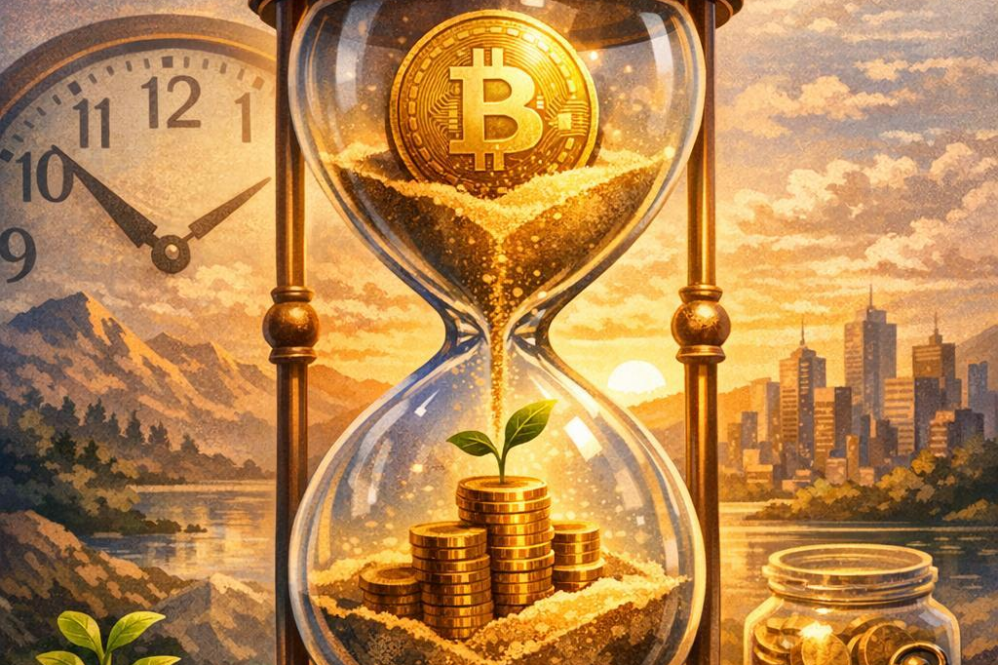
bitcoin as a Catalyst for Shifting Time Preference Toward Future Value
bitcoin introduces a paradigm shift in how individuals perceive and manage their wealth over time. By design, it’s fixed supply and decentralized nature encourage a lower time preference, meaning users are incentivized to prioritize long-term value over immediate consumption. This stands in stark contrast to traditional fiat currencies,which often succumb to inflationary pressures,eroding purchasing power and fostering a higher time preference where spending now becomes more attractive than saving.Consequently, bitcoin cultivates a mindset attuned to future rewards and prudent financial planning.
Key factors driving bitcoin’s influence on time preference include:
- Scarcity: With a capped supply of 21 million coins, bitcoin’s value is inherently protected from arbitrary dilution.
- Decentralization: Its trustless protocol reduces reliance on intermediaries, enhancing financial sovereignty.
- Openness and Security: The blockchain’s immutable ledger fosters confidence in the preservation of wealth.
- Global Accessibility: Anyone with internet access can participate, broadening the base of long-term savers worldwide.
| Aspect | Traditional Fiat | bitcoin |
|---|---|---|
| Supply | Inflationary, no fixed cap | Deflationary, capped at 21 million |
| Time Preference | High, favors immediate spending | Low, favors long-term saving |
| Control | Centralized (government/central banks) | Decentralized (network consensus) |
| Accessibility | Limited by geography and financial infrastructure | Global, internet-based participation |
By realigning incentives towards future value retention, bitcoin not only empowers individuals but also lays the groundwork for an economic culture that values sustainability and resilience. This shift has profound implications for personal finance, investment strategies, and broader economic stability, signaling a transformative era in how humanity approaches wealth accumulation and preservation.
Analyzing the Psychological Impact of bitcoin on Long-Term Financial Decisions
bitcoin introduces a novel psychological framework for evaluating money, one that challenges traditional conceptions of time preference-how individuals value present resources versus future gains. Unlike fiat currencies, which can be devalued by inflation and central policy changes, bitcoin’s capped supply encourages holders to perceive value in the long term. This scarcity intrinsic to bitcoin acts as a catalyst for promoting patience and delayed gratification, two essential drivers behind prudent financial planning and disciplined saving behaviors.
Research suggests that individuals exposed to bitcoin cultivate a mindset oriented toward preservation over immediate consumption. This shift is partly attributed to the obvious, immutable ledger that makes financial decisions and transactions more intentional and traceable.Economic behaviors aligned with bitcoin ownership frequently enough involve:
- Reduced impulsive spending, facilitated by the awareness of asset scarcity.
- Elevated long-horizon goal setting, including retirement planning and wealth accumulation.
- Increased willingness to absorb short-term volatility in favor of anticipated future gains.
| Behavioral Trait | bitcoin Impact |
|---|---|
| time Preference | Reduced impatience; longer-term outlook |
| Risk Tolerance | Higher short-term risk acceptance |
| Savings Habit | Encourages systematic accumulation |
Consequently, bitcoin does not merely represent a digital currency alternative but acts as a psychological tool that reprograms economic decision-making frameworks. This behavioral recalibration has profound implications for how individuals structure their finances and prioritize wealth stewardship over extended periods.
The Role of bitcoin’s Scarcity in Enhancing Delayed Gratification and Savings Behavior
bitcoin’s fixed supply of 21 million coins inherently creates a scarcity that encourages holders to think beyond immediate consumption. Unlike fiat currencies subject to inflation and unpredictable monetary policies, bitcoin’s predictable supply schedule fosters an habitat where delaying gratification becomes rational. This scarcity not only imbues bitcoin with intrinsic value but also shifts user behavior towards preserving wealth rather than hastily spending it.
Several key psychological and economic effects emerge from bitcoin’s scarcity:
- Increased patience: Users develop a willingness to wait, anticipating that bitcoin’s value will appreciate over time due to limited supply.
- Enhanced savings discipline: The mindset of scarcity motivates individuals to prioritize saving, recognizing bitcoin as a long-term store of value, not a fleeting asset.
- Reduced impulsivity: Holding assets that cannot be inflated away helps mitigate the urge to consume impulsively.
| Aspect | Impact on Behavior |
|---|---|
| finite Supply | Encourages long-term holding and wealth accumulation |
| Inflation Resistance | Discourages spontaneous spending, fostering delayed gratification |
| Decentralization | Increases trust in asset stability over time |
Integrating bitcoin into Personal Finance Strategies to Promote Sustainable Wealth Accumulation
Understanding time preference-the degree to which individuals prioritize present consumption over future financial security-is crucial when adopting effective personal finance strategies. bitcoin, by its very design, encourages a mindset focused on long-term value accumulation rather than immediate gratification. Unlike traditional fiat currencies susceptible to inflation and arbitrary policy changes, bitcoin’s capped supply instills confidence in holding assets without fear of erosion, thus cultivating patience and foresight in wealth-building decisions.
Key behavioral shifts supported by bitcoin integration include:
- Delayed gratification: bitcoin incentivizes saving by rewarding users who resist spending and rather choose to HODL, which fosters resilience against impulsive financial decisions.
- portfolio diversification: combining bitcoin with traditional assets spreads risk and aligns with prudent wealth accumulation practices.
- Transparency and security: Blockchain technology ensures verifiable ownership and reduces dependency on intermediaries,enhancing long-term financial planning.
| Finance Strategy | Traditional asset | bitcoin Advantage |
|---|---|---|
| Emergency Fund | Cash Savings | Inflation-Protected Store of Value |
| Retirement Planning | Mutual Funds | Decentralized & Limited Supply |
| Wealth Preservation | Real Estate | Global Liquidity & Portability |
Ultimately, integrating bitcoin requires a paradigm shift-valuing sustained financial growth over fleeting consumption impulses. This shift, when embraced, paves a deliberate path toward a robust, inflation-resistant portfolio designed for sustainable wealth accumulation across generations.
policy Implications and Recommendations for Encouraging bitcoin-Based Long-Term Savings
Regulatory clarity and consumer protection are paramount to fostering an environment where bitcoin can be safely embraced as a tool for long-term savings. Policymakers should focus on establishing transparent guidelines that define the legal status of bitcoin assets, ensuring security against fraud and theft. Such measures reduce uncertainty and instill confidence among savers looking beyond traditional fiat currencies. Encouraging collaboration between regulators, financial institutions, and crypto innovators can result in balanced frameworks that support innovation while safeguarding user interests.
To incentivize the adoption of bitcoin for long-term savings, governments and financial authorities might consider targeted fiscal policies, including tax breaks or deferred taxation on gains from bitcoin holdings held for extended periods. These incentives could align with behavioral economic insights, nudging individuals to lower their time preference and resist immediate consumption urges. Moreover, educational initiatives tailored toward financial literacy, specifically focusing on bitcoin’s characteristics and potential to hedge against inflation, would equip savers with the necessary tools to make informed, forward-thinking decisions.
| Policy Measure | Intended Effect | Implementation Considerations |
|---|---|---|
| Clear Regulatory Framework | Enhance market trust and legal certainty | Adapt to technological updates and stakeholder feedback |
| tax Incentives for long-Term bitcoin Holding | Encourage saving over spending | Define holding periods and thresholds clearly |
| public Financial Education | Improve awareness and responsible use | Integrate into school curricula and public campaigns |
By integrating these strategies, policymakers can cultivate a financial landscape where bitcoin serves as a credible store of value, promoting patience and strategic foresight in savings behavior. This holistic approach not only supports individual wealth growth but also contributes to greater economic stability and resilience by diversifying saving instruments away from conventional reliance on fiat currency.
Technological Innovations Supporting bitcoin Adoption and Their effect on Time Preference dynamics
Advances in blockchain technology and ancillary innovations are crucial in reshaping how individuals perceive and engage with bitcoin as a long-term asset. Technologies such as the Lightning Network significantly enhance transaction speed and reduce costs, addressing traditional limitations that hinder bitcoin’s everyday use.This scalability advancement lowers the friction for users who might otherwise favor immediate consumption over deferred gratification, nudging behavior toward elongated saving horizons.
Furthermore, developments in decentralized finance (DeFi) protocols offer users novel opportunities to earn yield through mechanisms like staking and lending. These innovations create financial incentives that align with a lower time preference by rewarding patience and engagement over extended periods.By embedding these options directly within the bitcoin ecosystem or its interoperable networks, technological solutions foster an environment where users are encouraged to prioritize future value accumulation rather than immediate expenditure.
Below is a concise summary of key technological contributions and their corresponding effects on time preference dynamics:
| Technology | Primary Benefit | Effect on Time Preference |
|---|---|---|
| Lightning Network | instant, low-cost payments | Encourages frequent, trustless transaction, reducing urgency for immediate fiat conversion |
| DeFi Staking & Lending | Yield generation on dormant assets | Promotes holding and saving by providing passive income incentives |
| Multi-signature Wallets | Enhanced security and shared control | Reduces impulsive spending by requiring consensus |