
April 21, 2026

Capitalizations Index – B ∞/21M

Zcash Governance Panel Votes Against Prioritizing ASIC Resistance

Zcash governance panel votes against prioritizing asic resistance

Zcash Governance Panel Votes Against Prioritizing ASIC Resistance


Zcash
Advertisement

In a vote led by the Zcash Foundation, the Zcash community voted against prioritizing ASIC resistance in the protocol. The governance panel consisted of 64 elected individuals from the Zcash community.

In May, Chinese hardware manufacturer Bitmain released the first ASIC miner for Zcash. Several people have expressed concerns over this stating that ASICs would lead to centralization of mining and being ASIC resistant is a key step towards decentralization.

In response to this, the Zcash foundation stated that it would make ASIC resistance an immediate technical priority. Josh Cincinnati, executive director of the foundation, stated that they would convene a technical advisory board to investigate the presence of ASICs on the ZEC network.

However, in its first election conducted the Zcash foundation saw 45 votes disagreeing with prioritizing ASIC resistance while 19 voted in favor of it. In a separate proposal which sought to commit resources towards “Selecting a thermodynamically efficient (not ASIC-resistant!), currently unused proof-of-work algorithm” and “Hosting and building an open hardware specification for the selected PoW algorithm,” among other things, the panel voted “Agree” by a 38-26 majority.
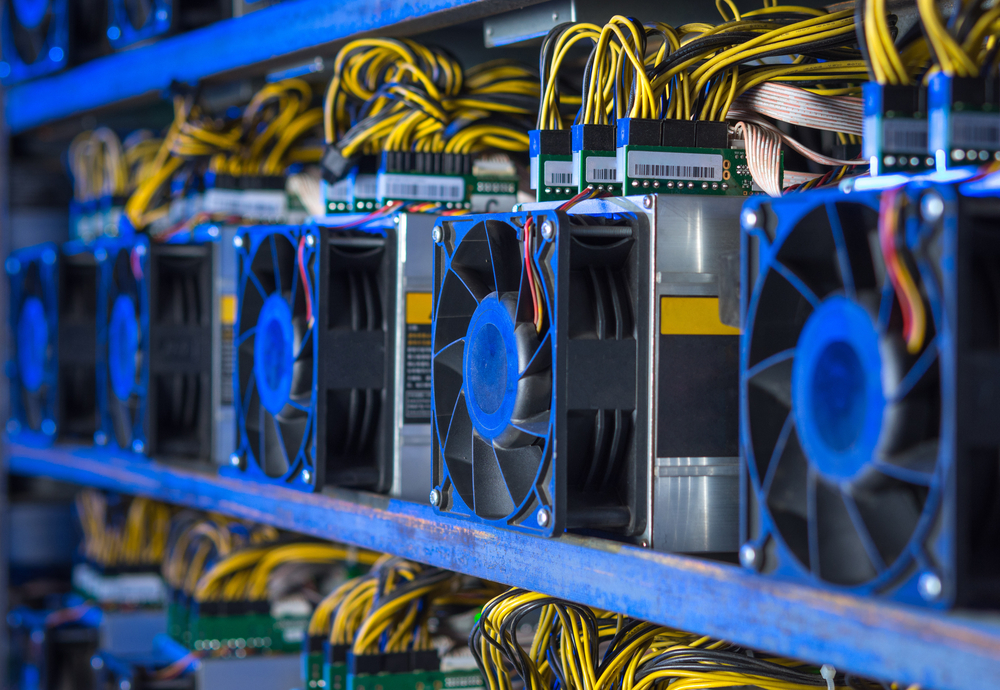
Asic miner
The zcash community governance panel voted against prioritizing asic resistance, a move that many found surprising.

This seems to indicate that although the panel does not want to indulge resources into making the cryptocurrency ASIC resistant right now it plans to make mining more efficient and accessible in the future to make sure the network is decentralized to the maximum extent.

However, the news has been received with a mixed response from the community with many claiming that not working towards ASIC resistance would kill GPU miners and cause problems in the long run. To put this in context, the three largest mining pools of bitcoin and ethereum have more than 51% of the hashrate.

The ballot also witnessed a vote on several other key proposals. In a narrow vote, the panel voted against reevaluating the foundation’s position on monetary policy and/or supply schedule of the protocol. The panel voted 48 for and 15 against on prioritizing transfer of ownership of the cryptocurrency’s trademark from the Zcash company to the cryptocurrency’s non-profit foundation. Three new members have also been elected for the foundation board.

As CCN reported earlier, the Zcash network experienced its first hard fork, Overwinter, earlier this week. The developers stated that this network upgrade would help smooth the path for future protocol upgrades such as Sapling, which is scheduled for later this year.

Featured Image from Shutterstock

Follow us on Telegram or subscribe to our newsletter here.
Join CCN’s crypto community for $9.99 per month, click here.
Want exclusive analysis and crypto insights from Hacked.com? Click here.
Open Positions at CCN: Full Time and Part Time Journalists Wanted.

Advertisement


Published at Fri, 29 Jun 2018 23:01:21 +0000

Altcoin Mining

Previous Article

Basketball Team Sacramento Kings Mine Ethereum to Fund Tech Education Scholarships

Next Article

EarthCoin Crypto

You might be interested in …

BitDice: Not Gambling On Fairness

BitDice is looking to “prove the fairness” in crypto-gambling as the Blockchain gambling platform differentiates itself from the competition who are being questioned about their own fairness in results.

[Note: This is a press release.]


By diversifying their technology, and even opening themselves up to the use of fiat currencies, BitDice will meld the cryptocurrency betting world, which already makes up roughly five percent of the entire online gambling industry, with fiat gambling by alleviating fears of the “Black Box” phenomenon.

Beyond a Single Technology 

Besides allowing the user to choose if they want to play with fiat currency or digital, BitDice is even offering players the choice in technology. In other crypto-gambling platforms, the single technology is essentially a clone of a simple dice game that is run on the Ethereum network and its smart contracts – this comes with its limitations.

The Smart Contracts can be cumbersome, especially in a gambling environment, as the speed and transaction fees can infuriate and frustrate players. Ethereum networks impose higher latency speed for validating wager results and on top of that comes a transaction fee a user must pay with each wager.

By diversifying its technology, BitDice can run its games free of charge on the server with publicly observable and provably fair algorithms that include different types of cryptocurrencies and are capable of processing up to 20 wagers a client per second.

Providing Absolute Fairness

Of course, when gambling online, the biggest fear is that the games are rigged, and there is no fairness involved. This is especially an issue with crypto-gambling as the Random Number Generation (RNG) algorithm cannot be invoked within the Blockchain.

It leads to outsourcing to other parties, which in themselves, are also outsourcing, which clearly leaves plenty of gaps for tinkering with results. Each layer of data transmission can be intruded upon an affected to the benefit of the casino.

This is where BitDice has stepped up the game by successfully implemented the “provably fairness” concept that serves its purpose and eliminates risks of cheating without outreaching any third-party provider.

A client-seed, generated and known by the user, is linked with the server-seed to create an unhackable random outcome which can be verified immediately after the bet is made, but cannot be known in advance by any party.

Standing Out From the Crowd

Traditional casinos, of course, have their limitations, as do Smart Contract casinos, but BitDice has addressed many of these shortcomings in order to put themselves head and shoulders above the competition.text

BitDice Chart

Yes1 – One should apply a top-skill technical expertise to understand and interpret the code of the smart-contract. Smart-contracts can be easily twisted without being noticed by an average user.

No2 – To accommodate high-roller players the funds shall be readily available and kept in hot wallets (online), which is a very insecure way of holding crypto assets. Last examples – Edgeless and Dao.Casino wallets were drained because of mistakes in the code.

Website: https://ico.bitdice.me
Email: contact@bitdice.me


Images courtesy of BitDice, AdobeStock

The post BitDice: Not Gambling On Fairness appeared first on Bitcoinist.com.

Qash - hot liquidity cold wallets

Qash – Hot Liquidity Cold Wallets

Qash – Hot Liquidity Cold Wallets Quoine CEO Mike Kayamori and I discuss Qash, crypto in Japan, regulations, bringing big money into crypto, Liquid, and the new ICO mission control. Please note this is NOT […]

Zcash successfully activates overwinter, the first zec hard fork

Zcash Successfully Activates Overwinter, the First ZEC Hard Fork

Zcash Successfully Activates Overwinter, the First ZEC Hard Fork Advertisement Privacy-centric cryptocurrency Zcash has successfully activated Overwinter, its first hard fork. Zcash Activates Overwinter Hard Fork The network upgrade went live at block 347,500, which […]