August 1, 2026

Capitalizations Index – B ∞/21M

XRP, Litecoin Fall to Lowest Prices Yet Seen in 2018

Xrp, litecoin fall to lowest prices yet seen in 2018

XRP, Litecoin Fall to Lowest Prices Yet Seen in 2018

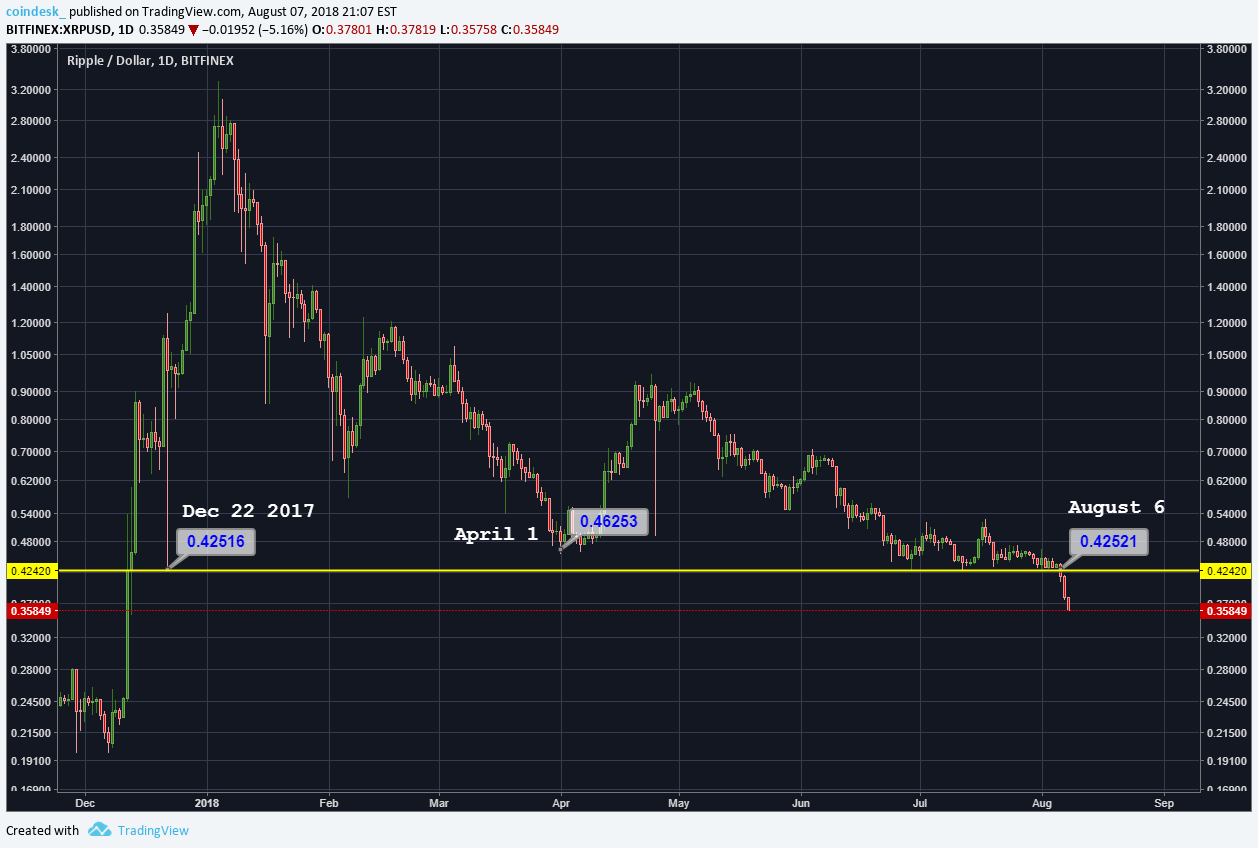
The price of XRP, the world’s third-largest cryptocurrency by market capitalization, fell to a new 2018 low on Wednesday.

Data from Bitfinex shows the cryptocurrency dropped to $0.35 – seven cents from the previous yearly low of $0.42 in July. Indeed the current price stands at its lowest level since December 12, 2017, days before XRP shot up to all-time-highs over $3 amid a bull run on the crypto market.

All told, XRP is now down 89.2 percent over an eight-month period.

Driving the trend is likely not only the wider bear market, but bad press for Ripple, the startup most often associated with XRP, and which continues to be bombarded by bad press and investor lawsuits stemming from the coin’s price decline.

XRP Daily Chart
Xrp, litecoin fall to lowest prices yet seen in 2018

At press time, the price of XRP continues its downward trajectory – down 11.76 percent over a 24-hour basis according to CoinMarketCap data and down 1 percent on the hour.

As a matter of fact, other major names are also flashing red. For example, bitcoin is down 4.86 percent over a 24-hour period after it dropped from its $7,000 support zone on Tuesday.

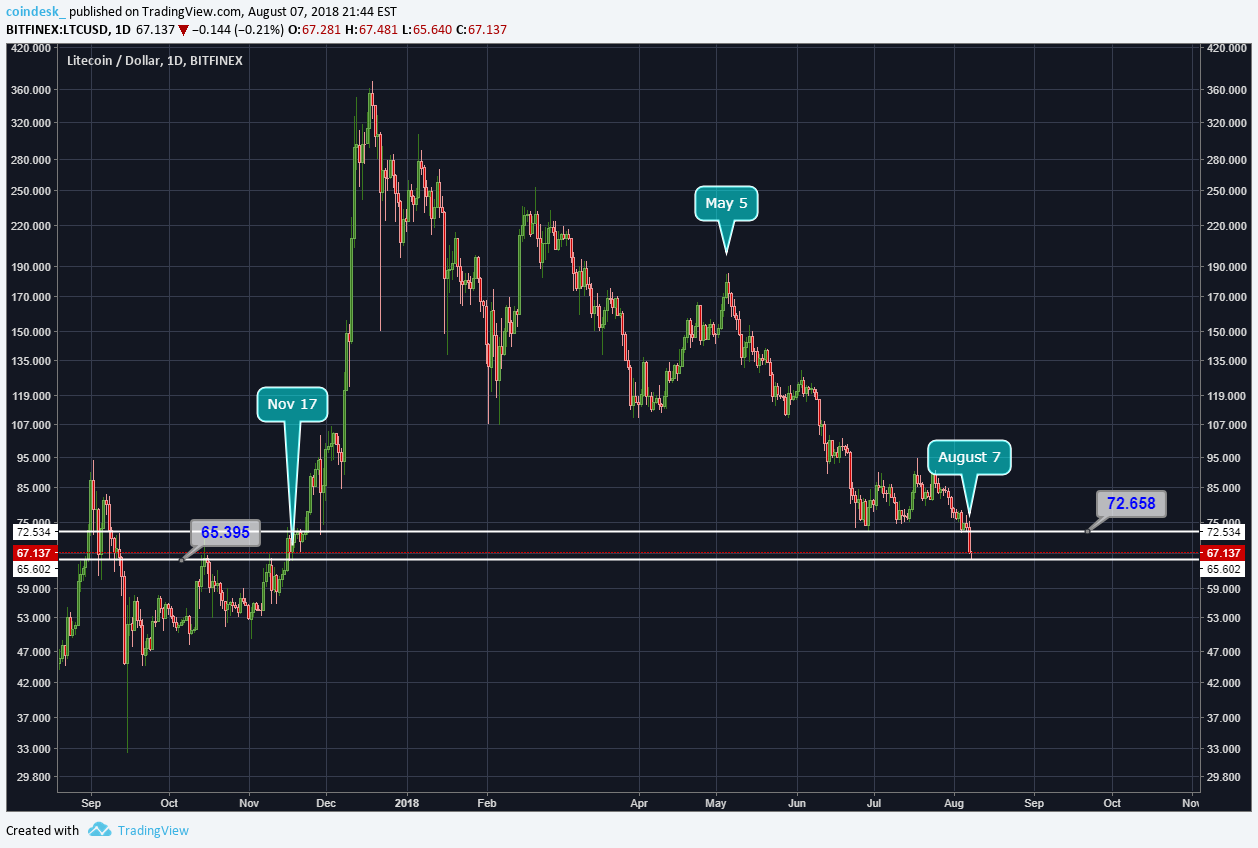
Litecoin Daily Chart
Xrp, litecoin fall to lowest prices yet seen in 2018

Litecoin has also dropped to its lowest point this year, declining 8.78 percent from its previous yearly low at $72.65, making it one of the biggest losers on the day.

Other names such as ethereum and eos are down 6.89 percent and 7.96 percent respectively and are showing no signs of a short-term bullish revival.

Meanwhile, the total market capitalization of all cryptocurrencies dropped below $250 billion –  an amount traders kept an eye on in hopes of remaining bullish.

The Author holds USDT at the time of writing

Image via Shutterstock; Charts via TradingView

The leader in blockchain news, CoinDesk is a media outlet that strives for the highest journalistic standards and abides by a strict set of editorial policies. CoinDesk is an independent operating subsidiary of Digital Currency Group, which invests in cryptocurrencies and blockchain startups.

Published at Wed, 08 Aug 2018 03:13:26 +0000

Markets[wpr5_ebay kw=”bitcoin” num=”1″ ebcat=”” cid=”5338043562″ lang=”en-US” country=”0″ sort=”bestmatch”]


Previous Article

Code as a Weapon: Amir Taaki Wants You to Join the Real Crypto Revolution

Next Article

First U.S. Congress Member Reveals Owning Bitcoin, Ethereum

You might be interested in …

Are Smartphones The Smartest Way To Secure Cryptocurrency?

Are Smartphones The Smartest Way To Secure Cryptocurrency? Source Did you know the cryptocurrencies thefts and scams surged more than 400% in 2018 to $1.7 billion? Out of which, $950 million is from infrastructure services […]

Guest Post: Understanding the Limits and Potential of Blockchain Technology

Guest Post: Understanding the Limits and Potential of Blockchain Technology

The promise of blockchain technology is coming to the forefront and capturing the imaginations of investors, entrepreneurs and innovators alike. But what many people do not know is how perilous the blockchain journey ahead still is. We live in a world of smoke and mirrors; enterprise investors must do their due diligence in navigating these choppy waters — making the right investments in the right blockchain technologies to unlock that promised potential.

To make the correct investments, we need to adopt a framework to evaluate them. Having a framework also means having the necessary inputs. What follows in this article are some of these key inputs.

If you are considering making technology investments, think about the end state: your vision. How will this technology fit within your existing technology infrastructure? You need to put on your far- and short-sighted glasses: First, what will the near future (1–2 years) of the blockchain ecosystem look like? Second, how will this blockchain technology integrate with your existing infrastructure? Does it complement your technology investments thus far? Does it mitigate or add to any burdens in your existing technological landscape? All of these questions should inform your purchasing decision.

As an integration consultant and a blockchain architect, my role is to help clients determine what is in the realm of possibility for them and what is not. Questions surrounding scalability, integration points, data interoperability and security are not easy questions to answer, but they must be considered. Some potential investors will be blinded by the sheer potential (or hype) of the technology and will completely ignore these realities. As appealing as blockchain technology is, it’s not for everyone. Some enterprise investors are not at the maturity stage to adopt it yet, and this is not an easy pill to swallow.

Blockchain is a nascent technology and much work is still being done in the areas of interoperability (e.g., ISO/TC 307, Ripple ILP, Hyperledger Quilt, etc.). These are challenges to consider. It is important to understand that, in order to realize the full potential of blockchain technology, some elements of integration with your legacy system are probably still going to be necessary. Consider also how your private blockchain can be integrated with public blockchains — we live in a less-than-perfect world where there are multiple blockchains. Will the blockchain be on cloud or on-premise? These are questions you’ll need to answer; in fact, these very questions will also serve as inputs to your technology adoption framework.

Bigger Picture

As blockchain technology speeds toward standardization (via International Standard Organization, etc.) and interoperability (Interledger Protocols, Hyperledger Quilt, etc.), we also need to ask ourselves if having too many standards will stifle innovation and whether integration and interoperability are antithetical to the core tenet of blockchain technology, which is decentralization, for which I have yet to find an answer.

Finally, the benefits of interoperable and integrated blockchains are many: improved governance, interoperability, process automation, further cost savings and perhaps even cross-chain atomicity (a dream for now, at least). But we must not allow the benefits to blind us to the reality.

I wish to end this article on a hopeful note. Despite the many challenges when it comes to adopting blockchain technology, these challenges are not unique to the blockchain. Every new piece of technology goes through phases of uncertainty and exploration: this one, too, shall pass.


This is a guest post by Nathan Aw. Views expressed are his own and do not necessarily reflect those of BTC Media or bitcoin Magazine.

The post Guest Post: Understanding the Limits and Potential of Blockchain Technology appeared first on Bitcoin Magazine.