April 15, 2026

Capitalizations Index – B ∞/21M

End Excerpt -->

The New-York based Gemini cryptocurrency exchange just announced the addition of 3 new cryptocurrencies to their trading lineup. The most surprising addition being ZCash, which was not expected by anybody in the community.


ZCash: Privacy Focused, But On a Regulated Exchange

The week of the Consensus conference has always been a week of news, innovation, and announcements from major players in the cryptocurrency and blockchain industry. It seems that this year’s Consensus is no different with the Gemini exchange announcing that they will be adding ZCash with plans to add Litecoin and bitcoin Cash in the near future.

The most surprising of these currencies is ZCash, however, as the additions of Litecoin and bitcoin Cash were expected by the community for a considerable amount of time.

When news broke out about the announcement of the addition of ZCash, the price of the privacy coin went from $250 to $350 within an hour, in expectation of increased volume, market reach, and publicity. 

On May 14th, Gemini received official approval from the New York Department of Financial Services (NYDFS) to open Gemini for ZCash deposits on May 19th and ZCash trading 3 days later. Gemini will offer the ZEC/USD, ZEC/BTC, and the ZEC/ETH trading pairs upon launch.

Gemini will also continue to offer block trading, which they announced earlier last month, along with their daily auction of cryptocurrencies and will adapt these things with the arrival of the new cryptocurrency on the platform.

Surprisingly, the exchange also seemed to be hopeful about the privacy features of ZCash when its blog mentioned:

The Zcash protocol’s cutting edge use of zero-knowledge succinct non-interactive arguments of knowledge (“zk-SNARKS” or “zero-knowledge proofs”) makes it a truly innovative privacy coin that offers confidentiality for peer-to-peer transactions

ZCash provides 2 different types of addresses on the platform, shielded and unshielded addresses. The latter showing the balance of the wallet and transaction balances going in and out. However, shielded addresses provide a high level of privacy for users, as their balance and transaction balances are made private on the blockchain.

Contrary to popular belief, ZCash does not offer full anonymity as their protocol does not obfuscate user’s IP addresses. Although some may perceive this as a downside, this was never ZCash’s goal, and never will be. 

Despite this, withdrawing ZCash to shielded addresses will not be allowed for ZCash traders on Gemini at this time, though this seems to undermine the entire point of using a privacy-focused cryptocurrency. 

This issue of this loss of privacy has probably something to do with the regulatory laws and oversight, which try to stop money laundering methods. However, the blog did mention that they may accept withdrawals to shielded addresses at a later date. 

In the same announcement, the NYDFS also announced that they had also fully approved the addition of Litecoin and bitcoin Cash, the 6th and 4th largest cryptos by market cap, respectively. However, the full integrations of these other cryptocurrencies onto the exchange have not been announced as of yet.

Gemini has long been a ‘good boy’ in terms of receiving the proper licensing and permission from regulatory bodies to operate their services as they are one of the few businesses to be granted the infamous New York BitLicense. 
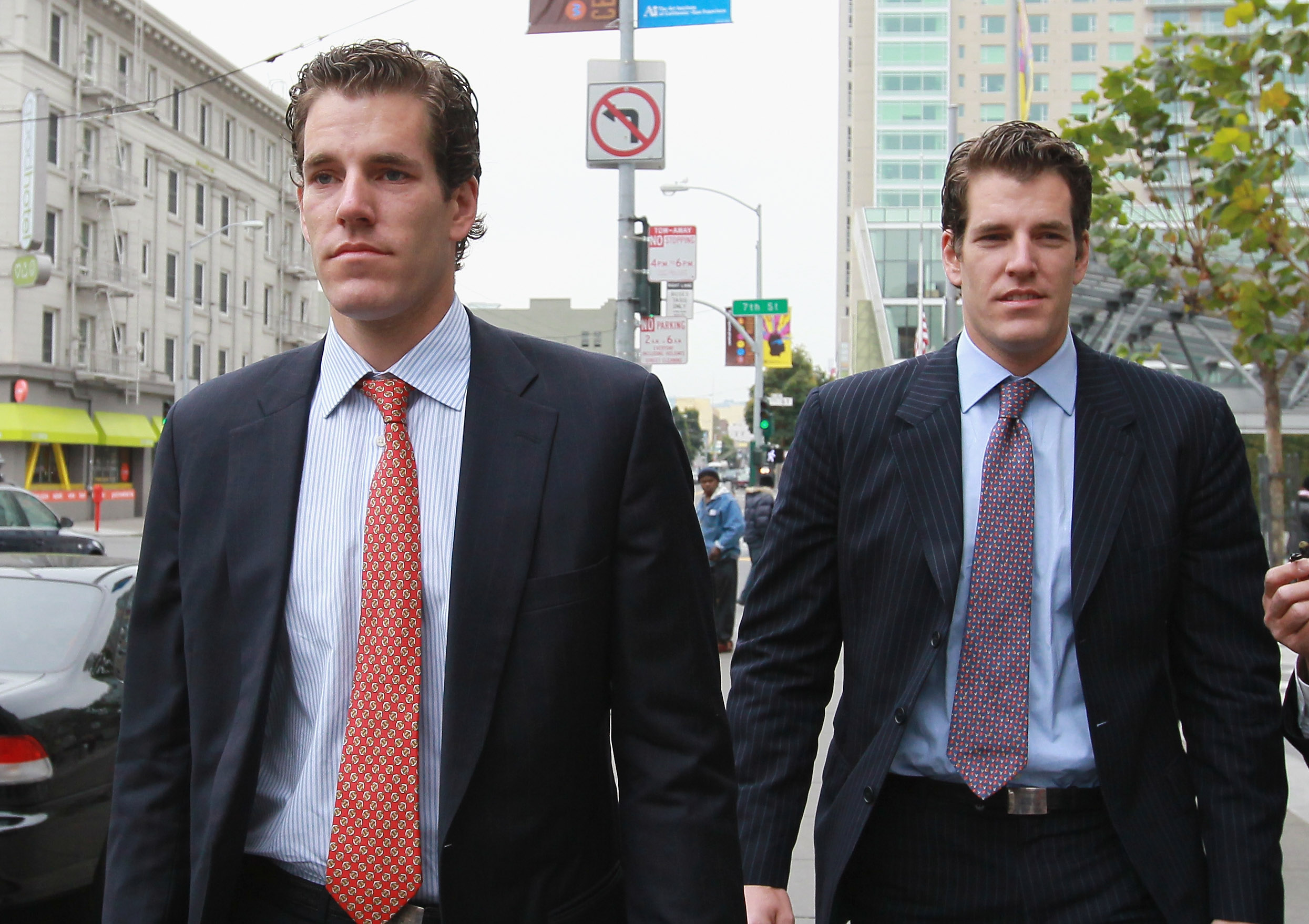
Winklevoss twins’ gemini exchange unexpectedly adds zcash

From the start, Gemini’s founders, the Winklevoss twins, sought to be a regulated and licensed exchange which would be different from other exchanges which were present in the market.

Gemini founder believe that being regulated “fosters innovation and protects consumers.” Although this may be true, this could be its downfall as users may seek exchanges operating without governments looking over their shoulders.

Do you think that the addition of these coins will be a successful venture for the Gemini Exchange? Why or why not? Please let us know in the comments below. 


Images Courtesy of Twitter/@Forbes, Shutterstock

Altcoinbitcoin regulationCryptocurrencyexchangegemininewsregulationwinklevossZCash Show comments

Published at Tue, 15 May 2018 08:00:40 +0000

Altcoin News
Previous Article

Bitcoin Traders Join Supreme Court Challenge to India’s Banking Blockade

Next Article

Ethereum Classic Price Analysis: ETC/USD Poised for Further Gains

You might be interested in …

NextBlock CEO Alex Tapscott Cancels Plans to Go Public and Will Return Money to Investors

Tapscott

Alex Tapscott, CEO of NextBlock Global, a venture capital company investing in blockchain technologies, announced in a press release yesterday that he is canceling their plans to go public through a reverse takeover (RTO) of Nobelium Tech Corp., a company listed on the Toronto Stock Exchange (TSX).

Tapscott said the young company had “stumbled” in falsely listing some crypto and blockchain experts as members of the firm’s advisory board. He is currently talking to NextBlock investors to work out how to return their original investments and to “rebuild the trust of those [they] have disappointed.”

NextBlock Global raised $20 million in their initial oversubscribed fundraising in July 2017 and had hoped to raise $100 million in the public offering. They planned to invest in digital currencies, blockchain hosting platforms and blockchain-based applications.

CIBC and investment bank Canaccord Genuity (a former employer of Tapscott’s) were underwriters on the deal, but CIBC pulled its support from the young venture capital firm amid the allegations.

According to BNN, clients of CIBC received an email saying, “CIBC has withdrawn as an agent from the NextBlock Global Limited private placement.” CIBC was not available for comment.

Sources have told BNN that Canaccord Genuity remained in the deal.

An article in Forbes last week detailed complaints from Kathryn Haun, Vinny Lingham, Dmitry Buterin and Karen Gifford that Tapscott had circulated an investor deck that incorrectly listed them as members of the NextBlock advisory board.

Dmitry Buterin, co-founder of Blockgeeks and father of Ethereum co-founder Vitalik Buterin, was included in at least one draft of the investor deck. He told bitcoin Magazine in a recent interview what had happened. He recounted:

“It’s pretty simple. Alex asked me to be an advisor, I declined. Then I got a deck forwarded to me which listed me as an advisor. It was forwarded to me by investors who received it from Alex.”

Buterin said he had met with Tapscott to let him know he wouldn’t be on the advisory board:

“We had a meeting and I was not convinced that they have the right resources to pull this off.”

When Is an Advisory Board Not an Advisory Board?

A thread on Twitter about NextBlock recently included some comments about how advisory boards have become routine and are often used as window dressing for making ICO pitches and, therefore, they aren’t really “advising” as such.

One user commented that likely only 50 to 60 percent of advisory boards are legitimate anymore, and put the NextBlock situation in a different light, implying that it’s become common practice to dress up a proposal with photos of known experts.

Amber D. Scott, CEO of Outlier Solutions, told bitcoin Magazine that she gets several requests a week to sit on ICO advisory boards. Scott explained that the conversation often goes like this:

ICO rep: “We saw you speak at an event and would love to add you as an advisor.”

Scott: “I’ve looked at your website/white paper and I’m not sure where you need compliance advice. Could you please elaborate on that?”


ICO rep: “You don’t actually have to do anything. We’ll just put your picture and bio on the website. You have a great name in the community.”


Andreas Antonopoulos, well-known author of “Mastering bitcoin,” says on his website that he does not accept invitations to sit on advisory boards and that he will not discuss projects publicly if he does work as an advisor.


Vitalik Buterin has also had to make it clear several times on Twitter that he is not an advisor for a number of firms that have touted his advice.


What could have been a major scandal for both the Tapscotts (father Don and son Alex) has been averted by this move, but how much long-term damage both NextBlock and the Blockchain Research Institute will sustain to their reputation remains to be seen.


The father-son Tapscott team co-founded the Toronto-based think tank Blockchain Research Institute, and co-authored the book “Blockchain Revolution: How the Technology Behind bitcoin Is Changing Money, Business and the World,” which has been translated into more than 20 languages.

The Blockchain Research Institute is holding a Members Summit this week in Toronto. Members of the think tank include CIBC, Microsoft, IBM, Fujitsu, Accenture, Tencent, Bell, Nasdaq, FedEx, Interac and the Governments of Canada and Ontario.

The post NextBlock CEO Alex Tapscott Cancels Plans to Go Public and Will Return Money to Investors appeared first on Bitcoin Magazine.