· February 24, 2018 · 4:30 pm
Why Blockchain Loyalty Programs Provide A Win for Companies and Consumers Alike

Capitalizations Index – B ∞/21M
We love getting points. Especially through credit cards. It feels like we’re getting free stuff when we buy items with points. And credit card points are a part of a larger ecosystem called loyalty reward programs. These programs can be as simple as a punch card where your 11th burrito is free or as involved as airline miles and credit card points.
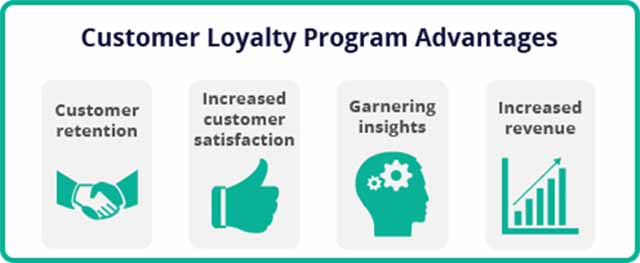
Loyalty programs are advantageous for companies for two main reasons. The first is it encourages brand loyalty. You’re more likely to go to the same coffee shop if you know that if you buy enough coffee, you’ll eventually get some for free.
Another reason why loyalty programs are beneficial is that they can provide companies with important data on their top customers. This data can be used to track spending habits which can be used to determine the success of marketing efforts.
But running your own efficient loyalty program is challenging. It’s expensive due to the extensive manpower required to run the systems. In the end, it’s just not practical for most small to midsize businesses.
To accommodate this, there are a few reward program coalitions that companies can join. is an example of one. Through the Plenti card, users can earn points on everyday purchases. Plenti also allows discounts at checkout for select retailers and restaurants. They have hundreds of participating stores online, which allows for even more points to be earned.
The advantage for a company to join Plenti is that now they’ve been exposed to millions of Plenti users who are more likely to shop at that store because of the points they’ll earn.
Loyalty programs have become so popular that seemingly every company was issuing their own points and rewards. While this may seem like a good thing, the points actually became less valuable. Now, instead of one store with all your points, you have multiple stores with only a few points.
You may have already experienced this problem with the airline industry. If you fly multiple airlines due to purchasing the cheapest ticket, then you’ll have multiple accounts with only a few miles in each one. The sheer number of accounts to manage has become so cumbersome that points are worthless in the public eye due to the time and management it takes to keep up with them.
A solution to these problems and more can be found by pairing loyalty programs with blockchain. (ELM) is an example of this. Due to the decentralized nature of blockchain, the fees companies incur are minimal.
Instead of points, Elements gives out their token, ELM. A tradable and practical digital asset, ELM can be used in a number of ways. First, it can be stored in your digital wallet as a place to grow. The price for ELM is based on the supply and demand for the coin. This means that it could grow substantially over a period of time.
ELM can also be traded for other popular , like bitcoin, Ethereum, and Ripple. Depending on the token, the transaction can take place instantaneously. Lastly, ELM can be converted into a fiat currency.
(SAT) is another example of a loyalty rewards program built on blockchain, providing similar and additional features. For example, blockchain also solves data security with loyalty programs. When data is transferred across a blockchain, the transaction is open and viewable to all, but the information of the sender is secure and encrypted.
This information is extremely valuable to businesses, but consumers are hesitant to give it out for fear of a hack. This makes blockchain a perfect fit for loyalty reward programs. It provides the necessary data for the businesses while giving security to the consumer that their information won’t be misused.
It’s important that companies use blockchain correctly when pairing it with their loyalty reward program. It would be wasteful for each company to create their own token and launch their own ICO. That’s why Sandblock uses their token, SAT to build a consortium. SAT is an ERC20 token. Instead of launching their own corporate token, companies can brand a group of SAT tokens. Each branded SAT token is indexed to the official SAT token. This means every SAT token, no matter what brand, will have the same value.
Users are able to track their tokens through the Sandblock mobile app. As does Elements, Sandblock provides a tradable asset that can be turned into other cryptocurrencies or fiat currencies.
Loyalty programs and points can be made more practical, more effective and more beneficial to both businesses and consumers, through blockchain.
Do you think that a blockchain-based loyalty program solution would be an improvement over currently available options? Let us know in the comments below.
Images courtesy of LinkedIn, AdobeStock
Published at Sat, 24 Feb 2018 21:30:51 +0000
Blockchain Technology
Recent Uploads tagged blockchain iexec coingump posted a photo: more info…

Wi Coin (WIC) Price Alert, Chart & News on BitScreener.com More detail: https://bitscreener.com/coins/wi-coin Wi Coin (Symbol: WIC) is a coin that will bring crypto to the masses. CryptoWi is the only app that customers will […]
BTCMANAGER Bithumb Wins Hack Case Court Battle; Judge Rules Crypto Exchanges are “Not Financial Institutions” South Korea-based cryptocurrency exchange Bithumb has been acquitted of a lawsuit filed by an investor named Ahn Park. Park accused […]