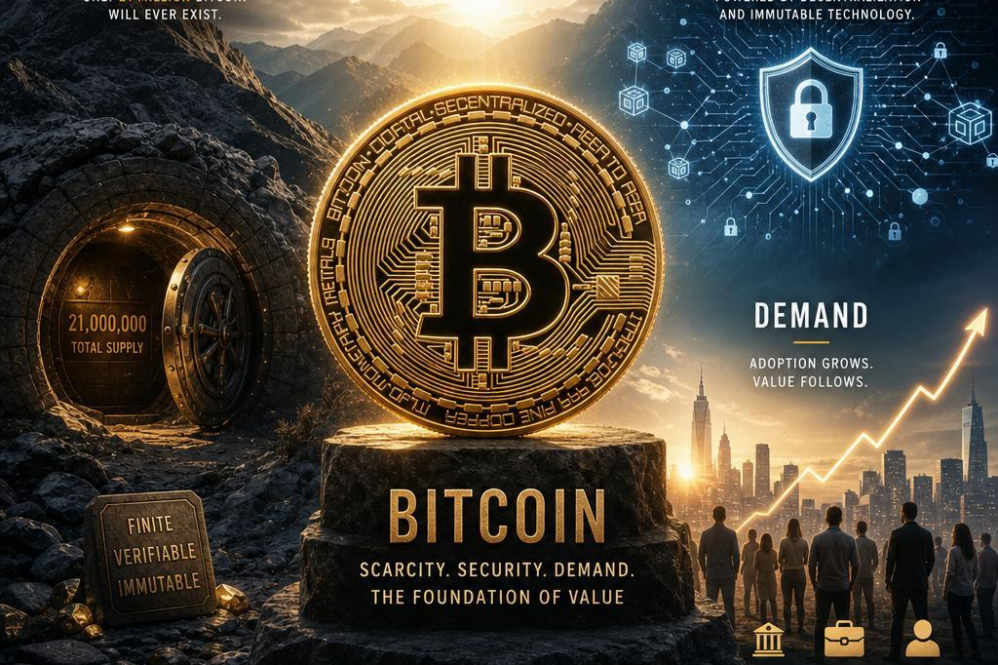
The Role of Scarcity in Establishing bitcoin’s Intrinsic Value
At the heart of bitcoin’s appeal lies its limited supply - capped at just 21 million coins.This scarcity is not an accident but a intentional design choice embedded in its protocol.unlike conventional fiat currencies, which governments can print at will, bitcoin’s finite quantity creates a digital form of rarity. This rarity establishes a foundation for value by limiting supply while demand continues too grow. As new coins are mined at a predetermined and steadily decreasing rate, the approaching limit fuels investor confidence in bitcoin as a deflationary asset.
Scarcity affects bitcoin’s intrinsic worth in several essential ways:
- It acts as a hedge against inflation by preserving purchasing power over time.
- It fosters a robust market dynamic where demand outpaces supply, driving price appreciation.
- It reinforces trust and predictability, given the clear and decentralized issuance protocol.
To visualize the impact of scarcity, consider this simplified comparison:
| Asset | Max Supply | Inflation Risk | Value Stability |
|---|---|---|---|
| Gold | Finite | Low | High |
| bitcoin | 21 Million | None | High |
| Fiat currency | Unlimited | High | Low |
The table highlights bitcoin’s unique position as a digitally scarce asset that combines the security of decentralization with a fixed maximum quantity. This scarcity underpins bitcoin’s ability to serve both as a store of value and as a potential currency alternative in the evolving financial landscape.
Understanding bitcoin’s Security Mechanisms and Their Impact on Trust
bitcoin’s decentralized architecture underpins its formidable security framework.Unlike traditional currencies governed by central banks, bitcoin operates on a peer-to-peer network secured by cryptographic algorithms and consensus protocols. This eliminates single points of failure, reducing vulnerability to hacks or manipulations. Miners validate transactions through a proof-of-work mechanism, which requires significant computational effort, making fraudulent actions economically unfeasible for attackers.
The integrity of bitcoin’s blockchain is upheld by an intricate combination of cryptographic hash functions and network-wide transparency. Every transaction is recorded in a block, linked sequentially to the previous one, creating an immutable ledger. This chain structure ensures that any attempt to alter past records would require altering all subsequent blocks and controlling over 50% of the network’s hashing power, a nearly unachievable feat on such a large scale.
Trust in bitcoin is further reinforced by its open-source nature and continuous scrutiny from a global community of developers and security experts. These contributors constantly audit the codebase and propose improvements to safeguard the system against emerging threats. The resulting resilience not onyl bolsters investor confidence but also positions bitcoin as a reliable store of value in a digital age.
Analyzing Market Demand Factors Driving bitcoin Adoption
As bitcoin continues to evolve,several crucial demand factors shape its growing adoption on the global stage. Among these, institutional interest stands out as a powerful catalyst. Corporations, hedge fundsand asset managers increasingly incorporate bitcoin into their portfolios, leveraging it as a hedge against inflation and systemic financial risks.This institutional embrace not only elevates bitcoin’s legitimacy but also fosters confidence among retail investors, fueling broader acceptance and transactional use.
Moreover, the rising global economic uncertainty and fluctuating fiat currencies prompt individuals in vulnerable economies to seek refuge in bitcoin’s decentralized and scarce nature. This push towards a non-sovereign store of value gains momentum particularly in regions with high inflation or restrictive capital controls, where bitcoin offers both an alternative means of preserving wealth and a mechanism for seamless cross-border transfers.
- technological advancements: Enhanced scalability and user-kind wallets improve accessibility for the average user.
- Regulatory clarity: Progressive legislations increase market confidence, fostering adoption.
- Network affect: As more users adopt bitcoin, its utility and acceptance naturally expand.
| Demand Factor | Impact on Adoption | Characteristic |
|---|---|---|
| Institutional Investment | Increases market capitalization and trust | Long-term holding |
| economic Instability | Boosts use as a hedge and alternative currency | Anti-inflationary |
| Technological Innovation | Improves usability and network growth | Scalability & Security |
Practical Strategies for Evaluating bitcoin Investment Opportunities
Understanding the intrinsic value of bitcoin requires a methodical approach rooted in assessing key factors that influence its worth. Start by examining the scarcity factor: bitcoin’s capped supply of 21 million coins ensures it cannot be inflated away like fiat currencies. When evaluating an investment possibility, investors should consider how this fixed supply interacts with growing adoption rates. Projects or platforms facilitating bitcoin’s accessibility and utility can enhance demand and ultimately its value.
Next, scrutinize the security features that underpin the bitcoin network. A robust, decentralized blockchain with a high hash rate indicates strong resistance to attacks and manipulation.For investment viability, identify platforms that prioritize network security and have transparent protocols. The security assurance not only protects bitcoin holders but also fortifies trust in its long-term retention of value.
Demand dynamics play a pivotal role in shaping bitcoin’s market outlook. When analyzing opportunities, consider factors such as mainstream acceptance, regulatory habitatand integration with traditional financial systems. Opportunities linked to increasing usage-including merchant adoption, institutional interest, or innovative financial products-often signal expanding demand. The following table summarizes these core evaluation criteria:
| Evaluation Criterion | Key Indicators | Investment Implication |
|---|---|---|
| Scarcity | fixed supply, halving events | Potential for price appreciation |
| Security | hash rate, decentralization | Network resilience and trust |
| demand | Adoption rates, regulatory clarity | Market growth potential |