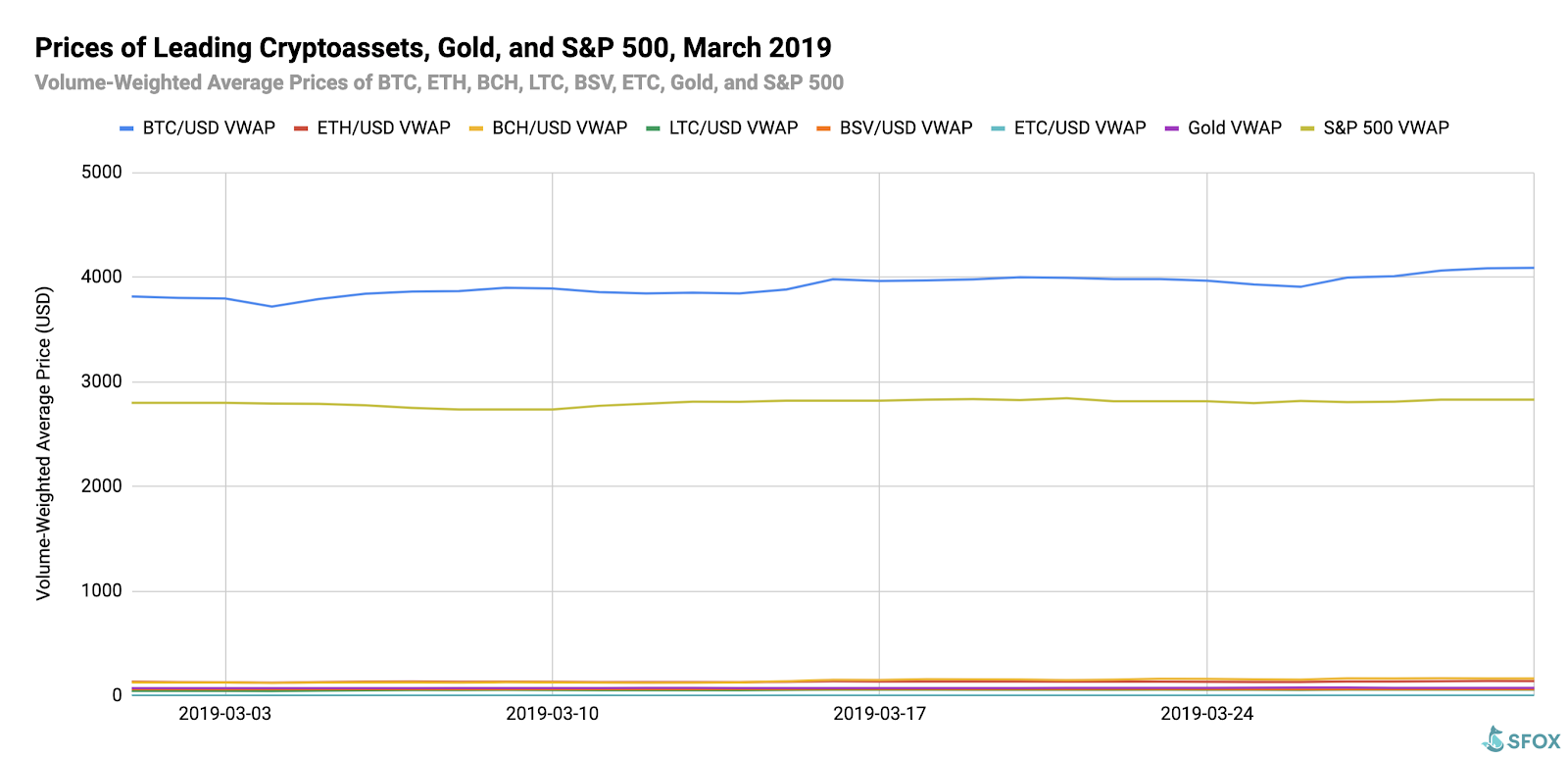
bitcoin is ofen described as “digital gold,” a label that reflects how many investors and analysts view its role in the modern financial system. Like gold, bitcoin is a scarce asset: its supply is mathematically capped at 21 million coins, and new units are introduced through a predictable process known as mining, recorded on a public blockchain ledger. This engineered scarcity, combined with its independence from any central bank or government, has led some to see bitcoin as a potential store of value and hedge against monetary inflation, similar to how gold has been used for centuries.
At the same time, bitcoin trades around the clock on global markets, with its price quoted against major currencies and tracked by financial data providers and crypto-focused outlets alike. its high volatility, rapid price recognition in certain periods, and growing institutional interest have further fueled comparisons with gold’s historical role during times of economic uncertainty.This article examines the key reasons behind the ”digital gold” moniker-focusing on bitcoin’s scarcity, decentralization, market behaviour, and perceived function as a modern store of value-and explores how well the analogy holds up under closer scrutiny.
historical origins of the digital gold narrative in bitcoin
When bitcoin emerged in 2009 from the pseudonymous creator Satoshi Nakamoto, early adopters did not promptly label it “digital gold.” The original white paper framed bitcoin primarily as peer-to-peer electronic cash, but its strictly limited supply of 21 million coins and predictable issuance schedule quickly drew comparisons with precious metals. As users witnessed the network functioning without a central authority, they began to emphasize its monetary properties more than its payments use case. This reframing laid the groundwork for a narrative that viewed bitcoin less like a new PayPal and more like a scarce, independent monetary asset.
Over the following years, commentators and investors sharpened that analogy, pointing to characteristics traditionally associated with gold:
- Scarcity – mathematically capped supply,echoing gold’s physical rarity.
- Durability – a ledger secured by cryptography and distributed nodes instead of metal that corrodes.
- Portability – global transfer across the internet, in contrast to shipping bars or coins.
- Verifiability – on-chain validation replacing assay labs and physical inspection.
As these traits became better understood, financial media and analytics firms popularized the “digital gold” label to explain bitcoin’s perceived role as a store of value rather than just a speculative novelty.
| Phase | Approx.Period | dominant Narrative |
|---|---|---|
| Cypherpunk Experiment | 2009-2011 | Electronic cash, censorship resistance |
| Speculative Asset | 2012-2016 | High-risk investment, tech curiosity |
| Digital Gold Thesis | 2017-present | Store of value, macro hedge, monetary alternative |
Across these phases, the “digital gold” idea solidified as macro investors, hedge funds and even some institutions began framing bitcoin in the context of inflation hedging and portfolio diversification rather than daily spending. This historical evolution-from niche cryptographic project to a widely debated monetary asset-explains why the gold analogy has become central to how bitcoin is discussed, valued and integrated into modern financial discourse.
Comparing scarcity and supply mechanics of bitcoin and physical gold
Unlike gold, whose total quantity in the earth’s crust is unknown and depends on future discoveries and extraction technologies, bitcoin’s supply is mathematically capped at 21 million coins, hard‑coded into its open-source protocol and enforced collectively by the network’s nodes . New bitcoins enter circulation through a clear, algorithmic process called mining, with issuance declining over time in pre-programmed “halving” events-until, eventually, no new coins are created . Gold mining, by contrast, follows economics rather than code: higher prices incentivize more exploration and more efficient extraction, which can increase annual supply, even if slowly, and create uncertainty about long‑term scarcity.
Both assets are considered scarce, but the predictability of that scarcity differs sharply. With bitcoin, anyone can verify the current supply, issuance schedule, and remaining coins to be mined on the public blockchain-no trusted intermediary is needed .Gold requires geological surveys, mining reports, and market analyses to estimate above‑ground stocks and reserves still in the ground. This contrast leads to different risk profiles: bitcoin faces protocol and adoption risk (changes in software, regulatory shifts, or market demand), while gold faces physical and extraction risk (new deposits, technological breakthroughs, or disruptions in mining and refining).
From an investor’s viewpoint, the way new supply responds to market conditions is crucial. bitcoin’s issuance is inelastic: no matter how high demand or price goes, the protocol will not accelerate the creation of new coins, making supply shocks entirely demand-driven. Gold is only partially inelastic: while production cannot instantly surge, sustained higher prices can gradually draw more metal into the market. Consequently, some see bitcoin as a kind of “engineered scarcity” with digital transparency, while gold represents “natural scarcity” shaped by geology and human industry.
| Aspect | bitcoin | Gold |
|---|---|---|
| Total supply | Fixed at 21M coins | Unknown, estimated only |
| New issuance | Code-driven, halving over time | Market & tech-driven mining |
| Verification | on-chain, transparent | Reports, surveys, audits |
| supply elasticity | Highly inelastic | Moderately inelastic |
- bitcoin: Programmed, capped, and globally auditable supply.
- Gold: Naturally limited, but influenced by discovery and extraction.
- Result: Two forms of scarcity-one engineered in software, one embedded in the physical world.
Market behavior how bitcoin and gold respond to inflation and macro shocks
When inflation accelerates or central banks pivot on interest rates,gold has historically behaved as a slow-moving hedge,while bitcoin tends to trade like a high-beta macro asset. Gold’s multi-decade track record shows that investors often rotate into the metal when real yields fall and currency debasement fears rise, seeking preservation of purchasing power rather than aggressive returns.bitcoin, by contrast, remains more sensitive to liquidity conditions and risk appetite, with its price rapidly repricing as global markets digest changes in monetary policy and macro data, while still drawing long-term interest as a hedge against fiat dilution thanks to its capped supply and decentralized design .
| Macro Trigger | Typical Gold Response | Typical bitcoin Response |
|---|---|---|
| Rising inflation | Gradual bid as a value store | Volatile surges,sentiment-driven |
| Rate cuts / QE | Steady support from lower real yields | High upside as liquidity increases |
| risk-off panic | Safe-haven inflows | often sold first,then re-accumulated |
In practice,the market now treats the two assets as complementary,not interchangeable,during macro shocks. Gold remains the conservative anchor, while bitcoin operates as a leveraged, digitally native alternative that can react instantly in 24/7 markets and is settled on a global peer‑to‑peer network without central intermediaries . Portfolio allocators increasingly watch how both behave across cycles, noting that bitcoin may amplify macro trends that gold reflects more slowly. This has led some to position bitcoin as a tactical inflation and liquidity play, with gold as the strategic long-horizon hedge, using allocations such as:
- Defensive stance: higher gold, modest bitcoin
- Liquidity boom: balanced gold and bitcoin
- Speculative phase: gold core, overweight bitcoin
Store of value analysis volatility time horizons and risk management
Evaluating bitcoin as a store of value begins with understanding its pronounced price swings and how they compress over longer periods.Metrics like the CME CF bitcoin Volatility Index, which tracks 30‑day implied volatility of regulated CME bitcoin options, show that bitcoin’s expected price movement can be substantially higher than that of traditional assets such as gold or major stock indices. Historical volatility charts confirm that short‑term fluctuations can be intense, even though longer time frames frequently enough smooth out these shocks. For investors, this means that bitcoin behaves less like a stable savings account and more like an asset whose store‑of‑value qualities emerge probabilistically over multi‑year horizons rather than weeks or months.
| Time Horizon | typical Experience | Risk Focus |
|---|---|---|
| Days-Weeks | Sharp price spikes and drawdowns | Trading risk, liquidity shocks |
| Months-1 Year | Pronounced cycles and volatility clusters | Timing risk, sentiment swings |
| 3-10+ Years | Past data shows reduced impact of noise | macro, regulatory and technology risk |
Because volatility is structural to bitcoin, risk management is less about eliminating risk and more about sizing and structuring it intelligently. Investors who treat bitcoin as “digital gold” often integrate it as a small satellite position around a more stable core portfolio, combining it with safeguards such as:
- Position sizing: Limiting allocation to a defined percentage of net worth to absorb severe drawdowns without forced selling.
- Time‑based discipline: Aligning holding periods with long‑term conviction, rather than reacting to short‑term volatility indices and daily price noise.
- Diversification: Pairing bitcoin with lower‑volatility assets like bonds, cash, or physical gold to dampen portfolio‑level swings.
- Liquidity and security planning: Keeping emergency funds outside bitcoin and using robust custody to avoid operational losses that can overshadow market risk.
Security custody and self sovereignty lessons from gold for bitcoin holders
Gold investors have long understood that owning an asset and controlling it are not the same thing.Vaulted bullion, allocated vs. unallocated accounts, and paper gold products all distribute risk differently between the holder and various intermediaries. bitcoin mirrors this spectrum: you can trust centralized exchanges and custodians, or you can hold your own keys. Exchange-based storage is convenient but exposes you to counterparty failure, regulatory seizure, and potential security breaches, a risk repeatedly highlighted in crypto communities discussing the trade-off between custodial platforms and self-managed wallets. Just as experienced gold owners often prefer independent storage outside banking systems,serious bitcoin holders increasingly adopt cold storage and self-custody to reduce systemic exposure.
From gold vaults to hardware wallets,the logic is the same: the more accessible an asset is to you,the more accessible it is to attackers. Gold owners mitigate this with physical controls, layered storage, and discreet practices; bitcoin holders must do the digital equivalent.That means combining strong key management with realistic threat modeling, recognizing that-while brute‑forcing a properly generated private key is astronomically improbable-the real vulnerabilities are usually phishing, social engineering, poor backups, and misconfigured devices. Practical measures include:
- Cold storage (hardware wallets, air‑gapped devices)
- Redundant backups of seed phrases in separate secure locations
- Minimized exposure of large balances to online services
- Operational secrecy about holdings and storage details
| Gold Practice | bitcoin Parallel | Lesson |
|---|---|---|
| Private vault storage | Cold wallet self‑custody | Control beats convenience |
| Distributed stash locations | multiple secure seed backups | Avoid single points of failure |
| Discreet ownership | On‑chain privacy hygiene | Reduce personal attack surface |
The deeper lesson from centuries of gold ownership is the principle of self‑sovereignty: the idea that wealth should not depend on any single institution’s promise.bitcoin takes this further by embedding ownership in cryptographic keys rather than physical possession or legal documentation. To benefit from this, holders must accept both the power and burden of direct control.That includes designing personal policies for inheritance and disaster recovery, much as gold owners plan how vault access and documentation pass to heirs. While cryptocurrencies can be traded via complex exchange infrastructure, the long‑term resilience of “digital gold” rests on individuals who understand that in this system, whoever holds the keys, holds the asset-and plans their custody operations accordingly.
Regulatory treatment of bitcoin versus gold implications for investors
For investors, the contrast between how regulators treat bitcoin and gold is increasingly material to portfolio strategy. Gold is generally classified as a commodity, slotting neatly into long‑standing legal and tax frameworks, while bitcoin frequently enough sits in a patchwork of rules that differ by jurisdiction and evolve quickly. Regulatory bodies are tightening AML/KYC expectations for crypto service providers, demanding robust identity checks and transaction monitoring for exchanges and custodians, in response to concerns about illicit finance and systemic risk. by contrast, bullion dealers and gold ETFs operate under well-understood rules that have changed only incrementally over decades.
| Aspect | bitcoin | Gold |
|---|---|---|
| Legal status | Varies by country; often “crypto-asset” | Widely accepted physical commodity |
| Regulatory clarity | Emerging and fragmented | Stable, mature framework |
| Intermediaries | Exchanges, custodians, defi platforms | Banks, brokers, bullion dealers |
| Compliance focus | High AML/KYC scrutiny | Traditional financial regulations |
These divergences translate into specific implications for investors. bitcoin exists on open, permissionless networks like bitcoin and Ethereum, which regulators find challenging to oversee because users can issue tokens, self‑custody assets and access DeFi protocols without centralized intermediaries. This creates both opportunity and regulatory risk: authorities are increasingly targeting gateways such as centralized exchanges with stricter requirements, and new rules can influence market access, liquidity and even which products are legally offered in a given country. Gold, with its entrenched role in the financial system, is less exposed to abrupt regulatory shifts, so its risk profile is driven more by macroeconomics than by rulemaking cycles.
From a practical standpoint, investors weighing “digital gold” against its physical counterpart should consider how regulation affects:
- Access and liquidity: sudden rule changes can restrict bitcoin trading venues or specific products, while gold markets are rarely disrupted by new regulations.
- Custody and counterparty risk: bitcoin custody relies on platforms subject to evolving crypto‑asset rules; gold storage and ETFs follow long‑established protections but remain location‑dependent.
- Compliance overhead: crypto investors increasingly face enhanced reporting, source‑of‑funds checks and tax disclosure; gold investors usually navigate more predictable requirements.
- Regulatory upside/downside: clearer global standards for crypto could unlock broader institutional adoption, but inconsistent or restrictive regimes may also create fragmentation in bitcoin liquidity and pricing.
Portfolio construction using bitcoin alongside gold for diversification
Blending bitcoin with gold in a single portfolio allows investors to tap into two very different forms of scarcity: one rooted in centuries of physical commerce and another enforced by cryptographic code and a hard-capped supply. Gold traditionally serves as a hedge against inflation and currency debasement, while bitcoin offers asymmetric upside as a high-volatility, high-conviction macro asset. Because their price drivers are not perfectly aligned, combining both can help smooth overall performance while preserving exposure to long-term wealth protection themes such as monetary debasement and systemic risk.
When allocating to both assets, investors frequently enough treat gold as the stabilizer and bitcoin as the growth engine.A common framework is to start from a conventional diversified portfolio and carve out a modest “hard money” sleeve. Within that sleeve, the split between gold and bitcoin can reflect risk tolerance and time horizon, for example:
- Capital preservation focus: Higher share of gold, smaller bitcoin allocation.
- Balanced risk approach: Roughly even mix of gold and bitcoin.
- High-conviction growth: Larger bitcoin exposure with gold as a volatility buffer.
| Profile | Gold | bitcoin | Objective |
|---|---|---|---|
| Defensive | 10-15% | 1-3% | Wealth preservation |
| Balanced | 5-10% | 3-7% | Risk / return balance |
| Aggressive | 3-5% | 7-15% | Maximize upside |
Implementation details matter as much as allocation percentages. Investors need to decide between physical bars or gold-backed funds on one side and spot bitcoin, ETFs, or custodial solutions on the other, each with different liquidity, fee and counterparty profiles. Key practical steps include: maintaining strict position sizing relative to total net worth,rebalancing periodically to prevent bitcoin’s volatility from dominating risk,and defining clear rules for adding or trimming exposure during drawdowns. In all cases, robust security for digital holdings (cold storage, multi-signature wallets, and tested recovery procedures) is essential to ensure that bitcoin effectively complements gold as a durable, diversifying asset rather than becoming a single point of failure.
Evaluating long term sustainability mining energy use and environmental impact
bitcoin’s security model depends on a global array of specialized computers competing to add new blocks to its public, distributed ledger, known as the blockchain, by performing energy‑intensive computations. This process,called mining,is what anchors the scarcity and immutability that invite comparisons with gold. Energetic cost is not a side affect but a core feature: by making it expensive to reorganize the chain, bitcoin makes historical transactions harder to reverse and attacks economically irrational. The sustainability question therefore is not whether energy is used, but whether the value provided-censorship‑resistant settlement and a non‑sovereign monetary asset-justifies that ongoing expenditure of power.
Environmental concerns focus on the source and intensity of the electricity that miners consume. In practice, miners tend to cluster where power is cheap or stranded, such as regions with surplus hydro, wind, or seasonally curtailed energy, because their profit margins are very sensitive to electricity prices. This incentivizes the use of energy that may or else be wasted, but it can also encourage reliance on fossil fuels in regions where those remain the lowest‑cost option. Key factors that shape the long‑term footprint include:
- Energy mix: Proportion of renewable, low‑carbon, and fossil power used by mining operations.
- Hardware efficiency: Efficiency gains in mining equipment that reduce watts per unit of hash rate.
- Geographic migration: Movement of miners toward jurisdictions with cleaner grids or excess capacity.
- Policy and pricing: Carbon taxes,energy subsidies,and grid‑access rules that reshape miner incentives.
| Aspect | bitcoin Mining | gold Mining |
|---|---|---|
| Primary resource used | Electricity for computation | Fuel, explosives, heavy machinery |
| Environmental impact type | Carbon emissions tied to grid mix | Land disruption, tailings, emissions |
| Location flexibility | Highly mobile; can seek stranded energy | fixed to ore deposits |
| Scalability of mitigation | Can shift to renewables as grids decarbonize | Constrained by geology and local ecology |
Over longer time horizons, the sustainability of securing a decentralized monetary network will depend on how quickly global electricity grids decarbonize, how mining hardware efficiency improves, and how economic signals redirect miners toward lower‑impact energy sources. The halving of new bitcoin issuance roughly every four years reduces the share of miner revenue from block subsidies, gradually increasing the role of transaction fees and possibly driving further competition for cheap, clean power as margins tighten. Observers evaluating whether the “digital gold” narrative is environmentally defensible will need to track both grid‑level changes and on‑chain indicators-such as hash rate trends relative to estimated energy use-to judge whether the network is converging toward a model where its security premium is maintained with progressively lower carbon intensity.
Practical guidelines for investors when treating bitcoin as digital gold
When approaching bitcoin as a long-term store of value rather than a speculative trading chip, investors should anchor their strategy in disciplined risk management and realistic expectations. bitcoin’s price remains highly volatile,even as it becomes more institutionalized and widely followed through indices such as the CoinDesk bitcoin Price Index (XBX) tracked by major financial outlets. Allocate only a small, clearly defined percentage of your total portfolio-frequently enough in the low single digits-so that even sharp drawdowns or extended “crypto winter” periods do not jeopardize your broader financial plan. Use regulated exchanges and secure wallet solutions, and document your purchase prices, fees, and tax implications up front, just as you would for a commodity or foreign currency investment.
- Define your role for bitcoin: inflation hedge, portfolio diversifier, or high-risk growth asset.
- Separate trading from holding: keep long-term “vault” holdings isolated from short-term trading capital.
- Favor gradual accumulation: use periodic purchases to smooth out volatility rather than chasing rallies.
- Plan liquidity needs: avoid funding near-term obligations with an asset that can move dramatically in days.
- Stress-test your conviction: decide in advance how you will respond to 50-80% drawdowns, which are historically common.
| Aspect | Gold Approach | bitcoin Approach |
|---|---|---|
| Allocation | Small hedge slice | even smaller, high-volatility slice |
| Storage | vault / custodian | Cold wallet / trusted exchange |
| Holding Period | Multi‑year | Multi‑year with extreme swings |
| Monitoring | Periodic rebalancing | Rebalancing plus security checks |
Q&A
Q: What is bitcoin?
A: bitcoin is a decentralized digital currency that operates on a peer‑to‑peer network without a central authority like a bank or government. It uses blockchain technology-a public, distributed ledger maintained by a network of nodes (computers)-to record and verify transactions securely and transparently.
Q: why is bitcoin often called ”digital gold”?
A: bitcoin is commonly called “digital gold” because, like physical gold, it is seen by many as a store of value that is scarce, difficult to produce, and independent of any single government or institution.its fixed supply, decentralized design, and role as a hedge against currency debasement are central to this comparison.
Q: How does bitcoin’s limited supply resemble gold’s scarcity?
A: bitcoin’s protocol caps total issuance at 21 million coins. This maximum supply cannot be altered without broad consensus among network participants, making it extremely resistant to arbitrary inflation. Gold’s supply is naturally limited by geology and extraction costs. In both cases, scarcity is a key part of the value proposition.
Q: what role does mining play in the ”digital gold” analogy?
A: bitcoin is created through a process called mining, where computers compete to solve cryptographic puzzles and add new blocks of transactions to the blockchain. Miners are rewarded with newly issued bitcoins and transaction fees.
This resembles gold mining, where significant effort and energy are spent to extract a scarce resource. In both systems, production is costly and constrained, reinforcing the idea of scarcity.
Q: How does bitcoin function as a store of value?
A: A store of value is an asset that can be saved and retrieved in the future with relatively predictable purchasing power.bitcoin’s proponents argue it serves this role as:
- Its supply is fixed and transparent at the protocol level.
- It is globally accessible and transferable across borders.
- It operates independently of central bank monetary policy.
Though, bitcoin’s price has been highly volatile, which critics argue weakens its reliability as a store of value, especially over shorter time horizons.
Q: How does bitcoin’s decentralization compare to gold?
A: Gold is not issued by any government; it is a physical commodity recognized globally. Similarly, bitcoin is not controlled by any single state, company, or person. The network is maintained by a decentralized set of nodes that collectively validate and record transactions on the blockchain.
This independence from centralized control is a main reason both assets appeal to those seeking alternatives to traditional, government-issued money.
Q: In what way is bitcoin more portable than gold?
A: bitcoin is purely digital and can be transferred globally in minutes, often at lower cost than moving physical gold. Ownership is represented by cryptographic keys rather than physical bars or coins. This makes large value transfers more efficient and less constrained by geography or logistics, which strengthens the “digital gold” characterization.
Q: How transparent is bitcoin compared to gold?
A: bitcoin transactions are recorded on a public blockchain that anyone can inspect. Every transaction and total supply can be independently verified by running a node.
By contrast, global gold reserves and flows are less transparent, relying on reporting from central banks, custodians, and private institutions.
Q: Is bitcoin’s price behavior similar to gold’s?
A: Both bitcoin and gold are often discussed as “safe haven” or hedge assets, especially in periods of monetary expansion or economic uncertainty. However:
- Gold has a long history of relatively lower volatility and use as a store of value.
- bitcoin’s price has been far more volatile, with sharp booms and busts visible on live price charts and market data.
This volatility distinguishes bitcoin’s risk profile from that of gold, even if the underlying narratives have similarities.
Q: How does bitcoin’s monetary policy differ from fiat currencies and relate to gold?
A: Fiat currencies (such as the US dollar) can be expanded at the discretion of central banks through monetary policy. Gold’s supply grows slowly based on mining output, and bitcoin’s supply grows according to a predetermined schedule embedded in its code, with block rewards halving approximately every four years until the 21 million cap is reached.
Supporters argue this predictable and limited issuance makes bitcoin more similar to gold than to fiat currencies in monetary structure.
Q: Does bitcoin have intrinsic uses like gold (e.g., jewelry, industry)?
A: Gold has non‑monetary uses in jewelry, electronics, and industry, which contribute to its demand. bitcoin does not have physical or industrial uses; its value comes from its network properties-decentralization,security,censorship resistance,and its use as a medium of exchange and store of value within the digital economy.
This is a key difference that critics highlight when questioning the “digital gold” label.
Q: How does bitcoin’s security compare to physical gold?
A: bitcoin’s security is based on cryptographic principles and the economic incentives of its distributed network.Attacking the network would require controlling a majority of mining power, which is extremely costly.
Gold’s security is physical: it requires secure storage, transport, and protection against theft.Both can be considered secure in different ways, but bitcoin eliminates certain physical risks while introducing digital and key‑management risks.
Q: Can governments easily seize or control bitcoin like they can with gold?
A: Gold held within a jurisdiction can be regulated, taxed, restricted, or even confiscated by governments. bitcoin, while also subject to regulation at entry and exit points (like exchanges), is harder to seize directly if users securely control their private keys and use privacy‑preserving practices. This resistance to centralized control is another reason it is compared to gold as a sovereign‑independent asset.
Q: Are ther risks in viewing bitcoin strictly as “digital gold”?
A: Yes. The “digital gold” framing can be useful but has limitations:
- it may understate bitcoin’s volatility and speculative nature.
- It may overlook bitcoin’s other functions, such as enabling censorship‑resistant payments.
- It may imply a level of maturity and stability comparable to gold, which bitcoin has not yet achieved given its relatively short history.
Understanding these differences is crucial for anyone considering bitcoin as an investment or monetary asset.
Q: What should readers take away from the “digital gold” analogy?
A: The term “digital gold” highlights three main aspects of bitcoin:
- Scarcity: A fixed, verifiable supply cap unlike fiat currencies.
- Independence: Decentralized operation without central authority control.
- Store‑of‑value ambition: Aiming to preserve purchasing power over the long term, similar to how gold has historically functioned.
at the same time,bitcoin’s price volatility,lack of physical uses,and relatively short track record mean that it should not be viewed as identical to gold,but rather as a distinct digital asset whose “digital gold” label is descriptive,not definitive.
The Conclusion
bitcoin is often described as “digital gold” because it combines core monetary properties traditionally associated with gold with the advantages of a natively digital asset. Its fixed supply of 21 million coins, enforced by code and consensus across a decentralized network, creates programmed scarcity that contrasts with the potentially elastic supply of fiat currencies and the unpredictable growth of above-ground gold reserves. Its borderless, peer‑to‑peer design allows value to be sent globally without banks or centralized intermediaries, functioning as an internet-native bearer asset rather than a claim on a third party.At the same time, bitcoin trades around the clock on global markets, with a transparent, publicly verifiable ledger and highly liquid markets tracked by major financial and data providers.These features support its emerging role as a store of value for investors seeking an asset that is resistant to censorship, difficult to confiscate, and independent of any single government or central bank.Whether bitcoin will ultimately achieve the same level of monetary status and long-term stability as physical gold remains uncertain and depends on regulatory, technological, and market developments over time. However, the combination of digital scarcity, decentralization, and increasing institutional recognition explains why, in contemporary financial discourse, bitcoin is widely framed as a modern, programmable counterpart to gold-a “digital gold” for the details age.