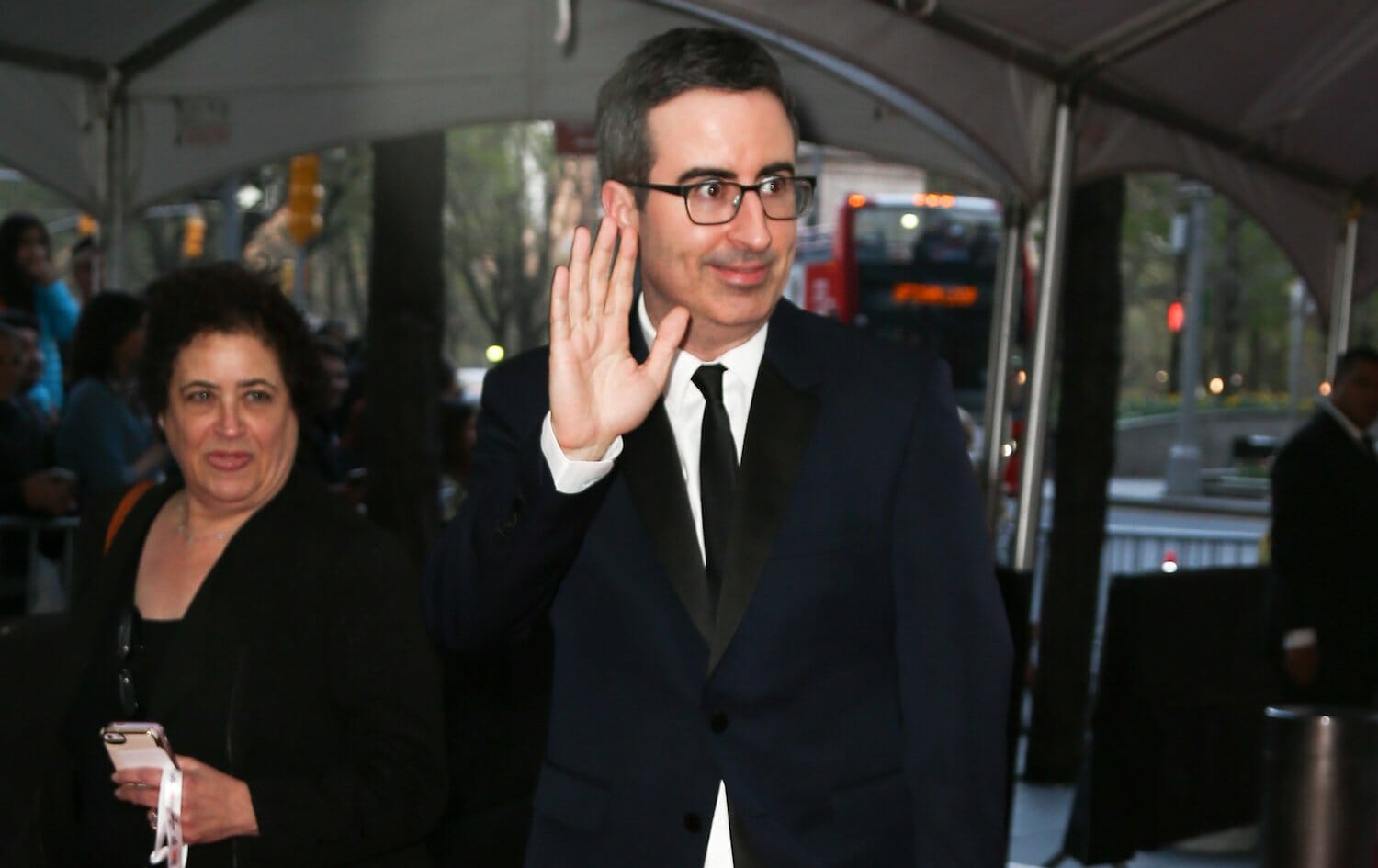
Most of John Oliver’s send-up of cryptocurrency was spot on.
On Sunday night’s episode of “” the HBO host poked fun at bitcoin community icons and reminded viewers to exercise caution when investing.
“The important thing to remember here is this is a brand-new, very complicated space and literally nobody knows how it’s going to develop, so you need to be careful,” he said.
Oliver’s explanations of blockchain technology and the nascent cryptocurrency industry were generally accurate, and the notes of caution were appropriate. Speaking of notes, guest star Keegan-Michael Key’s parody of Carlos Matos, the exuberant promoter, drove the point home when he bellowed: “Re-spon-si-bility!”
But in one important respect, Oliver missed the mark by a long shot.
In his efforts to relate the story to a broad audience, the comedian trotted out a tired analogy, comparing bitcoin’s volatile price to a $15,000 Beanie Baby, the plush toys that drove Americans into a buying frenzy circa the late 1990s.
He also described buying cryptocurrency as pure gambling, not investing – an oversimplification to say the least.
Beanie bust
It’s worth nothing that it’s been two decades since the Beanie Baby craze of the 1990s, and that some of the toy animals still sell for thousands of dollars online. Rare-toys appraiser Bruce Zalkin, for example, told a trio of Beanies that sold for roughly $1,299 in 1998 would probably fetch $50 today.
This devaluation highlights what makes Beanies fundamentally different from cryptocurrencies. Beanies didn’t introduce any new technology to the collectibles market. Aside from unique traits such as color, these toys have generally remained the same over the years.
By comparison, bitcoin offered the building blocks for the blockchain technology boom sweeping the globe.
This technology is being applied to everything from to and . Cryptocurrency itself already has diverse use cases, such safely store wealth despite discriminatory banks. Some entrepreneurs, like Sunny Park of skincare, accept cryptocurrency to help international customers avoid costly conversion rates and credit card fees.
A went so far as to estimate current bitcoin use cases would make the currency worth around $2,074 without speculation. Even if that’s well below the current market price, it sure as Satoshi ain’t zero.
Developer Jimmy Song, a , points out that decentralization plays a huge role in differentiating bitcoin from other speculative assets.
He told CoinDesk:
“Beanie Babies are made by Ty and you have to trust them to not flood the market with the more Beanie Babies… bitcoin is more like gold which is also not produced by a central party.”
Plus, bitcoin’s underlying structure continues to .
A Beanie or gold ring purchased today won’t gain any new features as it sits on the shelf. Meanwhile, people around the world are working to make bitcoin . If someone goes to use his or her cryptocurrency stash after several years of storage, this digital asset may have gained new capabilities.
It may even offer access to additional tokens deposited by an , such as when bitcoin owners claimed free bitcoin cash tokens after the bitcoin These users passively collected new tokens just by owning bitcoin.
Physical vs. digital
In this way, comparing a dynamic cryptocurrency to a physical asset is apples-and-oranges at best.
bitcoin is both traceable and generally fungible, i.e. mutually interchangeable (though to be fair these characteristics ).
By contrast, some physical assets are registered or certified, while bars of gold may be theoretically interchangeable. Few assets offer both options. Song pointed out how bitcoin’s characteristics differentiate it from other assets.
“Besides decentralization, these properties include fungibility, portability, durability, verifiability and divisibility. Clearly, Beanie Babies vary in quality, even among the same exact toy. They must be shipped and can get damaged. They are certainly not divisible to smaller units,” he said.
Blockchain-based collectibles like the ethereum-fueled game have much more in common with Beanies. They are valued for their rare traits and primarily used for entertainment or trading. Yet, even digital kitties offer potential beyond their soft and squishy predecessors.
People can to create a new digital asset, which is obviously impossible with physical collectibles. Bryce Bladon, communications director at CryptoKitties’ genesis studio Axiom Zen, told CoinDesk:
“Personalization, interactivity, extensibility – these are all things possible with things like cryptocollectibles.”
All things considered, the only thing Beanies have in common with bitcoin is scarcity.
As for the gambling comparison, cryptocurrency is an extremely risky investment, as Oliver rightly pointed out. But depending on the buyer, it is not necessarily a roll of the dice, because expert insight can decipher which cryptocurrencies have functioning use cases.
The rest may indeed turn out to be collectible fluff.
image via Shutterstock
The leader in blockchain news, CoinDesk is a media outlet that strives for the highest journalistic standards and abides by a . CoinDesk is an independent operating subsidiary of Digital Currency Group, which invests in cryptocurrencies and blockchain startups.
Published at Mon, 12 Mar 2018 21:55:10 +0000
Features[wpr5_ebay kw=”bitcoin” num=”1″ ebcat=”” cid=”5338043562″ lang=”en-US” country=”0″ sort=”bestmatch”]

![Roger ver talks about his bitcoin [btc] cash & regulation of blockchain at delta summit 2018](https://ohiobitcoin.com/wp-content/uploads/2019/01/UNziIo.jpg "Roger ver talks about his bitcoin [btc] cash & regulation of blockchain at delta summit 2018")