Belgien unterstützt das Welternährungsprogramm (WFP) der Vereinten Nationen (UN) mit einer Spende von 2 Millionen Euro. Damit werden zwei Projekte gefördert, die eine gerechtere und effizientere Verteilung von Hilfsgütern zum Ziel haben. Dies kündigte das WFP am 19. April an. Die geförderten Projekte setzen auf neue Technologien. Zum einen sollen unbemannte Luftfahrzeuge Aufklärungsarbeit in Krisengebieten…
Der Beitrag erschien zuerst auf .
After BTCManager attended the one-day conference in the Netherlands on April 19, 2018, it became clear that Amsterdam is working hard to attract the finest fintech minds to the city.
After a series of panels ranging from commentary on the GDPR regulation set to pass in May 2018 to the monetization of users’ content, the event captured the commercial sentiments urging the blockchain’s technical capacities forward. It also turns out women hate being a part of “Women in Blockchain” panels and that’s actually a very good thing.
First-Time Conference: Paul O’ Connell Takes on Fintech
In the way of , Zero-In was intimate and highly-focused. Folks could meander around the alternative warehouse-style venue past a large exhibition area before being invited to either the marketing stage on one end or the fintech stage on the other.
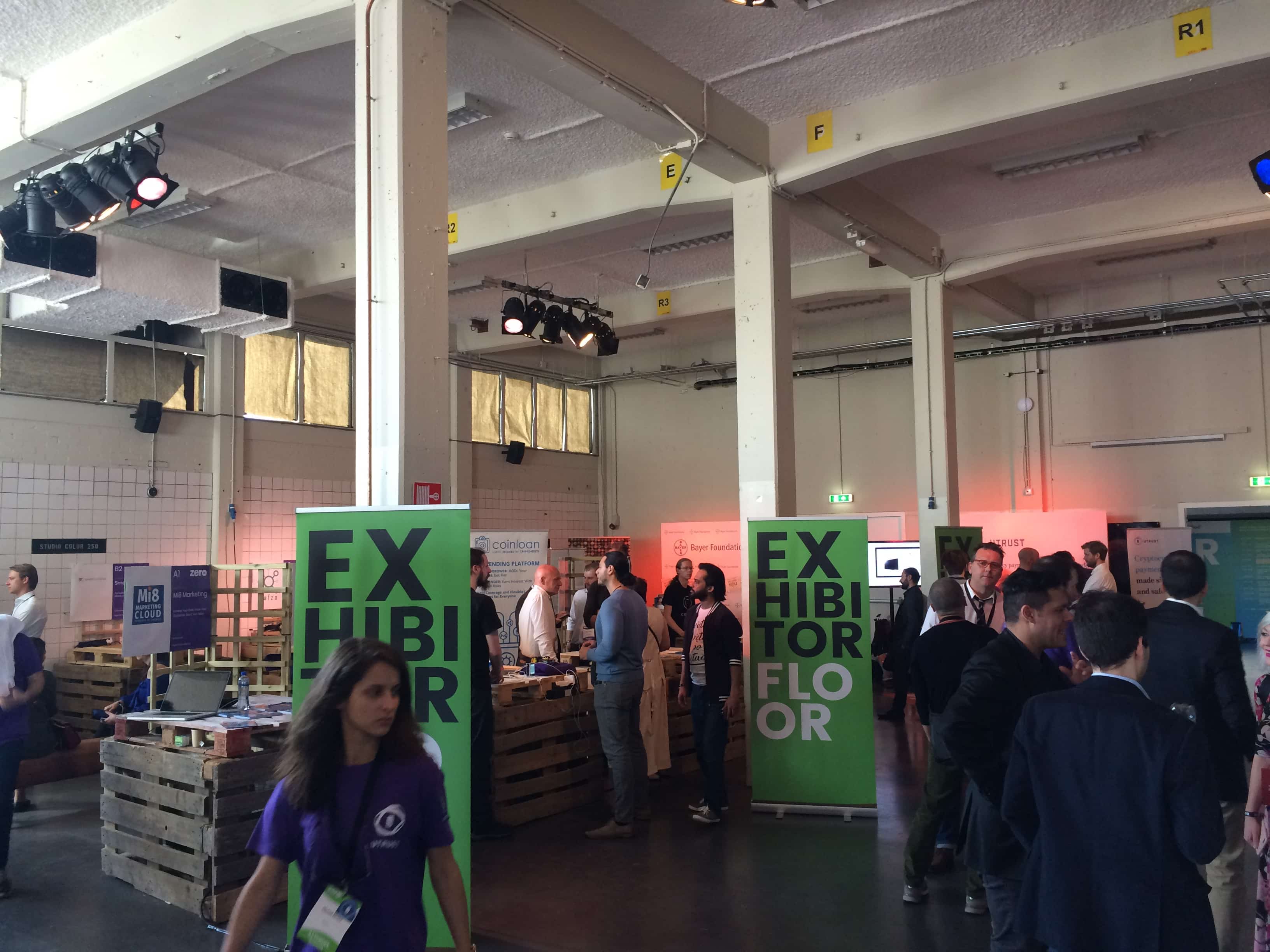
A number of individuals walked with the precision of a clear objective in mind. Others mingled, chatted and hoped to quantify their knowledge on buzzwords like “cryptocurrencies,” “content monetization,” and, of course, “blockchain.”

BTCManager spoke with marketing strategists João Gomes from and Ricardo Correia of both of whom were in attendance all the way from Portugal to figure out new solutions to nascent problems. “I don’t see blockchain as a problem,” Gomes reported, “But it will mean many companies need to change their approach to data collection.”
One immediate solution, which the founder of the conference hoped to make a theme of, is personalization. Instead of setting alight the massive cogs of the aggregation machines, both Gomes and Correia think that personalizing an experience is the only way forward when marketing in a decentralized world. Not only that but as a consumer, “It’s much better,” admits Gomes.
If you’re still not convinced that the user is indeed the product at places like Facebook or Google, the panelists of “Which Step is a Step Too Far? GDPR and Data-driven Marketing” provided an enlightening reality of which we should’ve already been aware.
Alexander Handcock of reduced the Cambridge Analytica debacle as a “PR disaster,” and in 2018, 12 years after The Zucc took the world by storm, Handcock is probably right. The CA scandal was simply the most public version of what happens just about every day at Facebook. Google too, for that matter, and it’s interesting that we see fewer hashtags to leave the search site. In any case, we now have the European solution, the .
But even while phrases like “the right to be forgotten” spell doom for an immutable technology such as blockchain, Kim Leonard Smouter-Umans of , a data research community, explained that “there is still a lot that you can do within the regulation.”
Smouter-Umans explained that first, yes, collectors of data must require permission before sharing data with any other third or fourth, or even fifth interested party, but the ways in which this permission is made clear can be done creatively:
“Firms can use videos, make songs, whatever. It just needs to be clear what they are up to when it comes to consumer data.”
These details are also interesting in regards to the public and private blockchain debate. The former seems much less feasible, from a legal perspective than everything the latter can offer. But is a permissioned-blockchain still a blockchain? Such existential questions dotted the playing field the entire day.
Get Out Your Meter Sticks: Crypto Valuation, Use Cases, and Why Americans Are Dumb
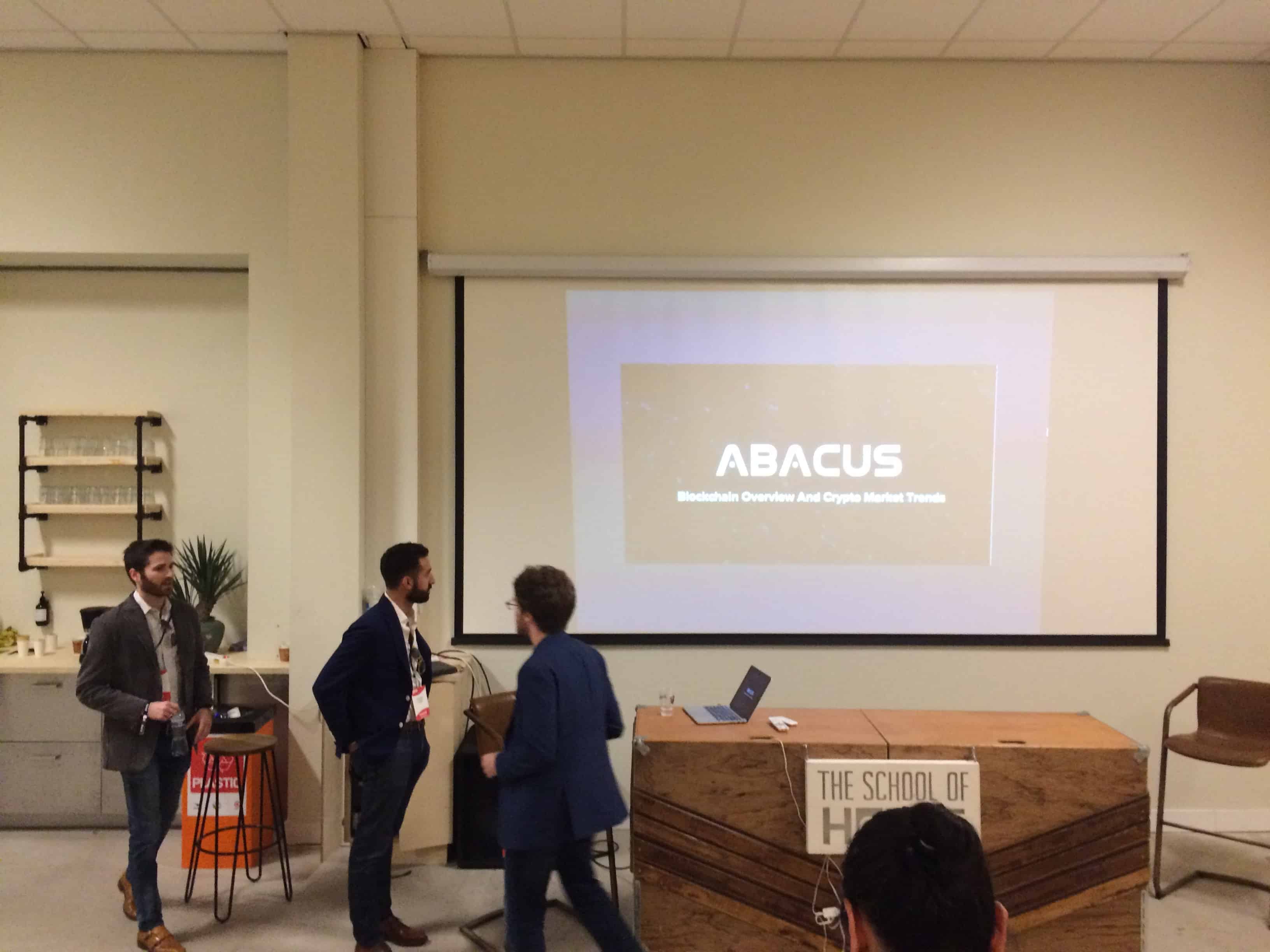
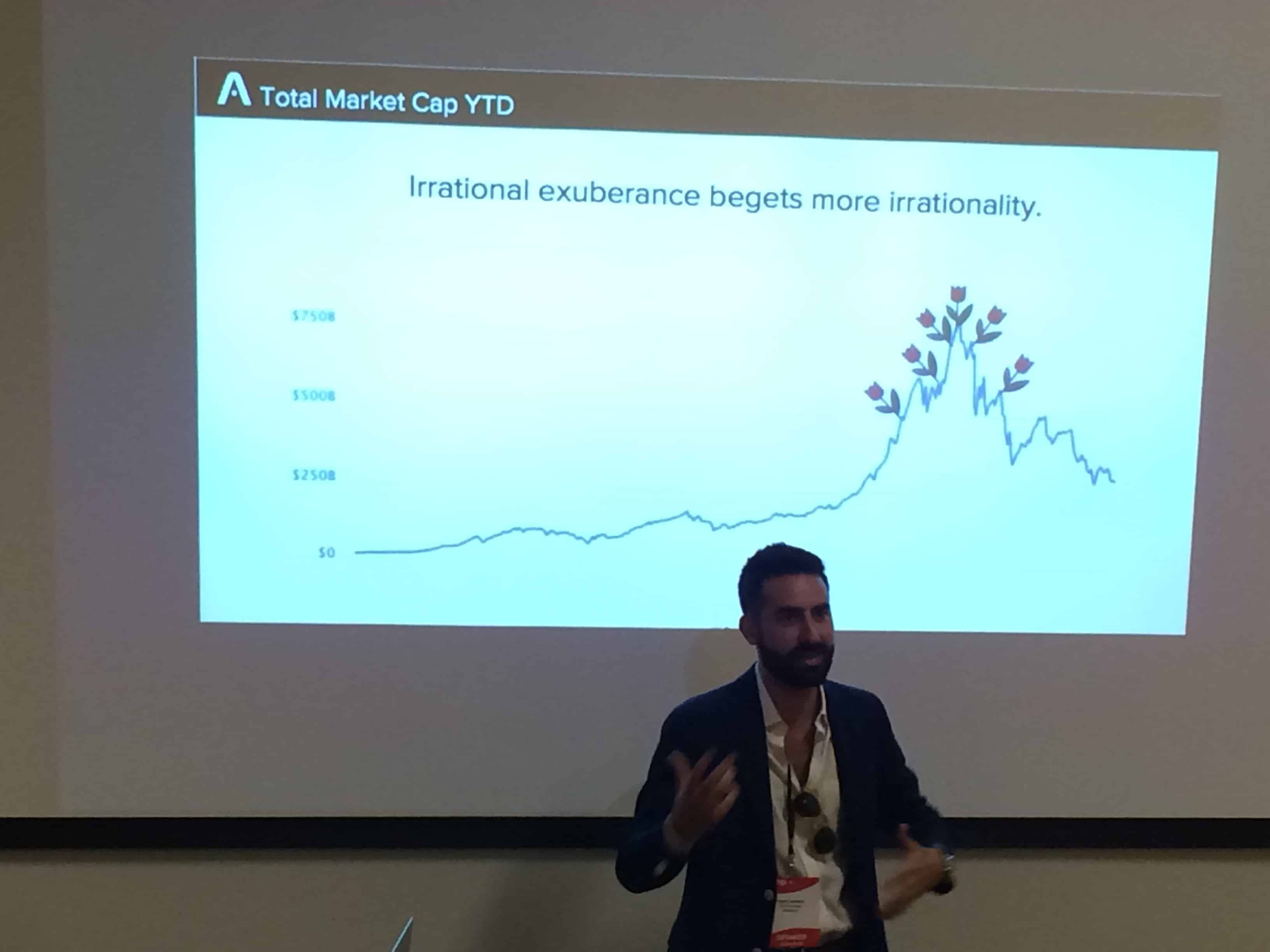
presented an afternoon workshop on “Macro Trends In Cryptomarkets.” The session boiled down to a brief overview of blockchain technology ( and ; Private versus Public ledgers), the outstanding political qualities that cryptocurrencies portend (i.e., what exactly are borders in a decentralized economy?), and the exciting (yes, exciting) possibility of Security Token Offerings (STOs) headed our way in the next “six to 12 months” according to the analysis firm.
More specifically and according to the Brooklyn-based fintech group, the United States only has one thing going for it in the race to sensibly regulate this emerging market; municipal bonds. In this, the speakers were referring to the by the city of Berkeley, California. Ironically, this move is merely a response from a city under attack by federal funding cuts. Clearly, we’re only beginning to understand the potential of a crypto fundraising model.
Of course, subversion of this order pales in comparison to the exchange haven being set up in , ICO-friendly regulations, and lightweight, yet proactive, attempts to legislate the novel asset class.
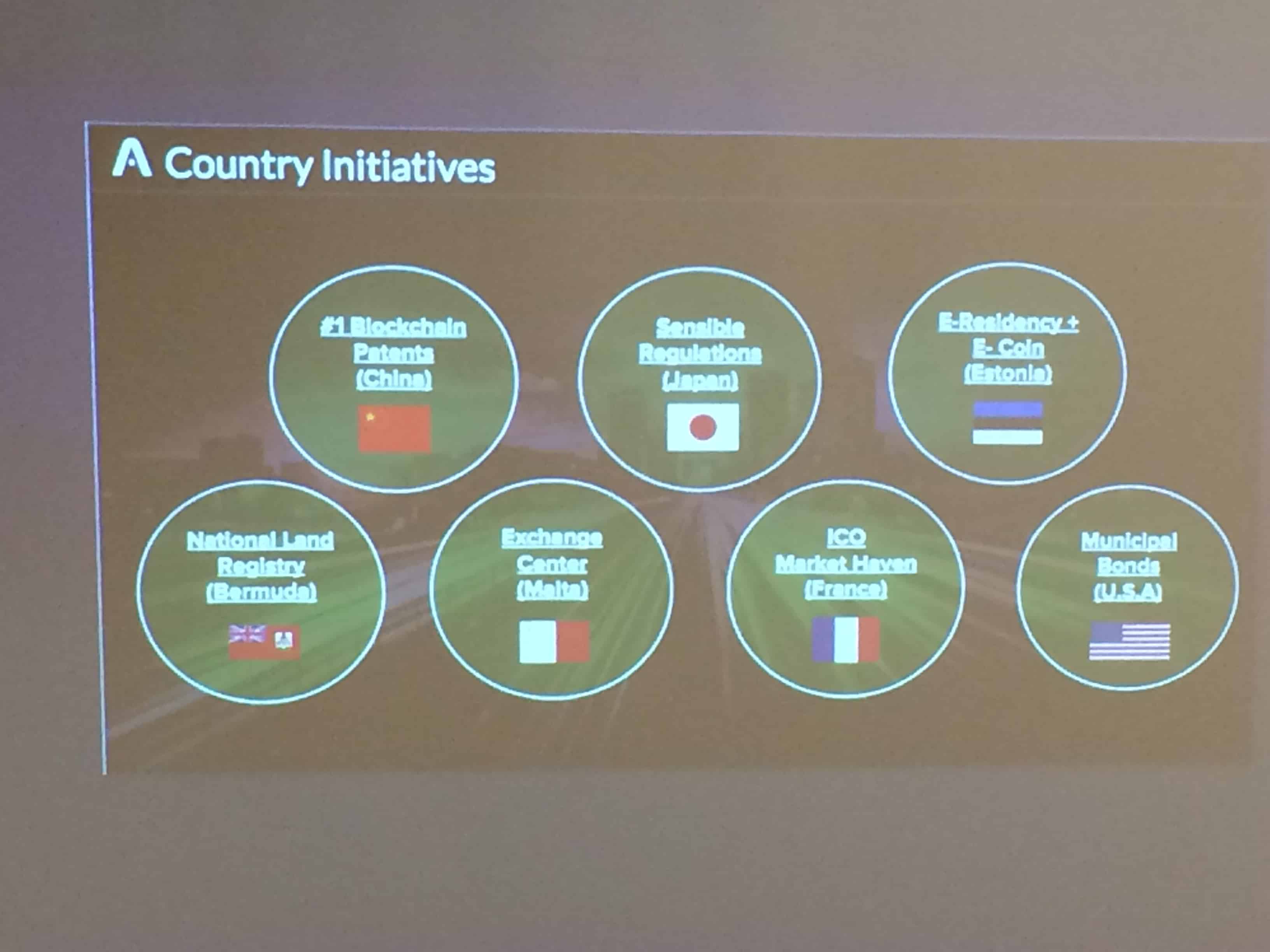
The US on the other hand constantly “seems to be slower than everyone else in the world when it comes to ground-breaking technology,” sighs CSO Jason Struhl. “We just can’t seem to wrap our heads around this stuff.”
The latter end of the presentation revolved around the imminent arrival of a wave of STOs in lieu of the legislatively cumbersome ICO. Things like asset-backed tokens, “stocks and equities 2.0,” and real estate all look like relevant crypto use-cases. But, as Abacus explained, this isn’t necessarily a new trend; since 2016, already $9 billion had been claimed from this exact token model.
The scheme is indeed dwarfed by the headline-claiming sums of the ICO, but it poses fewer regulatory hurdles and may even add a level of maturity to a market that desperately needs it.
Stop Saying “Women in Blockchain”
Following the summary of market trends, a round table later in the afternoon discussed another hip market trend; Women in Blockchain. Every week seems to reveal yet another article, another panel, or another pair of Barbie font bitcoin sweaters all of which claim to show how the decentralized movement will be a genderless one. Of course, this is a , especially in the wake of the bitcoin Miami after-party debacle and the “Brotopia” of Silicon Valley startup culture a recent memory.
At a certain point, however, meritocracy speaks for itself and as and (“The Crypto Divas”) explained, women want to get away from the whole glass ceiling metaphor.
Godsil told BTCManager that:
“There’s only a glass ceiling if you believe there’s one. And I just don’t feel that this is the case in the blockchain space.”
These same sentiments were echoed by Rianne Van Der Heijden of and Barbara Lampl of , both of whom are also turning their attention on the blockchain ecosystem.
“If I’m good enough, then I’m good enough,” said Lampl, “I don’t need a women’s panel. Let me speak with everyone else.”
UTrust Had Another Surprise Up their Sleeve
One of the more highly-anticipated events of the afternoon was CIO unveiling of MVP. The product, according to Castro, will look to upend the retail payment sector and compete with companies like BitPay to make crypto-to-fiat purchases even simpler.
The software indeed also seems relatively easy from a merchant’s perspective. In the case of a needed refund or simply responding quickly to open tickets, all of it does looks much more convenient than the BitPay offering. Plus, Utrust accepts a number of different currencies.
Folks who were interested in learning more were then invited to the UTrust booth to test out the product in real-time. “We had a whitepaper and an idea,” Castro told BTCManager, “And now we have a product that does exactly what we said it would do. It’s very exciting.”
FinTech Recap
At the conclusion of the conference, the founder Paul O’ Connell, also known for the , indicated his content with the release of the Amsterdam event. “We were able to get people together to talk about personalization and to start thinking of the user a bit differently. I’m happy with the launch,” O’Connell told BTCManager, “Hopefully it keeps growing more in the coming years and we can inspire more projects from the fintech community to join in.”
With so many great minds getting behind blockchain tech, it’s clearly early days in grasping it’s potential. Naturally, the coming together of curious entrepreneurs in one space has always been the best incubator for future innovation. Next year will undoubtedly reveal more than its fair share of developments in the space.
The post appeared first on .
In recent times bad actors have taken advantage of the largely unregulated nature of the entire digital currency industry to lance their . Amidst this backdrop, the United States Securities and Exchange Commission () has not been taking these attempts lightly. However, some heavy-hitting VC firms in Silicon Valley have urged the regulatory watchdog to soften its harsh grip on .
Watchdogs, Sledgehammers, and the SEC
to the Wall Street Journal, representatives from the California-based Venture capital firm and engaged top SEC officials in a serious discussion on March 28, 2018.
Included in the discussions were reputable legal luminaries from , , and . The formidable team asked the agency’s to give them concrete assurance that the SEC would not wield its sledgehammer on ICO projects in which they’ve invested.
Both VC firms have long been die-hard crypto investors, pumping a substantial amount of money into blockchain and digital currency-based firms including , , as well as several credible ICOs.
It’s worthy of note that both firms also contributed immensely to the success of the recently concluded CryptoKitties .
Categorize Some ICO Tokens as Utilities
On April 6, 2018, the chairman of the SEC, Jay Clayton the commission’s strict oversight on ICOs and crypto-related businesses, stating that the entire activity of the regulatory watchdog is in a bid to strengthen the digital currencies industry.
“I think if we don’t stop the fraudsters, there is a serious risk [of a] regulatory pendulum – the regulatory actions will be so severe that they will restrict the capacity of this new security,” he said
While the chairman admitted recently that not all ICOs are scam schemes, he does categorize almost all the ICO generated tokens as securities of which must be registered with the SEC. Clayton :
“For example, a token that represents a participation interest in a book-of-the-month club may not implicate our securities laws, and may well be an efficient way for the club’s operators to fund the future acquisition of books and facilitate the distribution of those books to token holders.”
“In Contrast, many token offerings appear to have gone beyond this construct and are more analogous to interests in a yet-to-be-built publishing house with the authors, books and distribution networks all to come,” he added.
Notably, Andreessen and USV have urged the regulatory watchdog to add more ICOs to the class of utility tokens, which do not constitute investments and therefore won’t be shut down by the SEC.
According to sources close to the matter, the agency may not offer a broad regulatory exemption as requested by the VC’s but officials may exempt projects that cap contributions and prohibit token holders from reselling tokens at a profit.
Most forward thinkers in the world, including IMF chairperson Christina Lagarde, have already woken up to the fact that blockchain and cryptos will the world. As such, there’s a need for favorable regulation to eliminate criminals from the cryptosphere.
At current, there seems to be a renewed confidence in the entire digital currency markets. The bulls are gradually taking charge as the price of bitcoin comfortably sits at at press time.
The post appeared first on .