April 17, 2026

Capitalizations Index – B ∞/21M

Washington State Recognizes the Validity of Blockchain Technology in New Bill

Washington State Recognizes the Validity of Blockchain Technology in New Bill

The Washington State Senate introduced bill SB 5638, an act that recognizes the validity of distributed ledger technology and aims to provide the legal recognition that blockchains were missing, the State’s authorities announced on January 28, 2019.

New Bill Aims to Encourage the Development of Blockchain and DLT

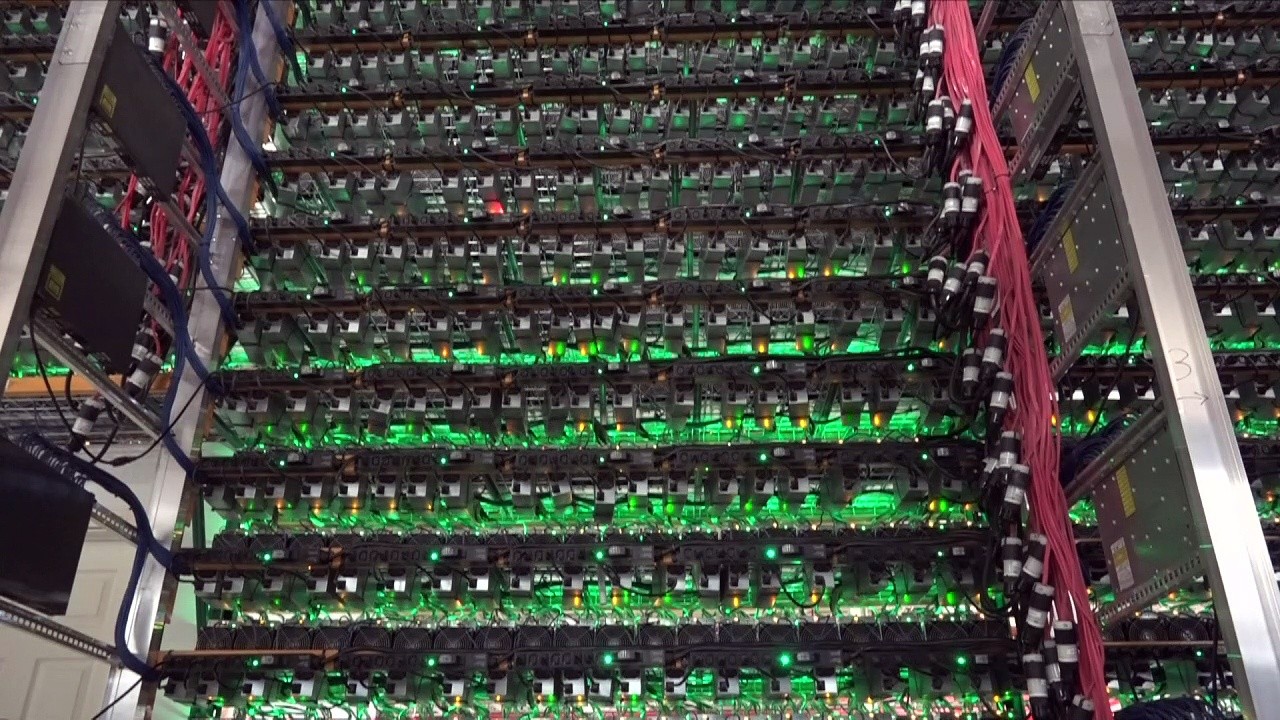
While the future of cryptocurrencies and the technology underlying them is still largely unknown, certain “crypto hotspots” have formed around the world offering a boost to the industry. One of those hotspots is the Washington State in the U.S., where low electricity prices and a welcoming government made it a promised land for crypto miners and blockchain companies.

Now, the state has introduced a new bill that aims to further encourage the development of distributed ledger and blockchain technology. According to the Washington State Legislature, the Washington State Senate introduced SB 5638, an act “relating to the recognizing the validity of distributed ledger technology.” The bill, introduced on January 25, 2019, will reportedly amend and add to an act that is already in state law.

The new bill aims to codify blockchain-enabled digital signatures and licenses, as well as provide the legal framework needed to enforce the newly implemented standards.

Amending An Old Authentication Act

The new bill was created as a revision of the “Washington Electronic Authentication Act,” an act passed back in 1994. The purpose of the original bill was to ensure that “electronic signatures,” which was a relatively new phenomenon then, were not denied legal recognition.

While there are many sections of the act that the new bill revised, the most important change is the addition of the blockchain sector to the list of things protected by the act. The bill also added two new definitions – the terms blockchain and distributed ledger technology were clearly explained in the document.

Despite the fact that Democrats control both houses of the Washington State Legislature, the bill is sponsored by four Republican State Senators. According to the Legislature’s official website, Senators Sharon Brown, Ann Rivers, Randi Becker, and Shelly Short have all backed the bill, which has completed its first reading as of January 28, 2019.

Advertisement

Advertisement

The bill is now headed to committee, where it will be subjected to detailed analysis by the state authorities. After sufficient research has been done on the subject, the committee will go ahead with the proposed legislation. And while the bill itself won’t bring any meaningful change unless it’s passed into law, giving the space formal recognition could accelerate the growth of the state’s already booming crypto industry.

Washington state recognizes the validity of blockchain technology in new bill

Like BTCMANAGER? Send us a tip!
Our BTC Address: 3AbQrAyRsdM5NX5BQh8qWYePEpGjCYLCy4

Published at Tue, 29 Jan 2019 03:00:50 +0000

Previous Article

Bitcoin cash intraday

Next Article

Ethereum is Hard Forking! Learn About the Constantinople Upgrade

You might be interested in …

GRAFT Blockchain:GRFTが上場しトレード可能に

YouTube: blockchain GRAFT Blockchain:GRFTが上場しトレード可能に GRAFT Blockchain:GRFTが上場しトレード可能に GRAFT BlockchainのGRFTがTRADEOGR… チャンネルをサポートしていただきありがとうございます! より有用… more info… YouTube: litecoin 🌎crypto market recap 3.30.18 (bitcoin, ethereum, litecoin + alts technical analysis) chat room + crypto alerts: http://bit.ly/th_chat precision trading course: http://bit.ly/th_tradingcourse […]

Bitgo announces new settlement system for institutional clients

BitGo Announces New Settlement System for Institutional Clients

BitGo Announces New Settlement System for Institutional Clients Blockchain security company BitGo is launching a new service for institutional clients: a clearing and settlements system that operates off-chain. BitGo announced this new service in a […]

The Bitcoin Block Clock Jr. Is Half Full Node, Half Work of Art

The Bitcoin Block Clock Jr. Is Half Full Node and Half Work of Art

bitcoin is a decentralized system of digital cash in which users don’t need to trust anyone else with their money; however, the full benefits of this technology are only seen when users operate a full node on the network. The vast majority of bitcoin users do not operate their own full nodes, but one man is trying to change that with a piece of hardware he calls the bitcoin Block Clock Jr.

There are many good reasons for individual Bitcoiners to operate a full node. Full nodes are responsible for validating transactions and blocks on the bitcoin network. Only by running full nodes can users know with full certainty that they received a valid payment. Additionally, the more users that run full nodes, the more decentralized the bitcoin network is, making it harder to shut down or corrupt.

And as Sia Co-Founder David Vorick pointed out in a talk at this year’s MIT bitcoin Expo, those who do not operate their own full nodes do not get a say in the matter when hard forks are deployed on the network. “If you’re not running a full node … your opinion on whether or not you like a hard fork is less relevant because, ultimately, if you’re not validating the rules and someone gives you a transaction following a different rule set, you don’t have a way to detect that,” he explained.

Running a full node, however, has been a rather expensive proposition. As a result, larger, economically invested entities that are better able to support full nodes have had more of a say.

According to Vorick, users can be dragged along with miners and large businesses if the cost of running a full node is too high: “If full nodes are expensive to run, only people who are capable of running nodes really have any say in what happens in a contentious upgrade.”

Matthew Zipkin is the man behind the bitcoin Block Clock. A sound engineer by trade, he has been working in his spare time on creating full nodes that are both affordable and fun to use. During a recent discussion with bitcoin Magazine, Zipkin revealed his desire to create a piece of hardware for operating a low-cost bitcoin full node that isn’t boring.

A bitcoin Full Node That Isn’t Boring

When commenting on his reasoning for creating the bitcoin Block Clock, Zipkin pointed to the full node devices made by Bitnodes before they were acquired by 21.

“I always wanted one, but they disappeared when they got bought out, so I decided to build my own,” said Zipkin.

While there are other full node options out there, such as Bitseed, Zipkin wanted to make something that was more than a piece of computer hardware that would sit on the floor next to a router. Zipkin wanted to turn a bitcoin full node into a work of art, and that’s exactly what he did.

Zipkin built the first version of the Bitcoin Block Clock last year, and it was on display at the SF Bitcoin Meetup’s “Proof of Art” event in May of 2016. After receiving positive feedback at the event and on Reddit, Zipkin decided to make a smaller version of the full node hardware to sell.

The bitcoin Block Clock included a screen that displayed various live information about the bitcoin network. Zipkin put the original version of the bitcoin Block Clock for sale on OpenBazaar and Purse.io, but it hasn’t sold.

“I priced it pretty high because it’s art and I love it and kind of want to keep it,” explained Zipkin. “So of course it still has not sold.”

Creating the bitcoin Block Clock Jr. With Bcoin

In an effort to create a version of the bitcoin Block Clock that could be produced at a lower price, Zipkin turned to Raspberry Pi Zero and Bcoin, which is an implementation of the bitcoin protocol written in Node.js.

“I discovered Bcoin was super easy to install and use, and the codebase was easier for me to review because it’s in Javascript instead of C++, and was built from scratch by a small group of developers (basically just two guys), so everything is really well labeled and consistent,” explained Zipkin.

Of course, the problem with using SPV mode is that it’s not a full node and the device won’t receive all of the information related to a new bitcoin block as it’s mined on the network. Zipkin opted for the pruned full node option in Bcoin in an effort to lower the system resources required to operate the node on Raspberry Pi Zero.

“With pruning, I get all the fun block details I wanted to display,” said Zipkin. “I even submitted a pull request (which got merged!) to Bcoin to make my application work even easier.”

Zipkin described the LED displays on the bitcoin Block Clock Jr. as follows:

“The bitcoin Block Clock Jr. has two LED rings. The outer ring of 24 LEDs indicates recent blocks. Each LED represents 2 minutes, and they “tick” clockwise around the ring. The color of the LED is determined by the block’s version (BIP 9 version bits combined with keywords from the Coinbase scriptSig like “/EXTBLK” or “/EB1/AD6/”). The inner 16-LED ring indicates the progress of the current difficulty period (2,016 blocks, or about two weeks). It starts blue and gradually turns more and more red as the meter fills up. The tiny little display screen indicates some details about the latest block: height, size, version (and extra scriptSig version) and the adjustment period progress. I added a little web interface so I could turn the lights off at night without having to SSH into the Pi every time.”

front-back

An Economical Way to Contribute to the Network

While Zipkin noted that the original bitcoin Block Clock displays much more information and also comes with full wallet functionality, he also pointed out that the latest model proves that bitcoin users only need about $20 to run their own full nodes (at least in pruned mode).

Having said that, Zipkin admitted that the bitcoin Block Clock Jr. can struggle to keep up with the network at times.

“Bcoin plus my Python script and all the GPIO display output just barely hangs in there on this tiny underpowered computer,” said Zipkin. “The Python script has a method to restart Bcoin when it crashes and monitor it as it catches up to the network.”

All of the technical details of the bitcoin Block Clock Jr. are open source and can be found on GitHub.

Zipkin has now placed the bitcoin Block Clock Jr. for sale on OpenBazaar and Purse.io.

The post The Bitcoin Block Clock Jr. Is Half Full Node, Half Work of Art appeared first on Bitcoin Magazine.