June 9, 2026

Capitalizations Index – B ∞/21M

Vitalik Buterin: Ethereum Will Eventually Achieve 1 Million Transactions Per Second

Vitalik buterin: ethereum will eventually achieve 1 million transactions per second

Vitalik Buterin: Ethereum Will Eventually Achieve 1 Million Transactions Per Second


Vitalik buterin: ethereum will eventually achieve 1 million transactions per second
Advertisement

Get exclusive analysis and cryptocurrency insights on Hacked.com for just $39 per month.

Vitalik Buterin, the creator of Ethereum, has explained in a recent OmiseGO AMA session that with second-layer solutions such as Sharding and Plasma, the Ethereum network will eventually be able to process 1 million transactions per second and potentially more than 100 million transactions per second.

Scalability Struggles of Leading Blockchain Networks

Previously, at various conferences and presentations, Buterin emphasized that the Ethereum blockchain protocol and decentralized blockchain networks, in general, are struggling to deal with scalability issues.

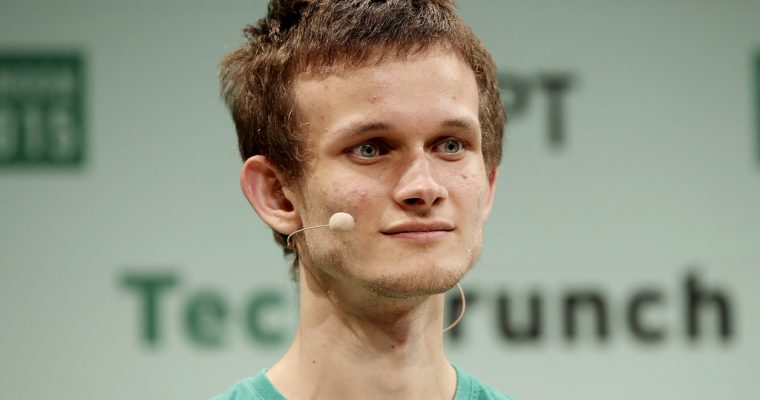
In September 2017, during an interview with venture capital investor Naval Ravikant at the Disrupt SF 2017 conference hosted by TechCrunch, Buterin noted that bitcoin and Ethereum have been processing three to six transactions per second at peak capacity. He added that for the blockchain to support large-scale payment networks such as Visa, stock markets like Nasdaq, and Internet of Things (IoT) networks, it will have to process hundreds of thousands of transactions per second.

bitcoin is currently processing a bit less than three transactions per second and if it goes close to four, it is already at peak capacity. Ethereum has been doing five per second and if it goes above six, then it is also at peak capacity. On the other hand, Uber on average does 12 rides per second, PayPal several hundred, Visa several thousand, major stock exchanges tens of thousands, and in IoT, you’re talking hundreds of thousands per second,” said Buterin.

During the OmiseGO AMA session, Buterin stated that second-layer scaling solutions that are currently being tested on the Ethereum testnet could enable the Ethereum blockchain network to support large-scale decentralized applications with millions of users by taking an innovative approach in optimizing the blockchain.

Sharding in specific splits a blockchain network to shards which are then equipped with a group of nodes that are tasked to process information of certain shards. With Sharding enabled, all nodes on the blockchain are not required to process every single piece of data settled on the blockchain, optimizing the process of settling information.

Plasma, a solution developed by Buterin and Lightning Network co-author Joseph Poon, operates similarly to bitcoin’s Lightning Network, as it enables Ethereum to process micropayments by creating child blockchain networks within the main blockchains to process information more swiftly, leveraging the security of the main Ethereum protocol and thus not leaving the network vulnerable to potential attacks.

“The reason I think layer 1 and layer 2 [networks] are complementary is because ultimately, if you look at the math, the scalability gains from the layer 1 improvements and layer 2 improvements do ultimately multiply with each other. If you have a Sharding solution, the Sharding solution itself might increase the scalability of Ethereum by a factor of 100, or eventually even more. But then, if you do Plasma on top of the scalability solution, then what that means is, you’re not just doing 100 times of the amount of activity but you are doing 100 times the amount of entrances, the amount of exits, and despite resolutions,” explained Buterin.

1 Million Tx / Second

Buterin further noted that the synergy between layer 1 and layer 2 solutions would increase the scalability of Ethereum by 10,000x, allowing the network to process millions of transactions per second and supporting most applications.

“So if you get a 100x from Sharding and a 100x from Plasma, those two basically give you a 10,000x scalability gain, which basically means blockchains will be powerful enough to handle most applications most people are trying to do with them,” Buterin added.

Featured image from Flickr?Techcrunch.

Follow us on Telegram.
Advertisement

Published at Sat, 02 Jun 2018 23:41:28 +0000

Ethereum News

Previous Article

ShadowCash (SDC) Price Alert, Chart & News on BitScreener.com

Next Article

Santiment (SAN): The Bloomberg for Cryptocurrencies

You might be interested in …

ZFX Token Fuels Investor Experiential Learning

ZFX Token Thumb

Common thinking suggests that investment markets are against you. 

This includes stocks, mutual funds and, of course, cryptocurrency. It’s in these sectors where unfair market advantages such as investors with better access to information and high-frequency trading are among the barriers that the average everyday trader is facing. This is why over half of investors lose money during their first year of investing. 

But one project believes there is a better way forward. ZFX Token, created by ZeroSumMarkets — a purveyor of peer trading foreign exchange (FX) competitions — aims to do that by revolutionizing the retail trading experience. In balancing the playing field by giving users a way to learn, test and compete against other traders, ZeroSum mitigates many of the trading fee barriers and market forces that hinder retail trader success. 

This innovative model is predicated on rewarding participants for their inherent skills as traders. It does this by eliminating trading fees and access to unfair advantages commonly seen in the FX world. In reducing costs, unfair algorithms, risks of trust and preferential access to information, ZeroSum opens up windows of possibility for retail traders to learn, experiment and compete against peers — and earn while doing it. 

In short, ZeroSum is a live ecosystem where FX traders compete head-to-head in skill-based competitions. No trading fees. No high-frequency traders. No algorithmic trading.

The ZFX Token fuels the ecosystem by serving as the conduit for exchanging and extracting monetary value from these fantasy competitions.  

Built on the Ethereum blockchain, the tokens are designed to be highly transferable. It’s here where the ZeroSum platform aims to be the platform for all blockchain prediction markets competing against the likes of Augur and others in this nascent niche. Through the enabling of third-party application programming interface (API) support, a sentiment engine and the opportunity to create competitions tied to a data feed, the opportunities are immense. 

This ZFX tokenized model was seeded by a number of Wall Street traders who together brainstormed ideas about how to teach retail trading investors the tricks of the trade. They applied the concept of fantasy football to the world of trading so that both new and experienced traders could practice, learn and compete against one another. It’s designed to function as a peer-versus-peer platform, where winners of each competition take home real money. (ZFX tokens can be sold on the market for USD or other currencies.)

This concept, which has been in development since 2016, currently has thousands of active users who have tested it in beta. Over $300,000 of seed capital was initially raised for platform development and the beta launch. 

ZeroSum fantasy trading is experiential in the sense that users can participate without risking a ton of capital for FX trading or for cryptocurrency. By way of example, an otherwise reluctant newbie may see it as a way to test new investment strategies or try new options. For these reasons, it’s a great way to get started for those unfamiliar with the deeper nuances of the industry. 

The Road Forward

The ZeroSum fantasy trading target market consists of FX, stock, cryptocurrency and retail investors in the U.S., primarily in Chicago and on the East and West Coasts. Three emerging trends are informing this path ahead: 

  1. FX markets continue to move the most amount of money per day.
  2. Cryptocurrency markets are highly volatile and will get more so as institutional investors pour into the space (through futures trading, options trading and more).
  3. Educating investors through a hands-on approach, where they can test, try and learn — without having to invest a lot of money or spend huge amounts on FX or cryptocurrency trading fees.

ZFX aims to become the fundamental means of exchange for fantasy competitions of any type that have a reliable data feed. Think FX competitions, stock trading competitions, weather prediction competitions, traffic prediction competitions — literally anything that has a reliable and accurate data feed will be possible.

The ZFX token sale is scheduled to begin January 3, 2018. This will allow further development to take place in terms of the platform, including more trading competitions as well as a sentiment data feed to find alpha signals. It is expected that the token will be listed on exchanges shortly thereafter. 

Included is a token bounty program where participants can earn up to 75 million ZFX tokens. It allows users to participate interactively and earn entries for every new participant they bring into the program.

Click here for more information and to sign up.

Note: Trading and investing in digital assets is speculative and can be high-risk. Based on the shifting business and regulatory environment of such a new industry, this content should not be considered investment or legal advice.

The post ZFX Token Fuels Investor Experiential Learning appeared first on Bitcoin Magazine.