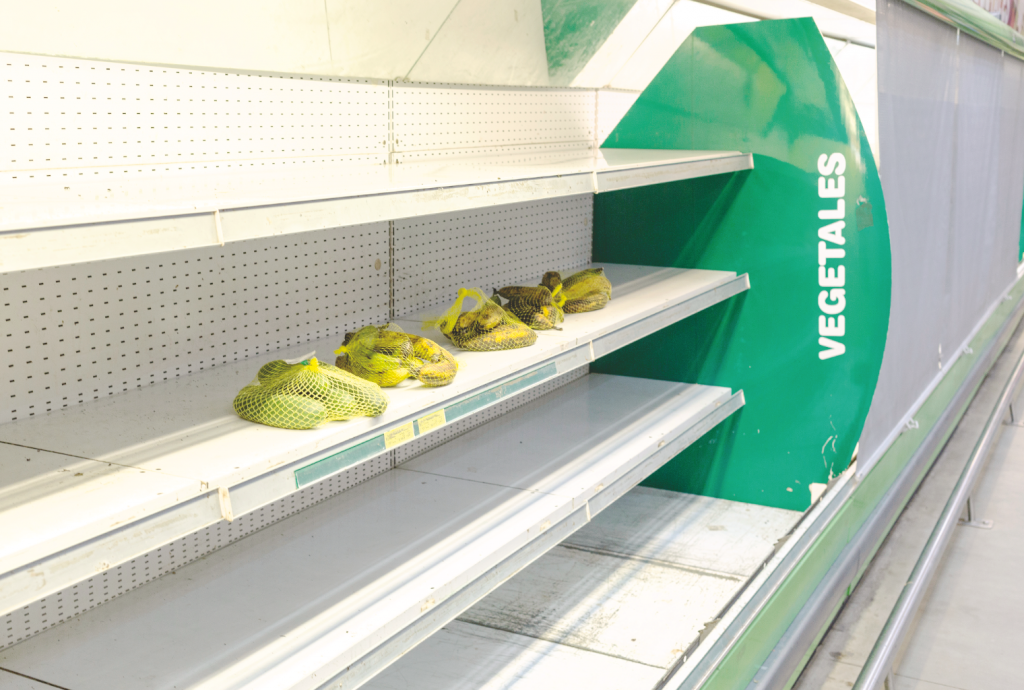
As the situation in Venezuela intensifies, a local user details how he and his family use the to survive the country’s ongoing crisis. Keeping all of his money in , he only exchanges small amounts into the hyperinflating bolivar when necessary.
Also read:
bitcoin Not Bolivar
Carlos Hernández, a Venezuelan living in Ciudad Guayana, told his story in The New York Times on Saturday about how is saving his family throughout the ongoing crisis in Venezuela. Citing the bolivar’s daily inflation rate of around , he wrote:
I don’t own bolívars, Venezuela’s official currency. I keep all of my money in . Keeping it in bolívars would be financial suicide.
He explained that he does not have a bank account abroad and “With Venezuela’s currency controls, there’s no easy way for me to use a conventional foreign currency like American dollars.”
Hernández revealed that has enabled him to cover his household expenses on his own, noting that his father, a government employee, earns $6 a month and his stay-at-home mom has no income.
His brother also relies on . Juan, a 28-year-old lawyer, became a freelancer because “in times of hyperinflation, everyone is constantly getting poorer, including a lawyer’s clients,” Hernández detailed. He added that his brother “had to turn to to get paid” because he could not use Paypal, a common way for websites to pay freelancers, due to “exchange controls here allow[ing] Venezuelan banks to use only local currency.” Moreover, helped Juan avoid his money being seized at the borders when he tried to move to Colombia. “Venezuelan military personnel at the borders have a reputation for seizing the money of people who want to leave,” Hernández exclaimed. Overall, he concluded:
You could say that have saved our family.
Converting Crypto Into Bolivars
In order to buy everyday necessities such as milk, Hernández explained that must be converted into bolivars. He uses Localbitcoins to find buyers who use the same bank he does so “the wire transfer can go through immediately,” he said, elaborating:
I can’t change too many bitcoins at once, though. The government doesn’t monitor transactions (yet), but it does monitor transactions in bolívars — and any worth about $50 or more will automatically freeze your account until you can explain to your bank where the funds come from.
Localbitcoins has been a popular platform for Venezuelans. The volume on the exchange has been steadily rising, hitting a record high of 2,487 for the week ending Feb. 9 before settling at 1,939 last week.
Another international exchange platform, Paxful, ..com last week that it also saw record volume in Venezuela, which increased 74.66 percent compared to last year. In addition, the number of trades on the platform increased by 118 percent to an average of 61,534 transactions monthly.
Recently the government of Nicolas Maduro decrees to regulate crypto activities in Venezuela, including taxing .
Charities Using bitcoin
Like Hernández, charities in Venezuela have also been able to benefit from ’s borderless nature. One such charity is Venezuela, a nonprofit organization that uses to raise funds to aid Venezuelans while offering education in basic economics.
For Venezuela’s International Children’s Day last year, the nonprofit’s humanitarian aid project collected donations from Paxful and others. It then gave to a soup kitchen that feeds 1,500 people daily, two orphanages, and distributed 200 hundred meals to people on the street.
On Feb. 10, Eatbch, a nonprofit drive powered by cash, its one-year anniversary. Within a few months of launch, the charity was “giving thousands of meals each week in 23 locations in 6 states of the country,” its co-founder described.
What do you think of how helps Venezuelans? Let us know in the comments section below.
Images courtesy of Shutterstock and Coin.dance.
Need to calculate your holdings? Check our section.
Published at Mon, 25 Feb 2019 04:53:35 +0000