
January 25, 2026

Capitalizations Index – B ∞/21M

Venezuela Starts Regulating Cryptocurrency Remittances

Venezuela starts regulating cryptocurrency remittances

Venezuela Starts Regulating Cryptocurrency Remittances

Venezuela starts regulating cryptocurrency remittances

The Venezuelan government has begun regulating cryptocurrency remittances. The regulator has set a monthly limit and will be collecting commissions of up to 15 percent of the transaction amount. Additionally, new details of its comprehensive registry of crypto service providers have been announced.

Also read: Indian Supreme Court Moves Crypto Hearing, Community Calls for Positive Regulations

Regulating Crypto Remittances

The National Superintendency of Crypto Assets and Related Activities (Sunacrip), the regulator of all crypto activities in Venezuela, announced on Friday that the new regulation for remittances using cryptocurrencies has entered into force. The decree enacting this regulation was published in the country’s Official Gazette No. 41.581.

Venezuela starts regulating cryptocurrency remittances

The decree establishes “the requirements and procedures for the sending and receiving of remittances in crypto assets to natural persons in the territory of the Bolivarian Republic of Venezuela,” Sunacrip explained.

According to the decree:

The sender of the remittances referred to in this ruling is obliged to pay a financial commission in favor of Sunacrip up to a maximum amount of 15% calculated on the total of the remittance.

The minimum commission Sunacrip charges is “equivalent to 0.25 euros [~$0.28] per transaction,” the gazette reads.

According to the text of the regulation, Sunacrip now has the power to establish the remittance limits, set values of cryptocurrencies in sovereign bolivars, specify tariffs, and request data from the issuers and receivers involved in the transactions, local news outlet Criptonoticias reported.

The monthly limit for sending remittances is equivalent to 10 petros (PTR), Venezuela’s national currency that the government claims to be a cryptocurrency backed by oil, gold, diamond and other natural resources. “This cap translates into US $600 per month, according to the quote set for the PTR. Any amount that exceeds this limit will require the Sunacrip endorsement, which will authorize up to a maximum of 50 PTR ($3,000),” the publication elaborated.

Venezuela starts regulating cryptocurrency remittances

Following Sunacrip’s announcement, some people took to Twitter to voice their opinions about the new rules. One user commented that these rules are “the most absurd thing I’ve seen.” Another user tweeted, “An absurd regulatory framework. Instead of promoting the adoption of crypto assets, [they] are trying to centralize something that its genesis is the opposite.”

Crypto Service Registry

Following the initial enforcement of crypto regulation in Venezuela on Jan. 31 with the publication of Official Gazette Number 41.575, the government has proceeded to enact rules specific to the cryptocurrency service registry.

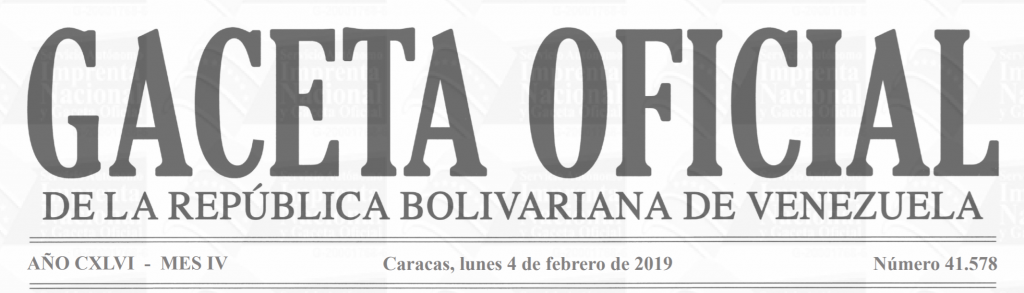
The Superintendent of Sunacrip, Ramirez Joselit, announced on Feb. 5 that the regulation for the “Integral Registry of Services in Crypto Assets [Risec]” has entered into force with its publication in Official Gazette Number 41.578.
Venezuela starts regulating cryptocurrency remittances

The Ministry of Popular Power for Communication and Information explained that “Natural, legal, public and private persons, communal councils and other organizations of the People’s Power that intend to carry out activities related to the Integral System of Crypto Assets may be registered.”

According to the decree, Sunacrip is in charge of Risec “which will systematize the information related to the identity and other recurrent data of the user of the Integral System of Crypto Assets and related activities.” The regulator will designate a unit “responsible for the control, monitoring and verification of updating of the data contained in the Risec.”

What do you think of Venezuela regulating crypto remittances and keeping a registry of crypto service providers? Let us know in the comments section below.


Images courtesy of Shutterstock and the Venezuelan government.


Need to calculate your bitcoin holdings? Check our tools section.

Tags in this story
Bitcoin, BTC, crypto, Cryptocurrencies, Cryptocurrency, Decree, Digital Currency, N-Economy, official gazette, registry, Regulation, remittances, Sunacrip, Venezuela, Virtual Currency

Venezuela starts regulating cryptocurrency remittances
Kevin Helms

A student of Austrian Economics, Kevin found bitcoin in 2011 and has been an evangelist ever since. His interests lie in bitcoin security, open-source systems, network effects and the intersection between economics and cryptography.


Published at Mon, 11 Feb 2019 00:58:47 +0000

Previous Article

The man behind two gold ETFs says this about bitcoin

Next Article

Venezuela Starts Regulating Cryptocurrency Remittances

You might be interested in …

Virtual Reality Business Networking on The Blockchain

Shares Per Hour, better known as SPH, takes business networking to the next level using the innovation of virtual reality (VR) and blockchain technologies.

[Note: This is a press release.]


You’re probably familiar with LinkedIn, if not, it’s a site where professionals can connect & network with each other through a website and mobile app. These current web and mobile app based services are fast becoming hard to use and outdated. SPH brings new life and excitement to the world of “Business Networking”, incorporating distributed technology that brings people closer together than ever before.

The improvements come from utilizing the three leading technologies in computer science: VR; Blockchain and Artificial Intelligence. Let’s take a more in depth look at how these breakthrough technologies aid in improving coordination, leading to increased productivity and time savings for businesses and everyday life.

Virtual Reality (VR) Virtual Reality Becomes the New User Experience (UX)

Shares Per Hour demonstrates the power of a deeply immersive work space. No longer are you limited to the size of a computer screen or mobile phone. Now your entire field of vision is accessible and functional. Don’t worry about access to your legacy desktops and cell phones, you still have them right there in the virtual office space of your choice.

There’s no need to pull your cell phone out of your pocket, instead, you can instantly see your phone’s screen and resize it however you like in futuristic holographic representations right in virtual reality. The same goes with your desktop screen and even your team members computer screens. Instantly teleport over to your co-worker’s office to collaborate, even at the virtual beach.

SPH expands much further into the VR immersive user experience but we will first explain the foundation that Virtual Reality will sit on, distributed ledger blockchain technology.

Blockchain Allows SPH to Progress Past a Simple Business Networking Project

The blockchain enables smart contracts to be created between parties. After negotiating a deal in the virtual world, users can close the deal with a “virtual hand shake” backed up by a smart contract running on the blockchain. Secure “per hour” payment plans can be set up in place between users.

User studies have shown “per hour” deals are the quickest to close and begin, Workers actually receive payment every hour, in real time, which aids in the workers’ confidence. Employers are protected through the collaborative UX and the reputation system. We will talk more about this in the artificial intelligence section.

Artificial/Virtual Intelligence (AI/VI)

A great thing about the blockchain is the ability to source it for data, collecting and analyzing this public data for future use. Sourcing data is key to creating a useful AI. A top SPH feature using AI is the VR hiring agent or what some people might call a VR head hunter. This is where users go through a more personal and immersive experience describing themselves and their ambitions to a virtual hiring agent who can aid in determining where they best fit into the digital work force.

The same process happens with employers. In the end, AI/VI algorithms are used to match employees and employers together and schedule interviews. AI is not used to do smart contracts between users. Users interact with each other in the virtual world and come to agreements. AI is used to save time and the human interaction is used to make final confirmations on business networking agreements.

For More Information

If you would like to learn more about SPH, visit the official website: https://SharesPerHour.com.

Read the in depth technical blackpaper or view the friendlier overview and demo videos. The ICO token sale is currently under way. It’s free to join the website. We strongly recommend joining the website since registration for the website will close 72 hours prior to the end of the ICO. Only previously registered members will be allowed to participate in the ICO during the last 72 hours.


Images courtesy of Shares Per Hour

The post Virtual Reality Business Networking on The Blockchain appeared first on Bitcoinist.com.