September 25, 2026

Capitalizations Index – B ∞/21M

Value Investing In Russia And Other Emerging Markets |

Value investing in russia and other emerging markets |

Value Investing In Russia And Other Emerging Markets |

Value investing in russia and other emerging markets |

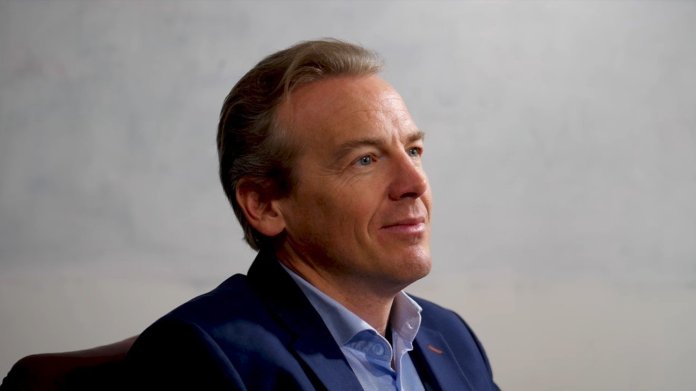
Axel Krohne is the head of the San Diego based firm Krohne Capital. There he is managing a fund with focus on emerging markets.

Image source: YouTube Video Screenshot

In this interview we mentioned the following:

  • At the beginning Axel explained why is he not investing in India and China
  • At 01:18 we are talking about the return he expects
  • At 02:22 we took a deeper look in the fund and talked about the question, if Russia is investiable
  • At 04:04 we talked about banks in Russia
  • And at 05:00 we covered banks in Africa
  • At 06:50 Axel Krohne explains why he is just buying the top banks.
  • At 07:37 he gives insights in the state of stock exchanges and the investing culture in Africa
  • At 09:40 he tells more about trading in developing countries, like Ghana
  • At 11:12 he explains his criterias to invest in a company
  • At 14:15 he is talking about dividends in the investing process
  • At 15:04 we asked him: Is there a culture of buybacks?
  • At 15:45 we discussed if there is activism
  • At 16:27 we talked about currencies
  • At 18:04 we took a look at the research process
  • At 20:06 we talked about the coverage of his stocks
  • At 21:29 we ended with a talk about the holding period of his stocks

Risky Roulette Or Rich Returns? Axel Krohne On Value Investing In Russia And Other Emerging Markets

Transcript

Hello Axel. Welcome to the valueDACH YouTube channel. You’re an emerging market value investor but you don’t invest in China or India. Why is that so?

Thank you very much for that question. I. Like to prefer I mean I’m for investing in markets that are easier to understand. And I’ve been to China I’ve been to India and both of them obviously huge country for massive populations and a lot of simultaneous competitive forces that I just don’t get it can get a grasp.

I just feel too much of an outsider.

On top of that in China particularly too many frauds have been going on that I don’t trust most companies books and therefore I avoid them in your fund.

What kind of your time do you expect. I don’t.

Have expectations for the fund however for every individual stock that I’m buying I expect at least to double my money.

And it’s not that I succeed with that all the time. But. I think I have to have a few companies that do very well a few stocks that do very well in order to make up for losses. So the stock has 10 20 30 percent upside in my mind.

I would not I would not touch it. It’s not enough.

Look at bit deeper in your fund. You are investing in countries like Russia, Nigeria, Egypt, Ghana and also in Asia and some countries Vietnam for instance. But take a look at Russia. A country where people say it’s not impossible. What’s your opinion on it.

I see. I totally disagree. I think it is very good Festival and I’ve seen many great companies make great businesses attractive stocks.

And many of those companies are managed for the benefit of their shareholders. And that’s all that elders including the minority shareholders.

And not they’re not run by the Kremlin. So I like Russia at the right price. Can you name some companies in Russian who like the certainly buy one company that comes to mind one of the biggest holdings is novel whisky ports.

Trades in the in Russia.

Moscow quite actively quite liquid. It’s not very investable for Germany Frankfurt by that support all the way.

And MGP is a symbol and the stock’s trading at the very attractive valuations at the port. Business is it quazi monopoly and this stock has bought north of 20 percent free cash flow yield derivative you to 7 8 percent 6 or so and that’s a company I would buy.

Day in day out bought that much more valuation but even at this appreciated prices I think it’s still attractive. We used to own the Moscow Exchange which runs the stock exchange a Moscow monopoly business not growing tremendously but still fantastic business.

And that I like a lot. What’s your opinion on banks in Russia. I like him. I like I like Spevak.

I think that’s a great business it’s a great man highly profitable bank in terms of return on equity and the stock is cheap. We currently own Bank of some book in the ABH fund and that’s as well.

In not as good a business because we chose equities pretty lol it’s the T high single digits 8 9 percent or so but then you’ve got to stop that trade at three times earnings 70 percent discount to book value. So I think it’s a very attractive stock that is one off site.

Without anything really good has to happen. It’s priced it’s a major crisis but there’s not. They just recorded record profits the last quarter.

Length in the financial sector but go to Africa having to take a look at the financial sector here and banks here like banks there to.

The post Value Investing In Russia And Other Emerging Markets appeared first on ValueWalk.

Published at Mon, 18 Mar 2019 04:09:06 +0000

Previous Article

Ethereum Price Analysis: ETH Targets New Monthly High

Next Article

Bank of Mexico’s Attempt to Regulate Crypto ‘Is a Disaster,’ Exchange CEO Explains

You might be interested in …

Tim Swanson: Enterprise Blockchain is in a "Trough of Disillusionment”

LTB_Swanson.jpg

There are few people who have worked in the blockchain technology space for so long and maintained such a seemingly disinterested and skeptical perspective on the emerging technology as Tim Swanson. Through numerous books and a blog, Tim has shown a knack for going out of his way to do deep market research within the blockchain space.

This week on Let’s Talk bitcoin, Tim Swanson, Director of Research at Post Oak Labs, talked with Epicenter’s Brian Fabian Crain and Sebastien Couture.

His most notable work within the space has happened as Director of Market Research at R3, the first blockchain enterprise consortium for the financial services industry. During his time at R3, Tim assessed several hundred entities — companies, startups and universities — working on some type of blockchain initiative. His experience gave a full range of good, bad and ugly business operations and blockchain propositions that existed in the early stages of this industry.

Whether you agree with his stoic perspective or not, it may be a good remedy for the mania that has resulted from bitcoin’s phenomenal price increase this year. As new investors flood in the crypto community and more and more people begin talking about blockchain technology, it’s never a bad idea to be reminded of how the industry has developed.

“Historically, we’ve seen a lot of manias happen in tech: social media, solar panels, AR, VR, etc. I don’t see the benefit in becoming a fanboy in anything at this early, early stage.”

On the current state for the enterprise blockchain market

Swanson proposed that there has been a significant shift of attention in 2017 from enterprise blockchain to Initial Coin Offerings (ICOs), due in large part to the amount of money that has been raised this way. Referencing the Gartner Hype cycle, Swanson believes blockchain enterprise adoption is currently in the “trough of disillusionment.” This stage comes after the initial peak of expectations where interest wanes as experiments and implementations fail to deliver. This is also where many producers of the technology either give up or receive continued investment for improving the products to the satisfaction of early adopters.

BTC-gartner-hype-cycle-graph_(1).png“The problem as a whole for the enterprise blockchain space is that it hasn’t managed any of the expectations it initially set out to accomplish. In the beginning, there were brash claims like putting the entire United States equities market on a blockchain in less than a year. Over time, it became clear that something like that was not possible. Because of the unmanaged expectations coupled with the retail enthusiasm coming from the consumer side seeing how blockchain could help them, where in reality, enterprise is a long-term cycle and build-out, many people lost interest once they realized they could make money much faster through ICOs.”

Swanson listed a number of startups working on the enterprise blockchain side in New York, London and the west coast, including Digital Asset, ConsenSys Enterprise, Cobalt DL and Ripple, among others, as well as Clearmatics and R3, both of which Swanson still advises.

“If you look at funding for those companies — as an aggregate they’ve raised maybe $400-450 million dollars. For comparison — and it’s not an accurate comparison — ICOs in the month of June raised over $600 million dollars. It was a shift in enthusiasm from people who wanted to get very rich, very quickly. The fact of the matter, even for ICOs, is that you can’t bypass the requirement-gathering necessary to build a platform that can work with existing institutions and existing regulatory and industry requirements.”

“You can’t just build an aeroplane, convert it into a helicopter then sell it to a bunch of helicopter enthusiasts. Ultimately, somebody will have to build applications and that’s why building an ecosystem and community is so important.”

Why Aren’t There Any New Enterprise Blockchain Companies?

Swanson attributed the lack of new enterprise blockchain companies to the difficulty new startups face in working against the existing competition within the space. Established companies have a head start in acquiring the essential ingredients for success in the enterprise blockchain space: capital and some kind of partnership with regulators or players of the existing infrastructure.

Furthermore, Swanson suggested that most of the obstacles encountered by enterprise blockchain companies could be easily surmounted by larger players:

“Large enterprises like Oracle, IBM, Sap, Microsoft have the capacity and budgets to acquire any of the enterprise startups. Oracle alone could acquire all the enterprise startups themselves and not blink much of an eye.”

Transitioning from Proof of Concept to the Pilot Stage

Swanson stated that one of the most critical obstacles for enterprise blockchain startups to be mindful of are the principles of financial market infrastructure (PFMI). These are a set of standards adopted after the 2008 financial crisis which the international community considers fundamental to strengthening and preserving financial stability.

“These principles are intended to prevent a snowball/domino affect where a local problem could potentially take down an entire system,” said Swanson. Due to the nature of these principles and how they interact within existing financial infrastructure, changing legacy infrastructure by integrating a blockchain that does not comply with these principles is far more time consuming and costly.

“Within these large corporations, you can’t just turn off legacy infrastructure, then turn on your blockchain version and continue production. Things have to be run in parallel for a while. It takes time and talent.”

The future of the blockchain in enterprise is not necessarily tied to more infrastructures, Swanson concluded. “Instead of building out more infrastructure, I am much more interested in seeing applications built on top of existing infrastructure.”

Watch the full episode to hear Swanson on busting hype, the recent ICO spike and the rise of cryptocurrencies as a new asset class among other things.

The post Tim Swanson: Enterprise Blockchain is in a "Trough of Disillusionment” appeared first on Bitcoin Magazine.

Skelpy and its functionality – liur lier – Medium

Skelpy and its functionality – liur lier – Medium The world community is now being introduced to a new digital-based financial system and has a considerable difference with the financial system in general. A new […]